Basil Plant Wilting

Basil Plant Wilting

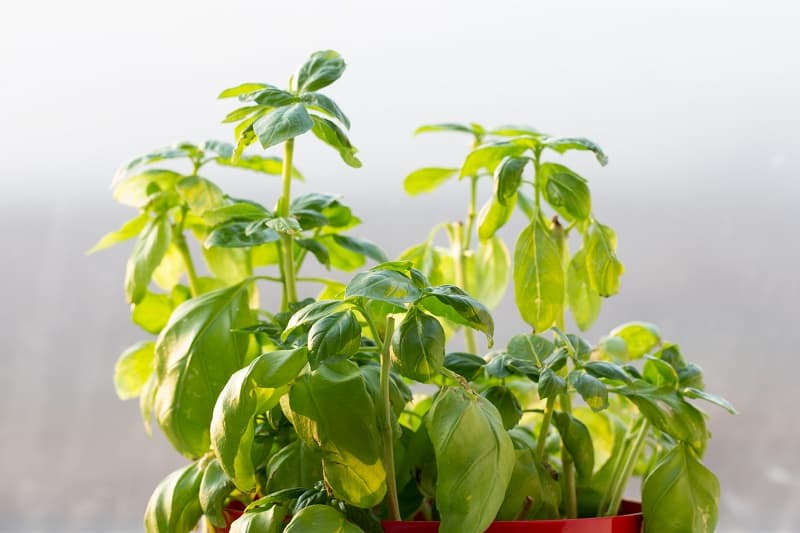
The most likely reason your basil plant is wilting is that the soil is dry and the plant is underwatered.

Basil plants need soil that is moist and porous. In the summer months, they need to be watered more frequently in order to keep them from drooping or wilting.

Planting the basil in a pot that is too small is also not advisable, because it will dry up too quickly. It is also important not to overwater your basil plant, because this could also cause your plant to wilt.

If you want to learn more about why your basil plant is wilting, how to remedy it, and how to prevent it from happening again, keep reading.  

Causes of a wilting basil plant

High temperature

Even though the basil plant is native to Southeast Asia and Central Africa, where the climate is tropical, it can still be affected by high temperatures. Basil plants can do well in warm weather, but that only applies if the plant is being watered well and the soil is moist. If the soil of the basil plant dries out, the plant will start to wilt. If you notice the drooping immediately, you can correct this by soaking the soil with water and making sure it has the appropriate moisture levels.

Transplant stress

The wilting of the basil plant in this case is observed when the plant has adapted to the living conditions in, say, the green house of a nursery where it grew. When the plant is sold, the new owner will take the plant away from the environment it has grown accustomed to. Going from a controlled temperature environment and into a homeowners garden can cause transplant shock or stress.

You can remedy this by assisting the plant in its transition to its new environment. Place the plant under the sun and make sure the soil has well-draining compost to help hold on to moisture. The soil should be moist but not boggy. Make sure you protect your plant from rain, high winds, and any other extreme weather conditions by taking it inside the house when these conditions occur.

If you are able to provide ideal living conditions for the plant, it should recover from transplant stress in about two weeks.

Wilting after flowering

When the leaves of a basil plant are not pruned regularly, it will flower. This is not exactly a bad thing because the flowers will attract bees, but once a basil plant has flowered, it will go to seed and stop producing new leaves. When the plant goes to seed, the leaves are no longer suitable for cooking.

You can always keep the seeds to plant when spring comes around, but if you want to keep your basil plant for longer, you will need to prune the top leaves to encourage it to become a bushier plant.

The pot is too small

Another common reason for a wilting basil plant is a small pot. When you buy a basil plant from a nursery it often comes in a small pot, but that does not mean it should stay in that pot forever. You will need to replant it in a bigger pot after some time. 

Basil is not typically choosy when it comes to the kind of container it is planted in, as long as it has drainage holes, but if planted in a container that is too small, it can dry out too quickly, especially when placed under the sun.

The best way to prevent basil from wilting due to a small pot is simply to transfer it into a bigger pot, at least 12 inches across. Clay and terracotta pots work best because they do not heat up as fast as plastic or metal containers. Just make sure the container has drainage holes at the bottom.

The basil plant is overwatered

Basil plants want to be planted in moist soil, but that should be coupled with a container that has good drainage so that the soil never becomes boggy and causes the basil to droop and wilt.

A basil plant wilts due to boggy soil when the soil is slow to drain or if the container has no drainage holes at the bottom.

Remedy this by making sure you are using well-draining soil and a container that has drainage holes at the bottom. If you are growing the basil indoors and using a drip tray under the pot, make sure you keep an eye on the drip tray, because it can cause the soil to become boggy too. Better yet, take the pot outdoors and water it so that the excess water can flow out freely. Take the plant back indoors after the soil has been soaked and the excess water has emptied.

The basil plant is underwatered

Perhaps the most likely cause of a wilting basil plant is underwatering. The ideal setup for a basil plant is for its well-draining soil to be consistently moist. This is achieved by using soil that has porous compost and frequently watering the plant.

The basil’s soil should never dry out; it is quick to wilt because its large leaves transpire a lot of water.

If you touch the soil and it feels dry, you should immediately give it a good soak. Keep watering until you see the excess water flowing out of the drainage holes at the bottom.

During the summer, bring the plant into the shade during the hottest hours of the day so that it is not exposed to extreme heat.

An underwatered plant will usually recover after two days of moist soil and ideal conditions.

Conclusion

Wilting in basil plants is usually caused by the plant being underwatered, overwatered, the pot being too small, the plant has just flowered, shock or stress from being transplanted, and high temperatures.

Most of these problems are very easy to remedy and before you know it, your basil plant’s leaves will have bounced back and you will be harvesting fresh herbs again.

Image: istockphoto.com / nevarpp
Why is My Aloe Plant Dying?

Why is My Aloe Plant Dying

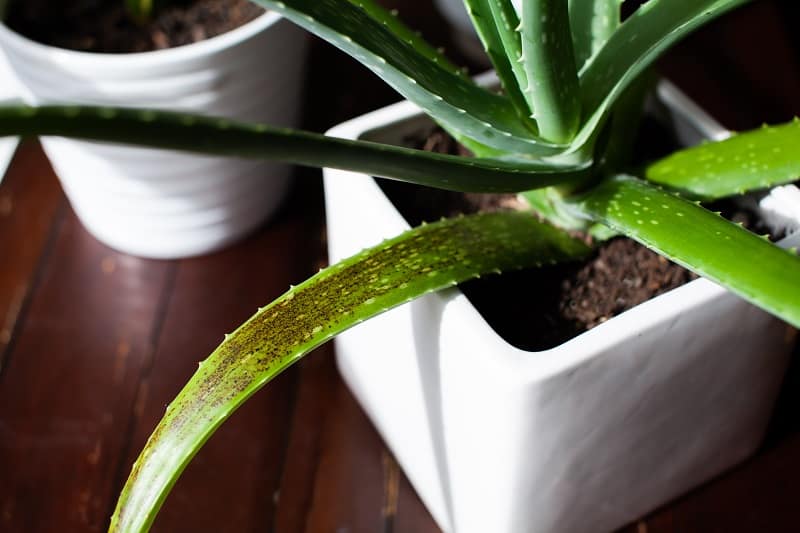
The most common reason for aloes to die is due to overwatering.

Aloes are succulents that come from the driest places on earth. They have evolved to thrive in places with high temperatures and little to no rain. Succulents are able to absorb a lot of water when it rains and they store that water in their bodies and leaves. These water stores are what they use up when a drought comes around.

It is very easy to overwater an aloe plant, especially if you do not check the soil regularly. If you establish a watering schedule that your aloe plant likes, your plant will bounce back.

How can you tell if an aloe plant is dying?

Leaves turning brown and becoming soft

When you overwater your aloe, use soil that does not drain well, or use a pot that has no drainage holes at the bottom, your plant can get root rot. The first signs of root rot are leaves turning yellow or brown and becoming mushy to the touch.

Aloes are drought-tolerant plants that do well in full sun and porous soil with infrequent rainfall. So, the best way to make sure your aloe plants thrive is to simulate the living conditions they might have in their natural habitat.

You can remedy an overwatered plant by extending the time between watering. If you are watering your aloe once a week and it looks overwatered, try watering it once every 10 days and see if it starts getting better. The best way to check whether to water your aloe is to stick your finger into the soil. If the top inch of the soil is dry, that means you need to water it. If it is still damp, you need to wait a few more days and check again.

Another step you can take is to replace the soil. You cannot use pure gardening soil for an aloe because it is too dense and retains too much water. Aloes need to have sand and perlite in their soil to make it more porous and quick-draining. Make sure the pots you use have drainage holes at the bottom to help get rid of any excess water from rain or when you accidentally overwater.

Not enough sunlight

When aloe does not get enough sunlight it will start to droop and its leaves will start dying, starting at the base. They need between four to six hours of sunlight every day to remain upright. The aloe plant may even become leggy from its desperation to reach the nearest source of light.

When you put your aloe in the shade, its leaves can become weak and long, and its color will become paler. The leaves at the bottom will start to brown in order to salvage the leaves at the top, because those are the ones that are closer to the source of light.

You can remedy a drooping aloe plant by gradually exposing it to more sun. Look for a spot in your home that gets four to six hours of sunlight each day and place your plant there. For the first four weeks, alternate placing the plant there and in the shade. Placing the aloe in a sunny spot suddenly can cause sun damage because it was not given time to adjust.

If you see the outer leaves drooping, it may be best to cut them off completely in order to allow new leaves to grow.

In the case of an aloe that has been deprived of sunlight for too long, with most of its leaves unable to keep themselves up, it may be best to take cuttings from the healthiest leaves and to propagate them.

The plant is getting too much sun

As mentioned above, aloes need between four to six hours of light everyday, but if they get more than that the plants can turn brown from sun damage. They need to be transferred to another area where they can take a break from the sun for the majority of the day.

This is most evident in plants that were bought from a store, where they have become used to the shade. The aloe in this case has adapted to that environment, so when you take it home and plant it in a garden or place the potted aloe under full sun, the sensitive leaves will burn and turn brown.

These plants need to be slowly introduced to the full sun by adding more and more sun exposure each day until they have adapted.

If the aloe has brown or burnt leaves, you can just cut the tips off because they will not recover or turn green again.

The plant is not growing

Sometimes you might notice that your aloe does not seem to be getting bigger or growing any leaves. It is understandable for you to worry, but usually, there is nothing wrong with your plant.

It could just be that your aloe has gone into dormancy because it is summer season. Aloe plants go dormant and stop growing in order to conserve the water they have stored, especially during times of intense heat and drought.

They stop growing because the plants need to channel all of their energy and resources into keeping themselves alive.

You cannot really do much during this time, so just wait until the weather becomes cooler and the aloe plant should continue growing then.

Conclusion

The most probable reasons your aloe plant is dying are overwatering, not getting enough sunlight, or getting too much sunlight.

Fortunately, all of these problems can be remedied quite easily.

It is also possible for you to think that your aloe is dying because it is not growing, when in fact it has just gone into dormancy.

Image: istockphoto.com / Ashley-Belle Burns

How Long Can Orchids Go Without Water?

How Long Can Orchids Go Without Water

Orchids, with the scientific name Orchidaceae, share many characteristics of succulents as they can thrive despite irregular soil, low light and limited water. These plants belong to one of the two largest families of flowering plants, with colorful flowers and approximately 28,000 species. Certain species are easy to care for and won’t even wilt while you go on vacation, which makes them hardy plants, too. 

How long can orchids go without water?

Orchids can go without water for at least four to five weeks, especially in a humid environment. The leaves may wrinkle, the flowers may eventually fall off and the roots may become dry, but the plants will not die easily. 

These are the conditions that will affect how long your orchids can go without water: 

1. It will depend on the variety of orchid. 

Orchids survive a long time if they are healthy, the soil has enough moisture and they are placed in an area with average humidity. Well-nourished orchids can last one to two months without water, but this depends on the variety. Certain varieties only last a month without water before they completely wither, while others could last two months or more. 

2. It will depend on the potting mix used for the plants.

Orchids tend to last long even without water if the potting mix is moss, which retains lots of moisture. In this case, there may be no need to water the plants for a long period. However, if the potting mix has bark or wood and charcoal, the plants will become dry in just two or three weeks. 

3. It will depend on the humidity level. 

If the humidity level is at least 60%, it is more likely that orchids will last longer. The plants could get their water and moisture from the humid surroundings. You may also try putting a humidity tray under the pot, such as a tray with water and pebbles or a pail of water with rocks and stones. 

4. It will depend on the lighting. 

Orchids that are placed away from the rays of the sun are more likely to last longer than those positioned near direct light. In this situation, the rate of evaporation is considerably lower. 

5. It will depend on the season. 

Leaving orchids unwatered during cold or winter months won’t affect them too much. The plants require less watering during such seasons.

6. It will depend on the general health of the plant. 

Healthy orchids have a greater chance of withstanding long periods without being watered than stressed orchids. 

How do you increase your orchids’ chances of survival while you are away?

These are some of the things you should do for your orchids to help them survive longer:

  • Make sure that you water them the day before you leave for a vacation or business trip.
  • Decrease the light if necessary, but increase the humidity. 
  • Make sure to decrease the temperature if needed.
  • Set up a DIY self-watering system using strings and a glass of water. 

What are the signs of underwatered orchids?

Orchids that have not been watered for a month or two will manifest signs of dehydration. You will notice that the leaves and roots shrink and become dry. The leaves turn yellow and black and appear pleated, and decay becomes noticeable. 

Underwatered plants will have visible veins on their leaves as they become thinner and thinner. The blooms, stems and spikes become limp and stunted. All of these signs indicate that you should water your orchids at once. 

What to do if your orchids are under watered?

To revive your withering orchids, you have to remove the plants from the pots and potting medium.  Next, inspect the roots, leaves and spikes. If you notice that there are blackened and shrunken roots, spikes and leaves, cut them off the main plants with a sterile cutting blade. Place some ground cinnamon on the places where you cut off the dead parts. 

Leave some of the withered leaves if they are not too withered, as they can possibly still be spared. Place the plants you are trying to save into new pots with a potting mix that retains water. Allow them to rehydrate by providing more water before air-drying them. You may give more water once the potting mix is almost dried out. The orchids will eventually recover and develop new leaves, spikes and roots. 

Conclusion

If you are planning to go on a long vacation or business trip, make sure that your orchids are in good condition and healthy enough to stay unwatered for a certain period. Orchids can go without water for four to five weeks, especially in a humid environment. You may have to decrease the light and temperature of the rooms where your orchids are kept. The humidity should be increased and most importantly, put up a DIY watering system to keep the orchids hydrated if you plan to be away for a month or so.

Image: istockphoto.com / Kwangmoozaa

Why is My Basil Plant Dying?

Why is My Basil Plant Dying

There are several reasons your basil plant may be dying, but the most common of these is that your plant is being either underwatered or overwatered.

Other possible reasons your basil plant is dying are pests, disease, lack of or too much light, and changes in temperature.

In this article, we will discuss all of these causes and how you can remedy each.

What are the causes of a dying basil plant?

The plant is underwatered

An underwatered basil plant will have crispy, wilted, and brown leaves. Some of its leaves may have dropped off into the soil around its base. This can happen if you forget to water your plant and allow its soil to become very dry.

Do not worry, because this is very easy to remedy. All you have to do is water the plant.

Bring the plant onto your patio or windowsill so that it is away from direct sun while recovering, and water the soil until it is sufficiently moist. The plant should perk up soon enough. Make sure you do not forget to water it again once the top of the soil feels dry to the touch.

If you see that the plant has started growing new leaves and is recovering well, you can place it back in your outdoor garden. Just be sure to check its soil every other day to be aware if it needs watering.

The plant is overwatered

Even though basil plants want their soil to be perpetually moist, that does not mean they will tolerate soggy soil. Their roots do very poorly in overwatered soil. If they have well-draining soil, it will be porous and airy enough to allow air to reach the roots. If the roots are constantly surrounded by damp soil, they will not get oxygen and will die. And if the roots die, they will not do their job of absorbing water and nutrients, which will eventually lead to the death of the entire plant. This condition is called root rot, and will make the plant more susceptible to fungal and bacterial problems.

Overwatering is not only due to you dumping excess water on the plant; it is also exacerbated by planting it in poorly-draining soil, a pot with no drainage holes or a pot that is too big, and not checking the soil to see if it needs to be watered.

An overwatered basil plant will have yellow leaves starting from the base, slowly spreading upwards. If it continues, the leaves will turn brown and drop off. If the soil is always wet, the roots will become soft and mushy and turn black. Rotten roots will smell just like rotten vegetation.

If an overwatered basil plant is too far gone, it may be unsalvageable, but if you are able to catch the problem early you can try to save it by letting the soil and the roots dry out and holding off watering for a few days. If the roots have parts that are black or brown, cut them off to save the healthy roots. Replant it in well-draining soil, in a pot with drainage holes.

If the root rot has affected the stem and leaves, it may be too late to save the plant so you are better off taking cuttings to propagate new basil plants.

The plant has pests

For basil plants in your outdoor garden, slugs are the major offender, while spider mites and aphids do the damage when you keep the plant indoors. These insects will feed on the sap of the basil plant, eventually depleting the plant and leaving it to die.

The first sign of these pests are spots on the plant’s leaves. A particularly bad infestation will leave the basil plant dehydrated and make it susceptible to other diseases because of its compromised state.

You can get rid of these insects with insecticides. Make sure you keep the affected plant away from your other plants so that they do not become affected while it is being treated.

The plant is diseased

One of the most common diseases that afflict basil plants is fusarium wilt. This is a group of fungi that affects plants. This fungus will attack the xylem vessels by blocking them and preventing the transport of water and nutrients in the plant. The signs to watch out for include yellow and wilted leaves, rotten stems, and stunted growth.

There is no salvaging a plant afflicted with fusarium wilt. The best you can do is prevent your other plants from getting it and make sure you dispose of it properly. Dispose of the soil as well and make sure you wash and disinfect the pot well before reusing it.

The plant is not getting enough light

Another reason your basil plant is dying could be that it is not getting the amount of sunlight that it needs. Basil plants need to be placed either under the full sun or at least near a window.

They need six to eight hours of sun every day, or twelve hours of artificial light when they are indoors during the winter.

Basil plants that do not get enough light will become leggy because they will grow toward the nearest source of light, but the leaves will be smaller than normal.

Changes in temperature

Basil plants are native to the tropical parts of Asia, so they will not do well in cold weather. Temperatures below 50 degrees Fahrenheit  will cause stress and wilting. If your plant is grown indoors, it is less likely to be affected by temperature changes because the temperature inside the house is more stable. If the plant is outside, make sure you bring it inside when the night temperatures get lower than 50 degrees Fahrenheit.

Conclusion

Your basil plant is most probably dying because of improper watering techniques. It is either being underwatered or overwatered.

Other common reasons for basil plants dying are pests, disease, insufficient light, or stress from changes in temperature.

Basil plants are hardy plants that are very easy to grow, and as long as you give them the basic care they will grow happily and healthily.

Image: istockphoto.com / Octavian Lazar

Can Succulents Grow In Rocks?

Can Succulents Grow In Rocks

Succulents look charming in dish pots and terraria. Their various colors and shapes make them attractive in these indoor arrangements, especially alongside white pebbles and colored rocks.

But can succulents grow in rocks, or do they also need soil? Read on to learn more about these hardy but lovely plants.

Can succulents grow in rocks?

No, succulents cannot grow in rocks alone. They need succulent soil or potting mix to support their roots and to be able to obtain nutrients. If you wish to create a “just rock” look for succulents for a particular event or gathering, it is still feasible, but this will not work on a long-term basis. 

Succulents need a growing medium, succulent soil, to stay healthy and nourished. Some arrangements, such as terraria, may create the illusion that the plants are only growing in rocks, but in reality certain techniques have been applied to hide the soil. 

Methods to achieve the “just rock” look for succulents

Here are some methods that create a “just rock” illusion:

1. Placing rocks or pebbles in a terrarium or glass jar

This method requires rocks of various sizes to hide the soil and to make sure that the soil won’t fall through the rocks and into view. To create this, you need to decide what rocks or pebbles you want to show on the outside.

Choosing smaller pebbles makes it easier, while different types of rocks also add attractiveness to the succulent arrangement. 

If you prefer big rocks, it is a good idea to place smaller rocks behind them to prevent the soil from falling through. Position the rocks you want to feature at the bottom of the glass container or terrarium.  Fill the gaps with small pebbles or gravel, and you can use a cloth to stop the soil from getting through to the glass. 

Create the look you want for your terrarium, positioning a layer of pebbles supported by the potting medium. The ideal height is usually halfway up the glass bowl, but some plant enthusiasts fill the bowl to the top.

Position your chosen succulents in the terrarium, but first shake the soil from their roots. If the roots are too spread out you can cut them back a bit without harming the plants. Make a hole in the potting mix wide enough for the roots and cover with more potting mix. 

If you are using a smaller jar or terrarium with a narrow opening, you will need some equipment like a spatula or tweezers to place the plants inside the jar and arrange them properly. Once everything is in place, you may add more pebbles to hide any visible traces of soil at the top. 

2. Planting succulents in plastic pots in a glass jar or terrarium

This is considered an easy method since there is no soil to worry about, but you should ensure that the glass vessel is the right fit. The number of succulents will also be limited unless the glass container is quite large, since the pots take up a lot of space. 

You need to check that the plastic pot fits in the glass jar and still leaves enough space around it for the pebbles. Put a few pebbles at the bottom of the glass, then place the plastic pot and start building around it until you reach the desired height for your arrangement.  Opt for smaller pots, about five or seven cm in size or diameter, since they are easier to work with. 

This method works best with cuttings, as it allows you to place at least six different succulents in a 10 cm plastic pot.

3. Planting succulents in pots or cans and other containers 

Achieving the just rock look in a pot is easy since all you need to do is plant the succulents of your choice using some succulent potting mix. Allow some space on the top for the rocks and add some pebbles if you want to.

If the succulent is already in a plastic pot when you purchased it and this pot fits into the ornamental pot you want to use for your plant, then you are in luck. You simply place the plastic into the final pot and place some pebbles on top until the whole top opening is entirely covered. 

4. Placing succulents in rocks and water

Growing succulents in rocks is technically feasible, but it is time-consuming and not intended for the long term. Water propagation enables you to grow succulents if the water is changed often enough and allows the roots to be submerged.

You can add rocks to the water, but the regular changing of the water can be a hassle, especially when the roots start to grow through the rocks. 

Always use good quality, fast-draining potting mix when you plant succulents in pots or enclosed vessels like glass or tin. Add a bit of perlite or vermiculite to achieve more drainage in the soil mix. Make sure the plant is suitable for the chosen location and select those that favor the indoors, like Sansevieria or Haworthia. 

 Make sure the pots have drainage holes to avoid root rot. Water the succulents as needed, especially during hot weather, but make sure they are not overwatered by letting the potting mix dry out in between watering. 

Conclusion 

Succulents are hardy plants that are well-adapted to survive even harsh weather conditions. However, while they can live in various terrains, they cannot grow in rocks. These plants need soil to support their roots and to obtain the necessary nutrients for them to flourish. 

Image: istockphoto.com / Alex McGregor

Jade Plant Leaves Turning Black

Jade Plant Leaves Turning Black

The jade plant, also called a lucky plant or money tree, is endemic to the regions of Southern Africa. This succulent is a common houseplant with small pink or white flowers. Like most succulents, it is easy to care for and needs minimal attention.

However, if you notice jade plant leaves turning black you need to act on the situation to save the plant from dying. 

Jade plant leaves turning black: What are the causes?

Below are the common reasons for jade plant leaves turning black:

1. The plant could be heat-stressed.

Too much direct sunlight could put your jade plant at risk of getting burned or becoming heat-stressed. If your jade plant is planted outdoors, use a shade cloth during heat waves or if it is placed in a spot where there is too much full sun. You may also opt to place it indoors and use a grow lamp for lighting without the risk of sunburn.

2. The plant may be overwatered. 

Another reason the leaves are turning black could be due to overwatering. In this case, the leaves tend to shrivel and fall off because of rotted roots. The leaves may also curl, along with other issues such as the roots having an odor or dark roots. 

If this happens, you can still save your jade plant by transplanting any healthy stem that may remain. However, if the roots are already brown and soft, they are useless and should be removed completely. 

To avoid overwatered plants, make sure to water them only when the soil is already dry. Use a mix of cactus and succulent soil along with some perlite to achieve well-draining soil. Soil that is too sandy retains water longer than required and may lead to root rot. 

Tips on watering jade plants 

 Here are some tips on how to water your jade plants:

  • Water the plants at the base instead of from above, as watering from above could increase the risk of the leaves turning black due to reduced transpiration. 
  • Water the plants early in the morning when the soil has dried out, as this allows them to lose excess water through their leaves during the day and regulate moisture levels appropriately.  Watering at night-time when the plants are dormant could leave the roots sitting in wet soil, thus increasing the risk of black leaves and root rot. 
  • Reduce watering during wintertime since succulents are dormant at this time and only need to be watered about once a month.
  • See to it that the pots have good drainage holes so water does not remain stagnant. 
  • Place the plants in full sun in a breezy location, with well-draining gritty soil to replicate their native growing conditions. 
  • Cut off any black leaves and stems to prevent the spread of rot.

3. The plant may have a fungal disease or infection. 

Plants that are grown in areas with high humidity are more prone to fungal infections than those grown in dry locations. You will know that the problem is due to fungus if there are more black spots rather than the leaves turning black. 

An effective solution for fungal disease or infection is to treat your affected plants with fungicide and quarantine them so the infection does not spread to other plants. Disinfect the gardening tools that you used for the infected plants. 

4. The plant may be infested with pests. 

Pest infestation could affect the color and health of your plant’s leaves. Spider mites, mealybugs and aphids could destroy your plants since they feed on the plant’s leaves. Affected jade plants will most likely develop white spots before the leaves turn black. To remove them, wipe the leaves with a mixture of alcohol and water on a cotton swab or in a spray bottle. Neem oil is also effective at removing these destructive pests. 

Conclusion 

Blackening jade plant leaves are unpleasant to look at but also endanger the health of your plants. Common reasons for this could be overwatering or exposure to too much heat or sun; it may also be due to fungal infections or pest infestation.

Image: istockphoto.com / Andrey Nikitin

Can Succulents Grow in Fluorescent Light?

Can Succulents Grow in Fluorescent Light?

Plants do not really need anything from sunlight other than the light itself, which they need for photosynthesis. They do not really need the heat, although the heat can be beneficial in that it can help dry the soil around the plant and avoid root rot from overwatering.

You can definitely use fluorescent light to help succulents grow. This is especially helpful in cases where your home does not get that much sunlight, like during the winter.

How much sunlight do succulents need?

Succulents, like all plants, need a certain amount of light in order to live. They absorb the light and turn it into energy through photosynthesis. Simulating sunlight inside your home can be tricky to master, but it can definitely be done.

Plants that do not get their required light will not grow properly. They will become weak and discolored. Some plants will even etiolate, whereby their leaves and branches will literally turn and grow in the direction of the nearest light source. This happens in truly desperate plants. The plant’s branches will elongate, stretch and disfigure what is considered the normal appearance of the plant.

That said, yes – succulents can still thrive indoors. In fact, there are multiple species of succulent that are highly adaptable to living inside the house. This is also why succulents are becoming increasingly popular indoor plants.

The amount of light a succulent needs will always depend on what type of succulent it is. Technically, all succulents can survive being indoors, but their response to their change in situation will vary. If possible, place the plants that like sunlight near your windows, while those more tolerant to low light can be kept further inside the house.

What are the different types of grow light?

Fluorescent light

Fluorescent light has been a part of our homes for a long time. These lights are very easy to find and purchase, and they actually do a decent enough job as grow lights for indoor plants. The ones most growers use are the T5, T8 and T12, but the most ideal is the T5. This fluorescent light is known to have the best results of the three.

Fluorescent light tubes can be quite space-consuming, so you can use a compact fluorescent light. It has small bulbs on a flat, round surface and is a great choice for people with small plants on a table.

Fluorescent light gives a full spectrum of light, from red to ultraviolet. These bulbs can get quite hot the longer they stay on, so make sure to keep it six to twelve inches away from your plants; the compact fluorescent light even further away.

This light is great for keeping your plants happy during the winter.

Light emitting diode light (LED)

The LED light can provide specific wavelengths of light to your plants. Succulents only really need red and blue light and the LED is able to provide this narrow spectrum of light. This is also why LED lights save more energy and provide less heat than compact fluorescent lights. The LED light is more cost-effective than the fluorescent light, but that does not mean it is better. Because LED light can provide your succulents with one or two specific colors on the light spectrum, this can trigger your plant to behave differently. For example, exposure to only blue or only red light can cause the plant to flower instead of growing.

Because LED lights are so low intensity, they may not be providing enough UV light for your plant’s color. The plants may just be green all winter instead of the color they might become when under the sun, like a bright red or yellow color.

How bright is the light from a grow light?

It is always important to know how bright the light from your grow lights is, as well as how much your plant is going to get.

Succulents will need at least 2,000 lumens for every square foot of light. At noon, direct sunlight can reach up to 10,000 lumens per square foot. 10,000 lumens may be tough to simulate in one go, but if you have a 2,000 or higher lumen bulb shining on your plant for 14 hours a day, they will be getting roughly the same amount of light. 

How do you use a grow light?

Choose a part of your house that is most appropriate for your plants and for a light to be installed above them. A corner in your living room will do just fine, for example.

Another important factor to consider is the distance between the plants and your light. If the light is too close it might burn the succulent, but too far and the light may not be sufficient for the plant to grow healthily.

As a general rule, no matter what light you plan on using, make sure it is between six and 40 inches away from the light.

If you are using an LED or fluorescent light, maintaining 10 inches is ideal, but if your succulent is big, six inches is sufficient distance.

If the plant is five inches away or closer, the light can possibly heat the water inside the cells of the plant. This can lead to dehydration and sun damage.

The best color temperature for growing succulents is 6500k, or 3000k if you want it to bloom.

You do not need to keep the lights on your plants for 24 hours every day. They will still need time to respire, so give them a 12-hour break every day.

Be sure to rotate the plants every week so that all sides and angles of the plant are exposed to the light.

Conclusion

Yes, succulents can grow under fluorescent light. Of course, nothing beats actual sunlight because it is free and your plant gets the entire spectrum of light which will help it grow properly. Unfortunately, if you live in an apartment building or in a place where the winters are especially long, you will need to provide your plants with artificial light.

You can use LED or fluorescent light, but fluorescent light can provide an experience closer to sunlight for your plants because it also exposes the plants to a full spectrum of light.

Make sure you install the light so that it is at least six inches away from your plant, because if it is too close there is a risk of dehydration or even sun damage. Keep the light on the plants for 12 to 14 hours a day to simulate a full day’s worth of light and the plant will keep growing as though it is out under the summer sun.

Image: istockphoto.com / Techa Tungateja

White Spots on Yucca Leaves

White Spots on Yucca Leaves

White spots on yucca leaves usually mean there is a problem that needs to be addressed as soon as possible. The white spots can either be due to powdery mildew, spider mites, mealy bugs, or scale insects.

All of these causes can spread from one plant to another, so it is best to act quickly and solve the problem before it infests your entire garden.

The Yucca Plant

The Yucca genus comprises approximately 40 perennial trees, shrubs, and plants. Only some of these are what is commonly known as the yucca plant that is usually grown indoors. They are native to the deserts and semi-deserts of North, South, and Central America, as well as the Caribbean.

Yuccas are slow-growing plants that are also prized for being drought-tolerant and low maintenance.

The most common cause of a dying yucca is overwatering, as with most other succulents, so be sparing and observant when watering. As the yucca plant matures, it will become quite the space-consuming giant, but do not worry as it will take several years to grow to a hard-to-manage size. It grows so slowly that you only really need to repot it every two to three years.

The yucca plant’s size when fully mature will depend on the variety. They like being exposed to full sunlight or bright, indirect sun; this means they will do great on your patio or near a window if inside your house.

These plants like sandy soil that has a pH level of 5.5 to 7.5. Their bloom time is somewhere around the middle of summer or the early weeks of fall. Their flowers are either pink or white in color.

Be aware that this plant can be toxic to some animals, so make sure you do not have them near pets like reptiles that might nibble on the leaves. There have also been cases of yucca plants causing skin irritation to humans.

White Spots on Yucca Leaves

Powdery mildew

One of the most common causes of white spots or substances on your yucca, or on succulents in general, is powdery mildew.

The mildew will look like white spots in its early stages, but will take over as it spreads more and more over the leaves, especially if it is not treated as soon as possible.

Powdery mildew will grow on your yucca plant if it is in a perpetually moist environment or if there are constant fluctuations in temperature. Therefore, make sure the spot you choose for your yucca plant gets a decent amount of sunlight. You can also use neem oil on the plant to remove the powdery mildew. 

It is imperative that you keep your other plants away from the infected plant even while you are treating it. Only after a couple of weeks without any powdery white spots on its leaves can you place other plants near it again.

Spider mites/ mealybugs

Spider mites and mealybugs can also cause your yucca plant to have white spots.

The mealybug looks like cotton on the leaf’s surface. It feeds on the plant’s leaves, causing the leaves to become dehydrated, and eventually affects the rest of the plant.

Both spider mites and mealybugs can cause the yucca plant’s leaves to curl, because the constant feeding on it will stress the plant as its nutrients are taken away.

Fortunately, just like with powdery mildew, neem oil is very effective against both of these pests. If you do not have neem oil, you can try rubbing alcohol on a cotton ball and applying it to the plant. This is just as effective as neem oil against the insects.

Just like the powdery mildew, these pests can migrate from one plant to another before you know it, so make sure you isolate your infected plants until you are sure all of the insects have been eradicated.

Scale insects

These insects can reproduce quickly on your yucca plant, especially if the conditions are in their favor. They will feed on the plant’s leaves and you will definitely want to get rid of them as soon as you can.

At first glance, these insects may just look like white spots on your plant’s leaves, but if you look closely, they will appear raised and not aligned with the leaf.

These insects can also cause brown spots to appear on your yucca plant.

Scale insects are not susceptible to most spray insecticides, so you will have to get rid of all of them by hand. You can use rubbing alcohol on a cotton ball, and you need to wipe down all of the plant’s leaves with the alcohol to kill the bugs. While keeping your yucca plant isolated, continue wiping down the leaves with alcohol every few days if you keep seeing the white spots.

If, after a few days, the white spots have disappeared, you can place the plant back with the others, but it is important that you check the leaves from time to time to ensure you do not risk a reinfestation. 

Conclusion

When you find white spots on your yucca plant’s leaves, this is cause for concern and you should address it immediately.

The most probable causes of these white spots are powdery mildew, spider mites, mealy bugs, or scale insects.

You can remove the powdery mildew, spider mites, and mealy bugs with high-quality neem oil.

Wiping down the leaves with rubbing alcohol on a cotton ball or swab can take care of scale insects, mealy bugs, and spider mites as well.

While you are treating your yucca plant for any of these conditions, make sure you keep it away from your other plants so they do not get infected.

Thankfully, these problems are easy to remedy and your yucca plant should make a full recovery in no time.

Image: istockphoto.com / undefined undefined

How To Save A Dying Cactus?

How To Save A Dying Cactus?

When you find your cactus in a desperate state and almost dying, there are still some steps you can take to save its life.

You need to remove all the rotting parts on the cactus, check the roots, change the soil or pot if needed, let the cactus dry up if overwatered, water it if underwatered, make sure it gets the light that it needs, and make sure it is placed or planted somewhere with the appropriate temperature.

Keep reading to learn more about how to save your dying cactus.

How do you save a dying cactus?

The first thing to do when trying to save a dying cactus is to identify what exactly is killing the cactus in the first place. If you are able to identify the problem, it will be easier to remedy it.

Check the roots

Root rot is one of the most common afflictions in cacti. The first symptoms you will see in a cactus with root rot are shakiness, discoloration, and mushy roots. If the plant itself is turning black or brown, the rot has probably reached the stem.

The root system of a cactus can be constricted by a small pot, because its roots tend to be shallow but widely spread out. When a cactus in a small pot is being overwatered and has compacted roots and poor drainage, this is essentially a recipe for root rot disaster.

It is important to act quickly when you suspect root rot, because you often only have a small window of time to save the plant, especially if it has begun affecting the stem.

First, remove the plant from the pot and shake off the excess soil from the roots. If there are any blackened roots, cut them off with clean scissors and make sure to clean the scissors after each snip. Lay out the roots on a tray lined with a paper towel and let them dry for a couple of days. After the roots have dried up, you can replant the cactus in a pot with a drainage hole, using fresh, sterile cactus soil mix.

Sometimes the root rot has become too extensive and you may not be able to save the cactus, even if you let it air-dry for several days. You may be better off saving some stems and leaves from the top of the plant to propagate.

Make sure you are watering your cactus properly

Even though cacti do not need that much water, that does not mean they cannot be underwatered. Cacti still need water regularly in order to continue growing. They will shrivel and turn brown if they do not get the water they need. If you suspect that your plant is underwatered, just give the soil around the plant a good soak and make sure you water it again before the soil becomes completely dry. Cacti usually only need to be watered once every two weeks.

It is quite easy to accidentally overwater your cactus. If you water it even just two days before you should, this can lead to the effects of overwatering. Another factor that contributes to overwatering is planting the cactus in a container without drainage holes. Drainage holes at the bottom of the pot can help avoid overwatering because the excess water simply flows through the holes at the bottom. 

Overwatering is also the main cause of root rot. You can correct overwatering by simply inspecting the soil around the cactus every once in a while. Touch the top inch of the soil to check if it is completely dry, and if it is, water the plant. If the top of the soil is still a bit damp, wait for one or two days and check again. Use cactus soil mix that has sand and perlite to make it quick draining and airy, so that the roots are not soaking in wet soil for too long.

Repot your cactus to a bigger container

Another reason your cactus may be dying is because it is outgrowing its pot. Cactus roots, just like those of any other plant, need space to grow and spread out so the plant can mature properly. 

Remove the cactus from the old pot and shake off as much of the soil as you can. Take this time to look at the roots and see if there are any dead or dying roots you may need to remove. Replant the cactus in a pot slightly bigger than the old one, with fresh cactus soil mix. Remember that you do not need to water the cactus immediately after replanting. Give the roots some time to heal from the trauma of being uprooted so they can absorb water properly again. One week should be enough time to wait before watering the replanted cactus.

Change the soil

As mentioned above, you need to use a special cactus soil mix for your cactus. There are cactus soil mixes available commercially, but you can make your own at home. Just mix one part gardening soil, one part sand, and one part perlite into a large container and mix it well. The sand and the perlite will make the soil well-draining so that the cactus’ roots are less likely to get root rot.

Make sure your cactus gets enough light

Different cacti have different light exposure needs. The best way to know how much your specific cactus needs is to do your research. Cacti that love the sun can be planted in the garden or in a pot on the porch or patio. Those that can survive indoors can be placed on a windowsill to get a couple of hours of indirect sunlight. Cacti are some of the easiest plants to take care of, and as long as they are placed in a spot where they are happy with the amount of sun they are getting, they should be completely fine.

Make sure the temperature is optimal

Most cacti come from the deserts and semi-deserts of the Americas, Asia, Africa and Europe, and can handle high temperatures of up to 90 degrees Fahrenheit. But did you know that there are also some special cacti that can survive cold temperatures?

Again, the best way of knowing what temperature your cactus likes is to do your research. You have to know which of your plants needs to be taken inside the house once the outside temperature drops to freezing.

If you live in a place where the winters are long and barely have any sun, you might need to get your cacti a grow light to supply them with the sunlight that they need to live.

Conclusion

The first thing you need to do when you think your cactus is dying is to figure out what exactly the cactus is dying from.

You need to check the cactus’ roots for root rot and remove any dead roots, change the soil or pot if needed, let the cactus dry up if overwatered, water it if underwatered, make sure it gets the light that it needs, and make sure that the temperature in the cactus’ living area is optimal.

Cacti are notoriously tough and hard to kill. They are low maintenance and easy to care for, and as long as you are able to establish a routine that works, you will find it a breeze to grow them.

Image: istockphoto.com / Sara Edwards

Why Are My Basil Leaves Turning Brown?

Why Are My Basil Leaves Turning Brown?

If you notice that the leaves on your basil plant are turning brown, do not waste any time; start figuring out the cause and taking care of the problem.

The most common reasons for your basil plant turning brown are overwatering, underwatering, getting too much or too little light, becoming rootbound, changes in temperature, pests, stress, and disease.

To learn more about why your basil plant is turning brown, keep reading.

Causes of basil leaves turning brown

Basil plants are one of the easiest plants to grow, especially for beginners. They are very popular plants because they serve a dual purpose: they can be beautiful indoor plants, and their leaves can also be used in multiple types of cuisine.

Even though they are easy to grow, they are quite sensitive to changes in their living conditions, which is why you should always be on the lookout for possible problems with your basil plants.

The following are the most common causes of browning basil leaves:

The plant is overwatered

A common mistake made by many home gardeners is overwatering their plants, and the popular basil plant is no exception. Overwatering can lead to root rot which, when it reaches the stem and leaves, can cause them to turn yellow and eventually brown.

Yes, basil plants like their soil moist, but never water to the point that it becomes boggy. This problem is doubled if the basil is planted in a container that does not have any drainage holes at the bottom.

Overwatering is more common for basil plants that are kept indoors because they do not have the heat of the sun to help evaporate excess water from the soil.

If you suspect that your basil is overwatered, check its roots to see if they are brown, soft and mushy. If they are, then they are rotting and you are definitely overwatering the plant. If you were able to catch the root rot in its early stages, you can salvage the plant by removing any dead roots and planting it in new soil.

The plant is underwatered

Basil likes its soil to be perpetually moist, but not boggy. If you fail to keep up with its water needs, the plant may dry out. Its leaves will shrink, curl, and turn brown. This will happen even faster if the plant is underwatered and also kept near a window that gets plenty of sun. The leaves of an underwatered basil plant will also have an unpleasant and bitter taste.

Basil does not really follow a strict schedule of when it needs to be watered. You simply need to look at the plant and if the leaves are looking a little droopy and the soil is no longer that moist, you can spritz it with some water from a fine mist spray bottle.

The plant is not getting the required amount of light

Basil plants like to get between six and eight hours of sunlight a day. If the plant is placed under direct sunlight, it should not get more than four hours of exposure.

If a young plant is placed in full sun, it can dry up and burn, but mature plants often do well. If a plant does not get enough sun, its leaves will turn yellow and curl up. The plant will also tend to have a longer stem because it will try to compensate and grow toward the nearest source of light in desperation. Be perceptive and know when your plant needs sunlight, and simply move it to a sunnier location. If the lack of light is due to the season, such as winter, you may need to buy a grow light for your plant. Basil plants will need 12 hours of exposure to artificial light in order to simulate the effects of six hours of natural sunlight.

The plant is rootbound

Another reason your basil plant may be turning brown is due to its container being too small. A plant’s roots need space to grow in order not to suffocate. A plant’s root system becomes rootbound if the roots keep growing in a circle around themselves.

You can tell a plant is rootbound if you can see the roots grow forcibly out of the drainage holes at the bottom of the pot, and if the soil tends to dry out very quickly even if it has just been recently watered.

The only way to remedy a rootbound basil plant is to repot it in a larger container. You do not need to loosen the roots when transferring the plant, because this could damage the plant. The roots will do the untangling themselves as they grow into the soil.

The plant is affected by changes in temperature

If a basil plant is left out in the cold, its leaves can turn brown and become deformed. Remember that the natural habitat of the basil plant is tropical. It does not do well if the temperature gets anywhere below 50 degrees Fahrenheit. You can save the plant by taking it indoors to a warmer location and only putting it out again once the weather becomes sunnier.

The plant has pests

Pests such as scale insects, thrips, spider mites, and aphids can cause a basil plant’s leaves to turn brown because they suck out the plant’s juices. Be sure to check your plant for pests every once in a while, especially when you start to see some discoloration. You can use insecticides to save your plant from these insects.

The plant is diseased

The basil plant can suffer from a multitude of fungal diseases that can cause its leaves to turn brown. You can try to save the plant with a fungicide, but if it is afflicted with verticillium wilt or fusarium, that usually means a death sentence for the plant.

The best approach to fungal diseases in basil plants is to prevent and avoid them completely. Try not to overwater the plant so that it is not perpetually damp. If you suspect verticillium wilt or fusarium, it is best to dispose of the plant immediately so it does not affect any neighboring plants.

The plant is stressed

Basil plants may be hardy, but they do not like being overhandled. Avoid repotting them too often because they may go into shock, turning the leaves yellow or brown. Give your basil plants enough time to adjust to any changes in their living conditions, such as temperature, light or watering.

Conclusion

A basil plant’s way of showing discomfort regarding its growing situation is through curling, wilting, and discolored leaves. When you see these changes in your basil plant, make sure you identify the problem as soon as possible in order to remedy it and have a chance at salvaging the plant.

It is your responsibility as an owner to know your plant’s water, sunlight and care needs so that it grows as healthily as possible. The healthier your basil plant is, the more productive it will become for you.

Image: istockphoto.com / StockRocket

Succulents Growing Too Tall

Succulents Growing Too Tall

Many succulents, especially indoor ones, are typically small in size and come in various shapes and hues. Tall succulents stand out for their unusual size and form, and it can be confusing when you see a tall succulent that would normally not be tall. This article will help you understand why these plants tend to grow too tall.

Why do succulents grow too tall?

Succulents grow too tall and become stretched out when they are not getting enough sunlight. The first thing you will notice is that the succulent will start to turn and bend toward the light source. As the plant continues to grow, it becomes taller and there will be more space between the leaves, which become smaller and lighter than their normal hue.

The lack of sunlight can also make the plant lose the vibrance of its original color or become less colorful. 

What is etiolation?

When succulents do not have enough sunlight, they start to grow longitudinally. This condition is known as etiolation, a state exhibited by plants grown in insufficient sunlight. Succulents growing too tall is a trait of etiolation, whereby they appear stretched and their leaves are spaced far apart. They also appear pale, and may have a bent stature. 

Etiolation is usually observed in indoor plants, since most of these are placed in poorly-lit or dark rooms. It could also occur in outdoor plants if they are placed in shade or blocked from the sunlight for a long period. Aside from long, stretched-out stems, the leaves may also appear smaller due to longer internodes, and the plants may be pale yellow in color.

Etiolated succulents are unable to produce chlorophyll which produces a bright green color, and the leaves and stems lose pigmentation and become pale.

During the early stages of etiolation, the plant will lean towards the sun or light source. After a while the stem starts elongating quickly, but stays thin. The spacing between the leaves is far apart, since they do not grow with the stem. Eventually, the plant takes on a distorted, disoriented shape, and the stems could break off as they become pale and weak.

Is it normal for succulents to grow a tall stem?

Some plant owners believe that succulents with tall and stretched stems are healthy, fast-growing plants and that this is normal. Unfortunately this is not always the case, since plants tend to become tall and stretched due to inadequate sunlight.

The condition is a unique survival mechanism, and could even lead to withering and death. 

Inversely, some succulent varieties spread vertically by producing lots of offsets and naturally grow longer than others. These plants have dense, vibrant leaves and thick stems, which are obvious indications of healthy growth.

How much light do succulents need?

Light requirements vary depending on the variety of succulent, but generally they do not need light all day. Certain varieties prefer partial to full sunlight and need at least a few hours of direct light daily.  Other succulents prefer low lighting and grow best in an indoor environment. 

Plants indicate their light requirements silently; there are certain signs that will indicate if they are lacking sunlight. Droopy leaves or downward-bending leaves indicate insufficient sunlight. Another sign is if the leaves are leaning: when a plant senses where the light source is, it will lean in that direction to reach the light it needs. 

Succulents growing too tall: What to do?

Here are some steps you can take to prevent your succulents from growing too tall and stretching out:

1. Try to reposition the plant. 

Try to move the planter or potted succulent near a window or to an outdoor area for at least a few hours daily. This will allow the plant to soak up sufficient sunshine.

2. Be sure to make changes gradually. 

Allow the plant to have at least half an hour more of direct light at least every three days. After two weeks, check whether the leaves have tipped upside. The pale color should also be reversed once it has been exposed to enough sunlight. Do not expose the plant to bright sunlight or full sun suddenly; rather do it gradually.

3. Use a grow lamp. 

A grow lamp is an artificial light source designed for plants that are grown indoors. It provides the required lightwaves for plants to continue the process of photosynthesis. It is also ideal if you live in a country that has long winters or cold weather most of the year.

4. Opt for other species that are less light-sensitive. 

If you notice that your stretched-out succulent is not responding well to the previous measures, you may have to opt for other varieties or species. Some succulents are just more sensitive to light compared with others. 

 Here are some low-light succulents that you may like to consider:

  • Aloe barbadensis, or Aloe vera 
  • Haworthia margaritifera, or Zebra plant 
  • Sedum morganianum, or Burro’s tail 
  • Sanseveria trifasciata, or Snake plant 
  • Schlumbergera, or Christmas cactus 

Conclusion 

Succulents are lovely plants that do not grow too large, which makes them ideal indoor plants. They enhance the aesthetic features of homes and offices. However, some tend to grow too tall and become pale and stretched; these are signs of etiolation due to growing in conditions with insufficient sunlight. 

To prevent succulents from growing too tall, you need to reposition them and gradually increase the time they are exposed to the sun. You can also use a grow lamp so the plants can continue to photosynthesise despite being indoors. 

Image: istockphoto.com / by sonmez

How To Arrange Succulents?

How To Arrange Succulents?

Succulents add aesthetic beauty to homes and gardens. They are also popular with interior designers to add character to a room, patio or office. Plant growers follow certain techniques to produce eye-catching succulent arrangements. In this article, you can get to know more about the basics of  succulent arrangement.

How to arrange succulents

Succulent growers note that there are guidelines for arranging succulents. They claim to follow this formula: thriller, filler, spiller. This is not some kind of magic spell; each word represents a certain kind of succulent. 

  • Thriller – This is a succulent that is large, spikey, tall and different from the other succulents in the arrangement. It is the first thing people notice when they see the arrangement. 
  • Filler – These are the succulents that make up most of the arrangement. These plants should complement the thriller succulents, but should still provide visual interest through either color or texture. You can get creative and mix and match varieties. 
  • Spiller – These succulents hang over the pot’s edge. Trailing succulents like String of Hearts, String of Bananas and String of Pearls are perfect choices as a spiller. The Sedum Burrito variety is also ideal as a spiller, because it trails as it grows older.

Spiller succulents can become an important factor in the longevity of the arrangement and should cover the edge of the pot. 

Other tips on how to arrange succulents

Here are some other tips on arranging succulents:

1. Consider the colors and textures of the succulents. 

Succulents come in an array of colors and while most are green, some are red, orange, yellow, purple or blue.  Plant experts note that when creating a monochromatic arrangement with only one main color, such as green, you should use various textures and shapes.

For a multi-colored arrangement, it is ideal to have groupings with analogous colors or those that are next to each other on the color wheel. For instance, combine green, blue and purple succulents, or opt for orange, yellow and green. 

Whatever your preferences, be as creative as you can and you’ll be surprised at the eye-catching outcome. 

2. Consider the light requirements. 

Succulents come in various varieties, and also have varying light requirements. Some plants, like the Sansevierias, do not like full sun but prefer low lighting, while others, like the Sedum nussbaumerianum, prefer full sun as this brings out the plant’s intense color and compact shape.

In creating a succulent arrangement, make sure to combine succulents with the same lighting requirements. 

3. Consider the leaf thickness and watering needs. 

Generally, most succulents can get by with minimal water, especially during cold weather.  Most varieties only need to be watered once a week or less in the winter season or if you live in a country with a  cold climate. You should also consider the leaf thickness of the plants in your arrangement.

The thicker the leaves, the more tolerant they could be when exposed to dry conditions or high temperatures.

Aside from those mentioned above, other things you should consider when arranging succulents could include the following:

  • Choice of container or pot

The container or pot that you use for your arrangement should have drainage holes for excess water to flow smoothly, to avoid root drowning or root rot. You should also consider the material of your container or pot. 

These are the common types of container or pot materials:

  • Terracotta and ceramic – These are great for both indoor and outdoor arrangements. However, they are fragile and prone to breakage.
  • Plastic –  It is lightweight and not prone to breakage, but is not breathable and water could get trapped inside it.
  • Wood – This adds a special appeal, especially for outdoor succulent arrangements. However, it can rot after a certain time and it could split over time if it cannot tolerate the amount of water or moisture. 
  • Metal – Succulent arrangements also look appealing when placed in metal pots. However, metal can rust after some time, and the temperature could change quickly and cause the soil to heat up. 
  • Glass – This provides elegance to your succulent arrangements and allows you to view the roots as you water the plants. This makes it easier to provide the right amount of water. However, it can get dirty easily and tends to collect hard water deposits. Extreme care should also be practiced in handling glass containers since they are breakable.
  • Size of the container or pot

According to succulent growers, the general rule is to leave a half-inch of space between the plants and the container’s rim. This will allow the plants more room to grow. However, make sure to only allow just enough space, since too much could also hinder the growth. 

For two-inch succulents, it is ideal to use a 2.5 inch container or pot. Leave just a tiny space around each plant if you are combining them in a single arrangement. See to it that the plants are not too cramped so they can grow well. 

Make sure that your succulent arrangements are given just enough water so that they will grow and last for years. Fertilize them, especially during the growing season, for them to absorb the right nutrients. 

Conclusion 

A succulent arrangement allows you to flaunt your collection in a creative and eye-catching way. In arranging your succulents, always follow the ‘thriller, filler, spiller’ formula discussed above. Most importantly, take into consideration the water and light requirements, as well as the color and texture of the succulents that you intend to combine and arrange.

Image: istockphoto.com / kynny

How To Fix Succulent Etiolation?

How To Fix Succulent Etiolation?

Succulents can survive in harsh conditions, but they are also prone to illnesses and infections. A common affliction is etiolation, which is an abnormal growth pattern in succulents. The plants look bent, leggy and stretched out, instead of being compact. Read on to learn how to resolve this, as well as other insightful information on succulent etiolation. 

How to fix succulent etiolation

You can trim down your etiolated succulents to make them look normal again, but you cannot entirely return the distorted plants to their usual and normal form. There is no way to reverse the stretched and leggy appearance of affected plants.

Aside from trimming, you can place the plants near a window to get some sunlight, and gradually increase the amount of sunlight they receive to 30 minutes daily. You may also opt to use a grow light to help provide the amount of light needed by your etiolated plants.

Nevertheless, if you are no longer happy with how your plants look, you can always propagate them using the trimmings so you can grow aesthetically beautiful succulents. It only takes a few weeks for roots to form and offshoots to appear. 

How to propagate trimmings of etiolated plants

These are the steps to propagate the trimmings of etiolated plants:

  1. First cut the crown of the plant, but make sure to leave at least one to two inches on the stem’s base and at least two to three leaves. Your plant is more likely to survive if you leave enough leaves to absorb sunlight. 
  1. Allow the cuttings to dry and callus over. Calluses or scabs on the ends of stems are an indication that the cuttings are ready for planting.  
  1. Finally, plant the callused end into the soil and water the newly planted cuttings.

The cuttings should be watered regularly until they develop roots. However, be sure to give just enough water and use a well-draining potting mix to avoid rot. Roots will start to develop after about three weeks. Once the roots appear, you do not need to water the plants often; once a week will do. 

What causes succulent etiolation?

This pathological condition is due to light deprivation in succulents, although water and temperature could also be contributing factors. It is prevalent among indoor plants, and  is a response mechanism to deficient sunlight.

Plants etiolate since they need sunlight to carry out photosynthesis, the process by which plants use sunlight to synthesize food from water and carbon dioxide. The process produces chlorophyll and generates oxygen as a by-product. 

Plants that are deprived of light tend to stretch out and grow toward an area where they think they could obtain maximum light. As a result, succulents tend to have an elongated and bent appearance, and also look pale and weak due to the excessive energy spent on growing tall. Etiolation usually happens among plants kept for most of the day in dimly-lit areas inside homes and offices.

Common signs of an etiolated succulent

These are the common signs of etiolation: 

1. The plant’s leaves are pointing downwards. 

If you notice that the succulent leaves are drooping, the plant is likely etiolated. Certain varieties, like the Echeveria, are famous for their rosettes and upright leaf patterns. However, etiolated specimens have drooping leaves that eventually face downward. The reason for this is that the plant is adapting by creating a surface to acquire more light. 

2. The succulent has a pale, bleached color.

The lack of sufficient sunlight prevents the plant from carrying out photosynthesis, which produces chlorophyll and gives the plant its bright green color. As a result, the plant looks pale, bleached or whitish. 

3. The plant has a rapid, leggy and bent growth. 

Succulent etiolation results in stretched-out, elongated growth, which happens rapidly. The leaves tend to space out and the plant cannot keep up with the formation of new leaves as it grows. The stem tends to become bent and weak out of the excessive energy spent finding the light. Weakened stems tend to break off and die. 

How to prevent succulent etiolation?

 Here are some preventative measures to avoid succulent etiolation:

  • Make sure the succulents are near a brightly-lit, south-facing window. They require at least four to six hours of sunlight daily to grow well.  However, make sure that you do not overdo it, since the plants may suffer from sunburn. 
  • Invest in a grow lamp if your plants are in an area where there is not enough sunlight. Grow lamps can provide photosynthesis wavelengths so the plants can continue to grow despite being in a dark area.
  • Consider growing different varieties of succulents that are less prone to etiolation.

These are the rosette varieties that are more at risk of succulent etiolation:

  • Echeveria
  • Sedum
  • Graptosedum
  • Sedeveria
  • Crassula

Conclusion

Succulents are hardy plants that thrive well despite getting very little moisture. However, they could become distorted, elongated and leggy because of insufficient sunlight. What you can do to fix succulent etiolation is to trim them and ensure that they receive enough sunlight, or provide a grow lamp to encourage photosynthesis. The last resort would be to propagate the cuttings so you can grow new and healthy plants.

Image: istockphoto.com / Katsiaryna Shautsova

When To Water Succulents After Repotting?

When To Water Succulents After Repotting?

It is recommended to wait at least one week after repotting a succulent before watering it. This is important because you need to give the damaged roots time to heal before you water them.

After one week, soak the soil in the pot until the water starts flowing through the drainage holes at the bottom.

Why do you need to repot succulents?

The most obvious reason you need to repot your succulents is to give the roots more space to grow. It is best to repot your plant in a pot only a little bigger than the old one. This gives the roots space to grow but it is not so big that there will be too much water in the soil and cause root rot.

Keeping a succulent in a pot that is too small for it can restrict its roots and stunt its growth, which is why it is necessary to transfer a growing plant into a bigger pot.

Another reason you need to repot your plant is to replace the soil with fresh soil that is full of nutrients.

Some succulents are also quick to reproduce and grow pups, or offsets. Repotting gives you a chance to separate these so you can propagate them.

How do you repot succulents?

Before repotting your succulent, you need to gather the following: the succulent you wish to repot, cactus or succulent soil, a new pot that is about two inches bigger in diameter than the old pot, and gardening gloves.

When you have everything you need ready, prepare the new pot by filling it a third of the way with your soil. If you do not have succulent soil, you can use regular gardening soil and mix it with equal parts sand and perlite.

Remove the succulent from its current pot and shake the roots gently so the excess soil falls off. You can agitate the roots with your hands if you need to so the soil falls off quickly. This will help lengthen and spread the roots so that they stabilize better in the new soil and pot.

Inspect the roots and pull off any that look black or brown. Those are old or dead roots that you need to get rid of. If there are any dead or old leaves near the base of the succulent, pull them off as well.

Dig a hole in the soil and place the succulent into it. Cover the roots with more soil until you feel the plant is stable enough. Make sure the soil is covering the base of the plant, but not so much that it reaches the bottom leaves. Do not let the leaves touch the top of the soil, as this can cause them to rot.

Once you are satisfied that the plant is stable, you can start decorating by adding sand, pebbles or rocks on top of the soil. Just make sure that the material that you place on top drains easily and will not hold any water stagnant at the surface. Any water you put on it should drain down to the roots.

Place your succulent in an area that has sufficient light for a few hours a day and make sure you bring it indoors if it starts to rain outside.

When do you water a succulent after repotting?

When repotting, do not water your plant before transferring it to the new soil and pot. You need to wait at least one week before you can water a plant you have just repotted, because when you pull a plant from its current container, its roots undergo a traumatic event.

The tiny root hairs that grow on each individual root get decimated, and you also need to cut or pull off old and dead roots before replanting. Thus, the damaged root hairs and the areas where the roots were cut will need some time to recover from the trauma. Waiting one week after repotting will give the plant’s roots enough time to adjust and recover so that they can once again efficiently absorb water and nutrients.

How do you water a plant after repotting?

After giving the repotted plant one week to recuperate, help it bounce back by watering it and encouraging growth.

Succulent roots know when there is water nearby, and the plant will start to grow roots in that direction. Repotted plants that have had old roots removed will want to grow new roots to replace the old ones.

Use a watering can with a long spout so that you can pour water directly onto the base of the plant. Make sure all of the soil is soaked through with water, and keep pouring until you can see the excess water coming out from the drainage holes at the bottom of the pot.

You may think that watering succulents a small amount every day is a better way of watering, but you would be wrong. If you water a small amount, it will only reach the top of the soil and deprive the bottom roots of any water. This can lead to poor root growth.

Make sure you drench all the soil with water so there is moisture trapped in the middle, which the roots can absorb easily. The better the deeper roots are drinking, the stronger they will become at anchoring the plant and keeping it stable.

Conclusion

After repotting your succulent, you will need to wait at least one week before you can water it.

Succulents that are pulled from the soil of their current pot will endure a certain level of damage to their roots. You need to give the roots some time to recover before watering them. The root hairs will need to grow back so they can effectively absorb water and nutrients from the soil.

After you have waited a week, you can go back to your regular watering schedule.

Image: istockphoto.com / Duygu Coban

Succulent Bottom Leaves Dying

Succulent Bottom Leaves Dying

If only the bottom leaves of your succulent are drying up or dying, do not worry: this may just be part of your plant’s normal life cycle.

Your plant needs to lose its older leaves, which are at the bottom, in order to make new and younger leaves at the top. You can usually pull off these dry bottom leaves without too much effort, because they are going to fall off sometime soon anyway.

Just be sure that it is the bottom leaves that are dying, and not the leaves at the top. Leaves dying on the top of the plant is usually a sign of overwatering, which often cannot be remedied if it is too far gone.

What are the most common succulent problems?

Dead leaves at the bottom

This one is not really a problem, since these are most likely just succulent leaves naturally withering and dying. A succulent will produce new leaves at the center, so the ones in the outermost layer or at the bottom are the oldest leaves. These old leaves need to die and drop off in order for new leaves to have room to grow.

You can easily pull off these dry and dying leaves. Make sure you remove them from the pot so that insects cannot use them for shelter, as well as to keep your plant looking smart and tidy.

Dark spots or brown leaves

This is usually caused by sun damage or sunburn.This happens when the succulent is left under direct light for long periods of time or if an indoor plant that is not used to direct sunlight is transferred to a very sunny spot without acclimatizing it first. Even plants that are normally fine with lots of sun can get these dark spots during times of heat waves and drought.

You can fix this by moving your succulent to a shady area, such as under the eaves of your house or under a big tree. Also give indoor plants time to get used to the sunlight little by little, until they adjust to the light. Do not place baby plants under direct sunlight because they will get easily scorched. You can also use shade-cloth or light-limiting nets to filter the sunlight before it hits your plants.

Underwatering

Succulent leaves can also become dried and shriveled if the plant is being underwatered. The top leaves usually show signs first, because when a succulent runs out of water stores it will prioritize keeping itself alive rather than supplying the farthest leaves with water and nutrients. The longer the plant is left without any water, the more top leaves will shrivel up and fall off.

Fortunately, underwatering can be easily remedied. Just water your plant more frequently than you used to do, and it should do better. In the summer, make sure you water the plant more than usual as well.

Lack of nutrients

Succulent leaves can turn yellow when the plant lacks nutrients. The nutrients in the soil of a potted plant get depleted as the plant consumes them, and they also get flushed out because of the constant watering. This is why you need to either put fertilizer on your plants, or repot them every once in a while to exchange their soil for fresh soil full of the nutrients they need.

Succulents are not heavy feeders, so you do not need to fertilize them too much. Feed your plant every two weeks during its growing season, and that should be enough.

Misshapen leaves

A succulent’s leaves can misshapen because of improper watering or lack of nutrients. Both underwatering and overwatering can result in abnormally-shaped leaves. Less than usual water results in shriveled leaves, while too much water results in soft and soggy leaves that fall off.

If your plant has been in the same container for years and has never been repotted, the soil is probably depleted of nutrients and this can affect the color and shape of the leaves.

If water issues are the cause, adjust your watering regimen until you can find a balance that you plant likes. If it is a lack of nutrients causing the misshapen leaves, then repot your plant with fresh soil.

Stunted growth

Stunted succulent growth can usually be attributed to a lack of light. When plants are not receiving enough light they will not be able to grow properly and can become weak. They will etiolate, meaning their branches will grow long and thin in the direction of the closest source of light because the plant is desperate.

Remedy this by moving your plant to a place that has more natural light available. You can place it on the porch or near a window. Make sure you do not shock your plant by placing it immediately in a place where it gets blasted with direct sunlight; try introducing it gradually until it gets acclimatized to more and more light every day.

If it is an indoor plant, you can buy a grow lamp with a 60-watt bulb and shine it on your plant for 12 hours a day.

Conclusion

If your succulent’s bottom leaves are drying or dying, do not worry, because it usually means your plant is growing and maturing. Succulents need to get rid of older leaves to make room for newer leaves to grow. You can simply remove these dried-up bottom leaves by pulling them off. 

This is the case only if the bottom leaves are dying. If leaves at the center or on top are dying, it may be due to a different reason, which you might have to address and remedy.

Image: istockphoto.com / JIAN YI LIU

How To Grow Calamansi from Cuttings?

How To Grow Calamansi from Cuttings?

Calamansi, also known as calamondin, is a citrus hybrid that is predominantly cultivated in the Philippines. This plant, known by the scientific name Citrofortunella microcarpa, is native to the Philippines, Sulawesi in Indonesia, Borneo, Southern China and Taiwan. The  calamansi fruit is a favorite addition to beverages, dishes, marinades and preserves in Malaysian, Indonesian and Filipino cuisines. You can easily propagate calamansi from cuttings if you follow the vital steps outlined in this article. 

How to grow calamansi from cuttings

These are the materials you will need:

  • Pruning shears
  • Pot
  • Grit 
  • Sand 
  • Sawdust 
  • Spray bottle 
  • Plastic bag 
  • Rubber band

Below are the steps to grow calamansi from cuttings:

  1. Take the cuttings during late spring or summer, since this is when the calamansi tree has new growth. Choose new growth that has already hardened. The wood should not be brittle but springy, and look for branches that are beginning to turn from green to brown. 
  2. Using a pair of sharp pruning shears, cut the branch horizontally just below a leaf node or a set of leaves. Make a second cut about three to five inches higher on the branch, right above a set of leaves, at a 45-degree angle. 
  3. Remove the leaves from the cuttings’ bottom but keep the leaves at the top of the calamansi cuttings. 
  4. While you prepare the pot, mist the cuttings every few minutes using a hand-held spray bottle, to keep the cuttings from drying out. 
  5. Be sure to use a tall, narrow pot with a two- to three-inch diameter top and four- to eight-inches deep. It should have drainage holes to allow water to drain through. 
  6. Place equal parts sand, grit and sawdust in a bucket and mix thoroughly. Blend and add water until the mixture is crumbly and damp. Fill the rooting pot with this damp potting mix. 
  7. Place the bottom two to three inches of the cutting into the pot. The bottom of the cutting should have no leaves, and should be cut horizontally. Mist the leaves of the cutting and make sure they remain damp. 
  8. Put a clear plastic bag upside down over the top of the pot, with the mouth of the bag around the pot’s rim so that the bag covers the cutting and creates a humid environment around it. Secure the plastic bag with a rubber band around the lip of the pot. 
  9. Place the cutting in a room with bright, indirect light. Keep the cutting between 77 and 80 degrees Fahrenheit. Remove the plastic bag at least twice a week and mist the leaves and rooting mix with water to maintain a high humidity inside the plastic bag. 
  10. Finally, remove the plastic bag once the cutting produces a mature set of new leaves. Plant it in a nursery bed during springtime. Calamansi cuttings can grow up to 24 inches in the first year. 

How to cultivate calamansi from seed

Below are the steps to cultivate calamansi from a seed:

1. Purchase calamansi fruit online or from a nursery or supermarket. 

Buy some calamansi fruits and remove the seeds without cutting through them. Cut through the top one-third of the fruit rather than through the center. Use the seeds immediately or store them correctly, as they need to keep moist to survive. 

2. Put the seeds in a damp paper towel. 

Dampen some paper towels with a few drops of water and place the seeds in the center of the towel. Fold so that the seeds are securely inside. You can also place the seeds directly into damp potting soil, just deep enough to be completely covered by the soil. 

3. Leave the seeds in a plastic bag somewhere warm for about three days. 

Put the seeds, wrapped in a paper towel, into a resealable plastic bag. Close the bag but make sure that there is some air inside. Put the bag somewhere warm like a windowsill where there is a lot of sunlight, or even on top of a fridge. If the seeds are placed directly into the soil, cover the pot with plastic wrap so the environment becomes warm and humid. 

4. Transplant the seeds that have sprouted into a small pot filled with soil. 

Check the seeds, and if you see any sprouts you can move them into a small pot to continue growing. Place potting soil in the pot and plant the sprouted seeds under the surface. Make sure to water the soil so that the top one inch is damp. If seeds were placed directly into the soil, remove the plastic wrap once the seeds in the pot have sprouted. It usually takes an extra day or two for these seeds to sprout. 

5. Seedlings should be moved to individual pots once they have two large leaves. 

The seedlings will grow to several inches tall and start to sprout leaves after around six weeks. Once the seedlings have two fully-grown leaves, you can place them in a pot. Remove the soil gently so you do not break the roots.  When transplanting to a new pot, water the seedlings well so the potting soil is always damp. 

6. Transplant calamansi every two months to allow more room to grow. 

Slide the soil and seedlings gently from the pot and break the roots carefully to separate them. Put the seedlings in a larger pot and fill it with well-draining soil. Make sure to water the seedlings so the soil remains damp. The seedlings should be planted around two inches deep into the soil. 

7. Water the calamansi plants regularly and put them in an area with full sun. 

When the top layer of soil has dried out completely, the plants should be watered. This happens several times a week depending on the humidity level. Calamansi plants need to be exposed to the sun for at least six to 10 hours a day, or you can use grow lights if they are indoors. Be sure to use fast-draining soil since these plants do not like having damp roots. 

8. Plant the seedlings outdoors once grown. 

It is ideal to plant calamansi outside if you are in the USDA hardiness zone 9b or higher. Ideal regions where calamansi thrives include parts of Texas, Florida, Hawaii and California.

Conclusion 

Learning how to grow calamansi from cuttings is seamless, provided you have the necessary tools and materials to help you. Follow the instructions as stated above to cultivate calamansi that is rich in Vitamin C and a known immune booster.

Image: istockphoto.com / Richard Ernest Yap

Can Succulents Grow in Shade?

Most succulents need at least a few hours of light a day, but there are those that are fine with being in partial shade for most of the day. Some even flourish in low light situations.

The important thing to remember is to do your research so that you choose the right succulents for a home that has little access to light. Also, you can always just purchase a grow lamp if you want to grow succulents that do need light to grow properly.

Can succulents grow in shade or low light?

Yes, succulents can grow in the shade or indoors with minimal light. Although possible, this can be trickier than growing them with access to lots of sunlight. You have to make sure you do not overwater these plants, because they do not get the same heat that outdoor plants do, which can help dry them out.

Overwatering can lead to root rot and fungal problems. Using a well-draining succulent soil mix, as well as a pot with drainage holes, can benefit the plant greatly. These plants can also do well if provided with enough lighting, whether natural or artificial.

How does shade help succulents?

Most succulents like sun for a few hours a day; some even etiolate when they do not get enough light, meaning they become leggy and stretch toward the nearest light source. They need sunlight to grow properly, become more vibrant, and produce flowers.

Succulents love the sun, but if they are exposed to too much sunlight, especially in areas where the temperature can exceed 90 degrees Fahrenheit, the plant’s colors may fade, their leaves will spot, and they will scorch in the intense heat.

Most succulents still need some shade, especially during the midday and afternoon hours. You can give them shade by placing them on the correct side of buildings, lattices, arbors, shade cloth, trees, or thick shrubs or bushes.

What should you keep in mind when growing a succulent in the shade?

The kind of succulent you are growing

There are thousands of succulent varieties and they all have their distinct differences. Each species is unique and has its own requirements to grow. You can read up on the succulents you currently own or those that you wish to own. You will then know which ones are more tolerant of little light and which prefer growing outdoors.

The kind of soil you use

No succulents like having perpetually wet soil. Soaking their roots in wet soil will cause root rot and make the plant more susceptible to fungal and bacterial problems. When you use soil that is too dense for succulents, such as pure gardening soil, it does not dry quick enough for succulents.

Succulents need well-draining soil, especially those in low light conditions, because they do not have the heat from the sun to help dry out the soil. You can make your own succulent soil mix by combining potting soil and perlite in equal parts.

If you want even more effective drainage, you can add an equal amount of sand to make a 1:1:1 mixture. The perlite and sand make the soil more airy and porous, and will help prevent the plant from becoming overwatered.

Your watering method

The best way to figure out a plant’s preferred watering schedule is to always pay attention to how often and how much you water your plant. It is also better to use a watering can with a long, thin spout to water your succulents, rather than misting them with a spray bottle. Succulents do not absorb water through their leaves or bodies, so misting those parts is useless.

Water a succulent by soaking the soil around its base until you can see the excess water flowing through the drainage holes at the bottom of the pot. All of the soil needs to be soaked to make sure all of the plant’s roots get drenched and rehydrated. If you are using a pot with no drainage holes, you can pour out the excess water on top or use paper towels to absorb the excess water.

You will only really need to rewater your succulents when the top of the soil looks and feels dry.

The kind of container you use

As mentioned above, you will have an easier time growing succulents with a container or pot that has drainage holes at the bottom. These holes allow excess water to drain out and avoid overwatering your plant. Your plant is less likely to get root rot and will have better aeration. Use clay or terracotta pots because these are more porous than plastic and steel pots.

Which succulents that do well in the shade?

Senecio rowleyanus ‘String of Pearls’

This succulent is one of the most popular indoor plants because of its leaves that look like peas, which is why it is also called String of Pearls. They are not fans of sunlight and appreciate being in the shade. They are fine with being in minimal light, as long as they are not overwatered. Their thin stems make them susceptible to root rot.

Schlumbergera ‘Christmas Cactus’

These plants are native to Brazil and have a look that is quite different from most other succulents. In the wild, they grow on other trees and enjoy the partial shade provided by the rainforest canopies. They make great indoor plants because they do not mind having no direct sunlight.

Sansevieria ‘Snake Plant’

Snake plants are a popular choice of indoor plants because of their air purifying properties. They can remove benzene toxins and formaldehyde from the air. This works well for both owner and plant, as the plants do not mind low light conditions.

Haworthias

A popular Haworthia is the zebra plant. They can tolerate poor lighting but will thrive if given bright, filtered light. This plant has green, pointy leaves with white stripes or spots.

Aloes

These are probably the most popular succulents in the world. They are low maintenance plants that you can leave indoors for long periods of time. They are great plants for beginners and are tolerant of different growing conditions.

Conclusion

Yes, certain succulents can grow even in the shade, but most of them still need a certain amount of light every day. If you want to grow plants that do well in the shade, do your research and purchase only those ones. However, if you want to grow succulents in your home but fear there may not be access to enough sunlight, you can always buy a grow lamp to help out.

Make sure you do not overwater the plants you keep in the shade; they are more susceptible to overwatering since they do not have the heat from sunlight to dry them out.

Image: istockphoto.com / Liudmila Chernetska

Bear Paw Succulent Propagation

Bear Paw Succulent Propagation

Succulents come in various shapes and sizes and are fun to own due to their vibrant colors. The bear paw succulent is an example of a succulent plant that has a cute appeal. Known by its scientific name, Cotyledon tomentosa of the family Crassulaceae, this succulent is endemic to Africa.

It grows on cliffs and in rocky fields in its natural habitat, and is also known by the following names: bear’s claw plant, bear’s paw succulent, bear paw cactus and kitten paw plant. 

Common Methods of Bear Paw Succulent Propagation

These are the common ways to propagate bear paw succulent:

1. Propagating by cuttings 

To propagate by cutting, cut a stem from the main plant and allow it to callus for a few days. Next, place the stem in some well-draining soil and wait for the roots to sprout. Be sure to water it whenever the soil has dried out completely. 

This is considered the fastest, most reliable way to propagate the plant. There should be multiple good-sized branches to choose from and the mother plant should be fairly mature. The cuttings do not have to be big, but should at least have six leaves.

The best time to propagate the cuttings is during spring or summer, since bear paw is dormant in winter. If properly propagated during the growing season, the root will form in as soon as three weeks. 

2. Propagating by seed

To propagate bear paw succulent by seed, you need to sow in a well-draining soil during the fall season. If you are growing seeds outdoors, your area should be in a zone above 9A where the minimum temperature range is 20 to 25 degrees Fahrenheit.

If you are in a colder area or country, you may have to do the sowing indoors under a grow light. The downside of this method is that seed propagation is a very slow process and it could take years before the new plant grows to a decent size. 

3. Propagating by leaves 

This method is not highly recommended, as it has a very low success rate. To propagate by leaf, twist the leaf carefully from the stem. The leaf should have a clean pull with no part of the leaf left on the stem. 

If you get a clean pull, there is a better chance of successful propagation. Allow the leaf to callus for a few days before placing it in well-draining soil. 

Bear Paw Succulent: Position and care

The bear paw succulent can withstand a range of temperatures as well as poor soil, but it is not frost hardy. This means that it could freeze and die if exposed to temperatures below 32 degrees Fahrenheit. If you are intent on growing the plant despite being in a country with a cold climate, you should plant it in pots and grow it indoors to avoid the frost. 

Position

The best position for the plant is in full sun, but it can still thrive in part sun and bright shade. However, plants grown in shade will likely not develop brown tips, the leaves will be bigger and heavier, and the plant will be less compact. 

The bear paw plant is suitable for outdoor gardens, but should not be exposed to very high temperatures as it is prone to sunburn. Those that are planted in the ground tend to tolerate heat better because their root systems stay cool.

Watering requirements

When watering this plant, water when the top layer of soil is dry down to about two inches. The pots you should use must have drainage holes so the water drains easily.  Do not water during the winter season when the succulent is dormant; just sprinkle enough water to prevent it from becoming shriveled. 

In the absence of rainfall, the plant should be watered thoroughly at least once a week. Make sure the soil is completely dry between watering to avoid root rot. 

Also make sure to feed your bear paw succulents with a balanced, all-purpose, water-soluble fertilizer at least twice a month during the growing season, typically during the summer. 

Interesting Facts about the Bear Paw Succulent

  • The plant has thick, fuzzy leaves, with three to 10 teeth-like growths at the edges that are similar to the paws of a bear. 
  • These teeth-like growths turn red when the plant is properly cared for and in the right conditions. 
  • Light requirement: full sun to partial shade.
  • It grows up to 12 inches tall and 24 inches wide.
  • It thrives in areas with a minimum temperature of 32 degrees Fahrenheit.
  • It can be mildly toxic to humans and pets. 
  • It has two sub-varieties: Cotyledon tomentosa subsp. ladismithiensis, which could reach up to 12 inches tall, and Cotyledon tomentosa Variegata, which has cream patches around the edges of the leaf tips.

Conclusion  

Bear paw succulents may be propagated using cuttings, seeds or leaves, although there is a very low success rate when propagating with leaves. Propagating by seed takes a long time to produce a new plant of a decent size. The ideal propagation method is using cuttings, as this takes roughly just three weeks to produce roots.

Image: istockphoto.com / liuyushan

What is The Right Temperature for Succulents?

What is The Right Temperature for Succulents?

Most succulents thrive in climates that range between 60 and 80 degrees Fahrenheit, but there are some that can tolerate temperatures as low as 40 degrees Fahrenheit, or as high as 90 degrees Fahrenheit.

There are even some cases of gardeners purposely exposing their succulents to extreme temperatures so that the plants change color.

What is the optimal temperature for succulents?

There are so many different varieties of succulents that there is no exact temperature that would be optimal for all succulents, but the best temperature ranges from 60 to 80 degrees Fahrenheit. As long as the temperature of their environment is somewhere within that range, your succulent will grow without any problems and remain healthy.

What is the highest temperature that succulents can tolerate?

The hottest temperature most succulents are capable of tolerating is 90 degrees Fahrenheit. Note that these plants are built to withstand extreme temperatures and are native to some of the most arid regions in the world. These are plants that can be left out in the sun for several hours a day with no problem.

Still, make sure you do not expose them to these high temperatures for extended periods every day, because they may become sun-damaged.

High temperatures are often used by gardeners to manipulate the colors of their succulents. Some succulents undergo deeply accentuated color changes in these situations. However, do not start using high temperatures to manipulate your plant’s colors, especially if you are a beginner. Do your research and gain experience before doing something that could potentially damage your plants.

What is the lowest temperature that succulents can tolerate?

The coldest temperature most succulents are capable of tolerating is 40 degrees Fahrenheit. Any lower than this temperature and the plant could freeze and die. The freezing point of most succulents is 32 degrees Fahrenheit.

In the same way that gardeners use high temperatures to change the color of their succulents, they also use cold temperatures to emphasize deep colors and make their succulents even more beautiful. Only experienced gardeners should use this method for extended periods, because you risk harming your plants if you do not know what you are doing.

How can I make sure the temperature for my outdoor succulents is not harmful?

It is difficult to monitor the outdoor temperature for the sake of your plants, but there are things you can do that can help keep your plants safe from extreme weather conditions. It is important to protect your plants from cold temperatures because they can freeze and die. The moment you see ice crystals forming on their leaves, you need to move quickly.

If the temperature outside goes below 40 degrees Fahrenheit, you can cover your succulents with a cloth to keep them warm and just above the optimal temperature range. If your outdoor plants are in planters or pots, transfer them indoors where the temperature is more controlled. Keep them inside throughout the winter and take them out again when spring arrives.

If the temperature outdoors becomes too hot and goes over 90 degrees Fahrenheit, you should transfer your plants to a shady spot such as under a tree or under the eaves of your house. You can also take your plants inside and place them near your windows so they still get enough sunlight. If you do not take steps to protect your plants from high temperatures, you will start to notice sun damage and burns on their leaves and roots.

How can I make sure the temperature for my indoor succulents is not harmful?

It is much easier to keep the temperature at an optimal level indoors when your plants are in pots. You will not need to cover the plants with cloth or move the plants around so much. Just make sure that, even if the plants are indoors, you do not leave them near your windows for long periods, because that can be harmful for the succulents.

During the winter, indoor temperatures are easily regulated so your plants will have no problem thriving.

Hardiness zone

The Department of Agriculture developed a guide to 13 different temperature zones, called hardiness zones, which provides information about which winter temperatures various succulents can thrive in.

Level 1 is the coldest zone and level 13 is the hottest temperature zone. The levels are 10 degrees Fahrenheit apart. Based on the succulents you have in your garden, you will be able to determine the highest or lowest winter temperature for your plants so they can remain healthy even with the changing of seasons.

Other countries have also developed their own hardiness zone guides to help determine the best temperature for your succulents.

Does the water I use on my succulents need to be a specific temperature?

There is no specific water temperature you need to use for your succulents; just make sure you do not use water that is too hot or too cold, because that can damage the roots of your plants. As long as the water is at room temperature, that will do just fine.

Conclusion

There is no universal temperature required by all succulents, but the temperature should be somewhere between 60 and 80 degrees Fahrenheit. The extreme temperatures that succulents can tolerate are as low as 40 degrees and as high as 90 degrees Fahrenheit. If it goes lower than 40 degrees, the plants can freeze and die, and if it goes over 90 degrees, they can sustain sun damage.

If the weather outside is too hot, transfer your plants into a shady spot, and if the weather is too cold, cover the plants with cloth or simply take the plants indoors.

Image: istockphoto.com / lovelypeace

Why Is My Cactus Shrinking?

Why Is My Cactus Shrinking?

Cacti are easy to grow and care for, and despite their prickly thorns, they are lovely to look at. The plants belong to the family Cactaceae, which has at least 1,750 species of the order Caryophyllales. The word ‘cactus’ comes from the ancient Greek word ‘kaktos’, a spiny plant. In this article, you can get to know the reasons cacti are prone to shrinking. 

Why is my cactus shrinking?

Here are some possible reasons your cactus is shrinking:

1. There is too much light. 

Cacti prefer sunlight and are usually exposed to a lot of sunlight throughout their lifetime, but if they are grown in cold areas they will naturally adapt to that environment. In this case, do not expose cacti to sudden bright light, as they will easily burn. If you are living in a cold country, allow your cacti to go dormant during the wintertime. 

Once the winter season is over, gradually re-introduce the cacti to bright light. Place them in bright light, but create shade using gauze or other semi-transparent material. As summer approaches, remove parts of the cloth to allow more exposure to sunlight. 

Avoid sudden changes in light or temperature, such as drafts or air conditioning, as this is bad for the plants and can cause loss of spikes, shrinking and burns. 

2. It could be due to overwatering or rotting.

Cacti may also shrink due to overwatering, as this leads to root rot that spreads and causes shrinking and softening of parts of the plant. If you notice that the plants have soft stems and have lost their shape, it could mean they are rotting. You may also notice yellowish coloration at the base and around the stems. 

3. There is not enough light.

Cacti cannot survive if they do not have access to sunlight for a certain time. These plants tend to start leaning and display elongated growth, also known as etiolation. They will not be able to photosynthesize without light, and their metabolic processes will cease. Cacti prefer bright and indirect light, although if you are in a cold country your plants may require full sun. 

See to it that your cactus plants are placed in an area with available sunlight during winter dormancy. Make sure they are in cool conditions, about 54 to 59 degrees Fahrenheit, or they will start thinning and growing. If cactus plants are kept in dark, warm conditions, they will start to die. 

Once winter is over, let your cacti acclimatize to the stronger sun again, but be sure to shade them in the first few days. If you notice that they are shrinking and have a bad smell or any yellowing, it could mean they are dead despite the roots looking normal. This could be due to lack of light, overwatering, or being kept in warm and dark conditions during winter.  

4. They could be under-watered. 

Cactus plants can also shrink if they are underwatered, which could become a long-term issue. They usually prefer fast-draining soil to dry out between waterings. It is ideal to use a soil meter to check the moisture levels of the soil. 

Plant experts recommend watering your cacti once every four to six weeks, but only lightly during winter dormancy. Some cactus owners won’t water at all, but it is recommended to water just slightly since transpiration still occurs during dormancy. During this time, cactus plants are likely to shrink but will bounce back to their normal health once normal watering schedules resume. 

Fungal diseases can also shrink cactus plants and are noticeable as a type of rot on the plants’ surface. Overwatering cacti could cause root rot and pythium rot. Cacti with fungal infections may shrink even before the fungus becomes obvious on the outside. To prevent this, plant cacti in pots with drainage holes and water the plants just enough to keep them from shrinking because of too little water. 

Conclusion

Cacti are hardy plants that do not need much water to survive. However, they may be prone to shrinking due to too much light or overwatering. Shrinking could also be due to too little light or underwatering. Environmental factors like droughts, as well as insect damage and fungal infections, could also be the reason your cactus is shrinking. 

Image: istockphoto.com / insonnia

Signs of Overwatering Succulents

Signs of Overwatering Succulents

Over-zealous or first-time succulent owners can sometimes care too much for their plants. They tend to water them without checking whether there is already too much water for the plants to handle. As a result, the plants become mushy, bloated and yellowing. This article identifies the signs of overwatering succulents and the steps you can take to prevent this. 

Signs of Overwatering Succulents

1. The plants have pale leaves. 

Succulents that are overwatered tend to have pale leaves and may even start to look translucent or glassy. Certain species have naturally lighter leaves, like those in the Sedum genus, but these turn even paler when they are overwatered. 

2. The leaves are very flimsy. 

Overwatered leaves lack integrity and the slightest touch can cause low-hanging leaves to fall off easily.

3. The leaves are bursting and mushy. 

If you notice some fallen leaves on the soil that look swollen and mushy, this could be a sure sign that your succulent is overwatered. Fallen leaves often provide clues to a plant’s overall status. 

4. The plant develops root rot. 

Root rot is a common sign of overwatered succulents. The roots will start to rot, characterized by dull brown and black spots rising from the soil-part of succulents. The infection spreads easily and will also affect the leaves and other parts, until finally it affects the entire plant. 

What should you do to save overwatered succulents?

These are the steps you should take to save your overwatered succulents:

1. Discontinue watering the affected plants.

If you start to notice signs of overwatering succulents, stop providing the plants with water at once. This will help them recuperate and be able to bounce back to health. Give them a rest for at least a week and after the seventh day, touch the soil and check if it is moist. If it is less moist, keep the plant as is, but if the soil is still too moist you need to re-pot the plant with fresh and fast-draining soil. 

To check if it is time to resume watering the affected plants, check the leaves and see if they are saturated with color. If the plants already look healthy and firm to the touch, you can water them, only repeating once the soil has already dried out. 

2. Uproot the affected plants if they look very sickly. 

If the plants look too sickly, uproot them to spare them from the continued exposure to moisture. By doing so, it will also alert you to any rot affecting the roots. Dig the plants out from the soil gently, but be careful not to damage the leaves, stem and root system.

Shake any clumps of soil from the delicate, hair-like roots. Place them on a clean and dry cloth and let them dry out for a few days, keeping them away from direct sunlight. 

Once the plants regain a better color and the leaves become firm, re-pot them in fast-draining succulent soil. Avoid soil mixes that contain peat moss, as these tend to hold moisture for longer. You can make your own succulent soil by mixing equal parts of potting soil, perlite or pumice, and coarse sand. The pots or planters should have enough drainage holes. 

3. Cut off the rotten parts so you can still save the healthy part of the plants. 

If there are rotten parts of the succulents, cut them off with one clean swipe using a washed, straight knife. Leave the rotten half on the pot  and observe whether it will continue to live over the next few days. This is usually unlikely, but even rotten succulents can still produce new growths.  Do not water them, but place them near warm sunlight and fresh air and observe for the next one to two weeks. 

Place the healthy parts on a clean, dry sheet and over the next few days they will produce new root systems. Re-pot them in the next one to two weeks and if the leaves shrivel, mist the cuttings with water but avoid placing them in a vase full of water. 

4. Salvage any viable leaves that you can.  

If most of the plants are already rotten but there are still leaves left, try to save whatever you can. Pull away any whole and intact leaves from the stem, since only complete leaves will likely survive the propagation process. Try to collect as many viable leaves as possible to increase the chance of producing new growth. 

Place the viable leaves on a tray layered with potting mix and put it in a warm room with fresh air and indirect sunlight. After a few weeks, you will notice tiny replicas of the mother plant growing from the edges of the leaves, along with a root system. You can transfer them to a new pot once the outgrowths are big enough. 

Tips on how to properly water your succulents 

 Here are some tips on how to properly water your succulents:

  • Always use a long-spout watering can.
  • Avoid routine watering. 
  • Plants are better off underwatered than overwatered.

Conclusion 

Succulents are easy to care for and can thrive in areas where there is very little rain or moisture. When they are overwatered, these plants tend to have mushy, pale and flimsy leaves. They may also develop root rot and eventually die. To avoid this, discontinue watering them and give them a rest for at least a week. Only water your plants when the soil has dried out, and if the plant has rotted, try to salvage the viable leaves as these can be propagated and produce new growths.

Image: istockphoto.com / wedphoto

Can Succulents Grow in Cold Weather?

Can Succulents Grow in Cold Weather?

There are succulents that are hardy enough to tolerate not just cold weather, but even frost. These are called hard succulents. Most other succulents cannot stand the cold and should be taken indoors during wintertime; these are called soft succulents.

Succulents in nature are native to the arid deserts and semi-deserts of North, South, and Central America, Europe, and Africa. They live in the driest conditions with little to no rain for most of the year.

They are able to survive these stretches of drought by storing water in their bodies and leaves, rationing it to live as long as they can and hopefully reach the next rainfall.

Can succulents grow in cold weather?

Yes, even though most species of succulents prefer warm weather, there are a few that can tolerate and even grow in cold weather. These plants thrive in snowy weather and the low temperatures can even bring out their beautiful, vibrant colors.

These succulents are called hard succulents, and they include the Euphorbia, Sedum and Sempervivum genuses. They can withstand temperatures as low as -20 degrees Fahrenheit. Some people even leave them in their outdoor gardens all year round without worrying.

Soft succulents, or those that are not frost-tolerant, need to be transferred indoors before night-time temperatures reach below freezing. You need to keep them indoors until the first sign of sunny weather.

How do you prepare your succulents for indoor living during the winter?

Before you take your succulents indoors for the winter, make sure you spray them down with insecticide at least three weeks before bringing them into your house. This is especially important if you have indoor plants that need to be protected from possible pests that your outdoor plants may harbor.

Make sure you remove any dead leaves, weeds, and other debris from the plant and the pot. Take the time to inspect for any signs of infestation. Try to see whether there are any flies or other insects flying around or gathering near the plant. If there are, it is best to change the soil in the pot as this could also cause infestation of nearby plants when you transfer it indoors.

Check that all the pots you plan to bring indoors have well-draining soil as well as drainage holes at the bottom. The soil should be able to drain quickly and have good aeration so that the plants do not get root rot.

Also know that because the plants will be indoors, they will not need to be watered as often as there will be no heat from the sun to dry them out easily. This is crucial because it is quite easy to overwater succulents.

Giving the succulent less water, coupled with the low temperature, will usually put the succulent into a state of dormancy and help it to get through the winter.

When the succulents are safely indoors, do not water them unless the top inch of the soil feels dry to the touch. Make sure the temperature of the room where the succulents are is between 50 and 60 degrees Fahrenheit.

Another important factor to address when winterizing succulents is the provision of light for the plants. If these plants are used to being under the sun, or at least getting half a day of sunlight, they will need adjusting to the minimal light inside your house.

The best thing to do when growing any kind of plant is to simulate the conditions of their natural habitat. In hotter areas, you can place the plant next to a windowsill for six to eight hours. However, if you live in an area with close to no sunlight during the winter months, you should consider getting a grow light for your plants.

A grow light is very helpful, especially for non-dormant plants that continue to grow even during the winter. Keep the light on your plants for 12 to 14 hours a day to give almost as much sunlight as they would get under the midday sun.

What are some succulents that can grow in cold weather?

Because most people only know of the succulents that live in deserts, they assume that all succulents need to be brought indoors in the winter. But there are actually several species of succulent that survive and even thrive in cold weather and snow.

Here are some of the most common hard succulents that you can grow.

Butterfly agave

This plant is native to the Puebla and Oaxaca states of Mexico. It has rosettes that can grow up to two feet tall when it reaches full maturity. Its leaves are thick and cream-colored or grayish-green. Its growth phase is during the spring and summer months, and it goes into dormancy during winter.

This plant likes to get a lot of sun which is why it prefers being left outdoors when the weather is warm. As much as it can tolerate drought and heat, it can also survive light frost and temperatures as low as 22 degrees Fahrenheit.

Ice plant, or Oscularia deltoides

This succulent is native to South Africa. It has small, plump, green leaves and flowers that look like daisies. These flowers bloom in the summer. This particular succulent can be grown both indoors and outdoors. All it needs is well-draining soil and appropriate watering.

It can be left outdoors in temperatures as low as 15 degrees Fahrenheit. If the cold is persistent and goes below freezing, it might be best to take it inside.

Sempervivums

Sempervivums are some of the hardiest succulents and are able to withstand temperatures as low as -30 degrees Fahrenheit. Their rosettes will often close up and their colors will darken; this is their defense mechanism against the cold.

Sedum

Sedums are another group of succulents that are known to be hardy against the cold. They can survive through temperatures as low as -40 degrees Fahrenheit. They will drop their leaves and even look dead, but do not worry because there is new growth under all the dead foliage.

These plants will turn a brilliant color when the weather becomes cold and look just as good after the snow has melted.

Conclusion

There are several succulent species that can survive and even thrive in the cold. Even though most species of succulents like warmer weather, a select few will be completely fine if left out in the snow for the duration of the winter season.

The most hardy of these succulents come from the Sedum and Sempervivum genuses, which can withstand temperatures as low as -30 degrees Fahrenheit for months on end.

Image: istockphoto.com / Nadya So

Why Are My Succulents Turning Brown?

Why Are My Succulents Turning Brown?

The most common reason why the leaves on your succulent are turning brown is due to sun damage, which is caused by leaving it in the sun for longer than required. Just make sure you place your plant in a spot that has sunlight exposure in the morning and shade in the afternoon. This controls the plant’s sun exposure without needing constant supervision.

Another cause of browning succulent leaves is underwatering. Succulents, especially the ones with long, thin leaves, will curl and fold their leaves if they are running low on water.

What are the reasons why my succulent’s leaves are turning brown?

Sun damage or sunburn

This is the most common cause of succulents getting brown or black spots on their leaves.

It happens when the plant is left outside for too long. Even cacti and succulents that are native to deserts and places with arid climates will still need a break from the sunlight. If the leaves are burnt, there really is nothing you can do to bring them back to life, the best you can do is to wait for those leaves to fall and for new ones to grow in.

When a succulent is still young, do not expose them to direct sunlight. They will do just fine in a spot where they get indirect sunlight until it matures for several weeks.

If an outdoor plant looks to be sun damaged, transfer it to a smaller pot and bring it indoors until it can recover fully. If you do not want to transplant your succulent, you can try creating some shade for your plant by planting shrubs and taller plants around it.

When your succulent is almost fully recovered, slowly reintroduce it to direct sunlight. Add one hour to the sunlight exposure each day until you can have an estimate as to the correct number of hours.

You are underwatering your succulent

Another common reason for browning succulents is underwatering your plants. The best way to know if your plant is underwatered is to take a close look at its leaves. If the leaves are yellow or brown and the tips are shriveled and wrinkled, it is most likely underwatered.

A succulent’s leaves will turn brown when the plant’s water stores are depleted. Succulents keep the water they absorb from soil inside their stems and leaves. If the plant is down to its last bits of moisture, it will let go of its leaves and stems in order to conserve the little water and energy it has left.

For plants like the aloe vera, with its long and thin leaves, the tips of its leaves will dry up and curl inward as its way of choosing which parts of its body it will prioritize giving water to.

The same goes for flowering succulents. If you notice that a succulent that normally flowers in June is not producing flowers, it is a sign of dehydration.

The way to remedy an underwatered plant is simply to  water it. First, pour water into the soil around the plant and wait for it to be fully absorbed by the soil. Then add even more water until you see the excess water draining from the holes under the pot. Do not water your plant everyday, instead only do so if the soil feels dry to the touch.

Keep repeating this every two  weeks until you find the right balance of how often to water your plant. You will know if your plant seems healthy and happy. If two weeks between watering seems like a long time, try watering every 12 days, and observe the plant.

You can prevent underwatering your plants by soaking the soil when you water it instead of using a spray bottle. Succulents absorb water from the soil, so that’s where the water needs to be.

The leaves are just naturally dying

Succulents, just like other plants, need to get rid of their older leaves to make room for new ones. It is normal for the bottom leaves of your succulent to die. You can help out your plant by pulling off the dying leaves, or pruning.

As long as you can see that the leaves in the center portion of the plant are green and healthy, there should be nothing to worry about. In fact, this means your succulent is thriving.

Tips on making sure your succulents are healthy

Choose healthy plants when buying

When you are browsing through a succulent nursery, make sure you do not get roped into buying unhealthy plants. Nurseries will usually put the unhealthy succulents on sale to get rid of stock.

Some nurseries will even go as far as spray painting the discolorations on the plants to cover them up. Others will dress them up with glitter or fake flowers to dupe you into buying their plants. Make sure you inspect each plant before purchasing so you do not accidentally take home a sick plant.

Buy an LED lamp

An LED lamp is not that expensive, but can mean a world of difference to your plants. Succulents make great interior decor, but they often don’t get ample sunlight where they are placed. Buying an LED lamp to give your indoor plants their required light every day can greatly help in their growth and overall health.

Buy an appropriate planter or pot for your plant

Do your research regarding any newly purchased plant to make sure that you know all of its specific care instructions. There are thousands of succulent species and they all have unique needs. One of the most important needs to cater to is the size of the container you will be planting it in. 

If a container is too big, you might end up overwatering the plant because of all the water in the soil. Overwatering can cause root rot and make your plant susceptible to fungal problems.

If a container is too small, it can cause root containment and stunt the plant’s growth because the soil will quickly run out of nutrients and the roots will have no space to grow and thrive.

Conclusion

The main reasons your succulent’s leaves are turning brown are because it is sunburnt, or it is underwatered and the tips of the leaves are turning brown, or this is just your plant’s natural cycle and is simply changing its old leaves into new ones.

Image: istockphoto.com / everydayplus

How To Pot Succulents?

How To Pot Succulents?

When potting succulents, the key things to remember are to shake off any excess soil from the plant to expose the roots, use a succulent potting mix for optimal growth, use the correct size pot with drainage holes, and make sure you know how to water your specific type of succulent.

Succulents are very hardy plants, so if you follow basic planting methods and establish a watering schedule that works, your succulents will have no problem thriving.

What are a succulent’s basic growing needs?

Natural climate

Succulents mostly come from arid deserts all over the world, though there are a few that come from the rainforests. Some prefer constant sunlight, while others like indirect sunlight more. Some do not do well in the winter, while others are fine with being kept outside in the cold.

It is important as a responsible plant owner to do your research on each of your plants to know exactly how to take care of them individually. If you know which plants have similar care needs, you can place them in the same container. This way if you need to take these plants in for the winter, you can just carry one container inside without worrying about leaving a susceptible plant outside.

Water

Most succulents have similar watering needs, so you should not have any issues as long as you establish a schedule that works. Again, researching your plant’s care needs will help you greatly. Some species, like the Lithops, have very specific watering needs that you may need to cater to. 

Succulents need to be watered every 10-14 days, depending on the weather. Hot weather may require you to water your plants more frequently. The best way to know when to water them is to check the soil. If it is dry to the touch, you probably need to water it.

Light

This is where research will also play a big part. If you know which of your plants like lots of sunlight and which plants only need indirect sunlight, you can plant them together and have an easier time choosing spots to place them so that they get what they need.

Make sure you know the signs of sun damage as well as when a plant has been getting insufficient light. Catching a problem in its early stages will give the plant a shorter recovery time and cause less permanent damage.

What are other factors to consider when planting a succulent in a pot?

The size of the pot

Succulents like to be in pots that give their roots just enough space to grow. When a pot is too small, the roots will be restricted, which may affect the growth of the plant. It may become stunted. If a plant’s pot is too big, the roots will be exposed to more excess water that the soil has absorbed. This can lead to root rot and make the plant more susceptible to pests and fungal problems.

You may be tempted to plant your succulent in a big pot so you will not have to repot so often. This is not advisable; the best thing to do is to repot the plant as it grows into slightly bigger pots than before.

The kinds of succulents you are growing

If you want, you can plant your succulents in individual pots, but planting and arranging them in one container can result in a more aesthetically pleasing presentation. The different shapes, colors, and textures will give your arrangement a lot of personality.

You can also save money on pots by planting succulents with the same growing needs in one container. This will make it easier for you to relocate the plants when they need to be taken in for the winter since all you have to do is transfer one thing.

The type of soil you are using

Succulents come from places that have little to no rainfall, so you should simulate these conditions as much as you can if you want your succulents to be happy. Because they do not need constant watering since they absorb enough water into their bodies to last them for several days, they need soil that drains water efficiently.

The best soil mix to use is cactus soil mix, perlite, and sand. Cactus mix usually has less nutrient-rich ingredients than regular gardening soil. The perlite and sand will make the soil more airy and allow the water to drain easily.

You can use regular gardening soil for your succulents, but you need to be very careful when watering them. Regular soil absorbs and holds water longer than succulent soil mix. The longer the roots of your succulent are soaked in wet soil, the more likely your plant will get root rot.

Root rot happens when the roots of your succulent “drown” after being constantly overwatered. Their roots need oxygen; drowning will kill them. The dead roots will soon affect the stem, branches, and leaves until your plant dies.

Drainage holes in your pot

If you live in a place that is humid with constant rain, make sure that your pots have drainage holes. Succulents only need their soil to be soaked through once to get enough water for several days. The water they do not absorb can flow to the bottom of the pot and through the holes.

As mentioned above, overwatered succulents can get root rot and a host of other problems. Make sure you avoid issues by having proper drainage.

How should I plant succulents?

If you are planning to make a succulent arrangement, place the plants on top of the container first so you know where they are going to be planted. Arrange them according to what you find to be most aesthetically pleasing.

Fill your pot with the succulent soil mix. Take the plants from their nursery pots and shake off any excess soil from the roots. This is to loosen any root balls. If you are planting an arrangement, start from the back and plant the tallest succulents first.

Next, plant the succulents that go in the center, then the ones that go on the sides. Plant the ones that go in the front last. Pack the soil around each plant to make sure they are secure.

You can place topsoil to make everything look more polished, but be warned that adding topsoil may cause it to absorb more moisture.

After you are satisfied with how the arrangement looks, water the soil until it is soaked and you can see excess water flowing through the drainage holes.

Place the container in an area where it will be able to get its recommended sunlight needs.

Check the soil everyday. When it becomes dry to the touch,  water it again.

Conclusion

When planting succulents, you need to make sure you are planting them in the right soil, watering them appropriately, and giving them just enough exposure to sunlight.

Plant them in a pot that has enough space for their roots to spread. Use succulent soil mix with perlite and sand. The pot has to have drainage holes to avoid root rot and fungal problems in case you overwater your plants. Check the soil regularly. When it is dry to the touch, water it then.

Succulents are resilient plants that only need basic care, so make sure you provide it.

Image: istockphoto.com / Julia Lavrinenko

How To Grow Succulents Without Roots?

How To Grow Succulents Without Roots?

If you are planning to expand your succulent garden, you do not have to spend money to make it a reality. You can breed succulents just by using leaves or cuttings. There are various methods that you can explore to be able to grow more plants and increase your collection.  Read on for some insightful information on how to grow succulents without roots. 

How to grow succulents without roots?

You can grow succulents without roots through these methods:

1. By propagating from leaves.

Leaf propagation means carefully removing leaves from a healthy plant and placing them in an appropriate potting medium. You will then wait for the leaves to grow roots and new plants. It is usually done with several leaves at once and the leaves could be from discarded plant scraps or fallen ones. 

2. By propagating from stem cuttings. 

In general, propagating from stem cuttings is the easiest way to grow succulents. It also usually yields a higher success rate than leaf cuttings. With this method, stems are allowed to dry and callus where the edges dry and harden a bit. The cuttings will eventually begin to root from the cut ends, start to grow and become new plants. 

3. By propagating from pups or offsets/offshoots.

Certain varieties produce pups or offshoots such as hens and chicks, aloe and some cacti and haworthia species. To grow new plants from these pups, simply remove them and place them in suitable potting soil. They will eventually grow and start new plants. Mother plants stay healthy when the offshoots are removed since they can refocus their energy to their own growth instead of supporting the pups or offsets/offshoots. 

4. By propagating from seeds.

This is a more traditional method but may not work for you if you want faster results. Seeds are harvested from the plant’s flowers and the latter undergo pollination through pollinators or by self-pollination.

Once the flowers are fertilized, dried and stored, the seeds are collected and placed in a suitable environment so they can germinate. Once the seeds are germinated they are then transplanted and become new plants.

Watering is not encouraged during propagation stages, as the tiny plants are still very vulnerable. Baby plants should only be watered once a week depending on the weather or season. They should also be kept away from direct sunlight, and ensure that you remove the original rosettes. 

While the methods mentioned above are commonly used for growing succulents, the following are also options:

  • Through water propagation.

With this method, you only leave the cuttings in a glass jar that is filled with water. You can easily observe the development if you use a transparent container. Patience is key with this method since varieties differ in their growth patterns, especially during the winter season. You will know when the new plants start to grow when white roots start to appear.

  • Through soil propagation.

With soil propagation, the callused leaves are placed on top of semi-moistened soil while the callused end can also be placed in the soil. Allow the soil to dry out before you wet the soil again.

This method can be done outdoors but make sure that you do not overwater the soil.  The bottom of the leaves will start to dry out and the vibrant colors will fade but this is part of the process and new plants will soon grow.

  • Through air propagation. 

You can leave the succulents on a rack but be sure that the environment is humid. Mist the area if it is indoors. The roots that will eventually appear are red-colored and it is an indicator that you have to start misting again.

  • Through the full spectrum light.

Succulents also multiply and grow roots through the use of grow lights. Full-spectrum grow lights, for instance, have additional warm and white lights that allow plants to grow better.   

Is it important to stimulate root growth in succulents?

Yes, it is important to stimulate root growth in succulents. These plants rely on their roots to draw nutrients from the soil. Those that have poor root systems eventually die because they are not well-nourished and unable to withstand harsh conditions.

Succulents have shallow root systems that are prone to rotting due to excess moisture in the soil. It is ideal to use shallow pots with drainage holes as they can only accommodate enough water to avoid root rot. 

Conclusion 

It is easy to propagate succulents without any costs. You can grow succulents without roots by propagating from leaves, stem cuttings, offshoots and seeds.  Other methods with high success rates include water, air and soil propagation as well as through the use of grow lights.

Image: istockphoto.com / Iryna Imago

Green Goddess Succulent

Green Goddess Succulent

Succulents come in various sizes and colors with an estimated number of about 10,000 species around the world. One such is the Green Goddess succulent. Also known as the Mexican hens and chicks plant, its scientific name is Echeveria Haageana of the family Crassulaceae, and it is famous for its yellow-orange flowers. This mint-green cultivar with chunky leaves is a hybrid between the Echeveria Harmsii and Echeveria Agavoides.

Caring for the Green Goddess succulent 

The Green Goddess succulent is gorgeous when it is well-cared for.  Like other succulents, it needs to be watered to keep it healthy. 

These are the factors to consider in determining how often you should water the plant:

The general weather or climate condition in your area

If you live in a hot or tropical area, you must water the plant more often than you would in a cold or humid area.

The season

If it is the summer season, you will have to water the plant more frequently than you would during the wintertime. Ideally, you should water your succulent weekly during the summer and monthly during the winter. During spring and fall, you could opt to water the plant  on a bi-weekly basis, but this will depend on how fast the soil dries. 

When the soil is completely dry

Succulents can thrive with very little moisture and when it comes to watering the plant, the golden rule is to only do it when the soil is completely dry. This will ensure that the plant gets just the right moisture and won’t be prone to root rot. 

What kind of soil should I use for the Green Goddess succulent?

This succulent, along with most varieties of succulents, require high-quality succulent soil that provides good drainage. You could also add in some grit, such as perlite or coarse sand and pebbles for maximum drainage. The succulent soil prevents moisture from remaining and will prevent root rot. Opt for containers or pots with drainage holes so your plant will grow healthy.

Can the Green Goddess succulent be grown indoors and outdoors?

Yes, this plant can be grown both indoors and outdoors, but make sure that there is enough light. You should also see to it that the temperatures are consistently moderate.  Provide the plant with at least six hours of sunlight or bright indoor light each day. 

If you are growing the plant outdoors, see to it that it gets plenty of sunlight regardless of whether it is full or partial sun. Ideally, provide the plant with a mix of full and partial sunlight throughout the day. Succulents cannot handle extreme temperatures for too long and if it gets too hot outside, bring your plant indoors or put it in a shady area.

When growing Green Goddess succulent indoors, make sure it gets the same amount of light inside the home as it would outside. Place the plant near a sunny window sill so it can still have at least six hours of sunlight daily. If this is not possible, invest in a high-quality indoor grow light so you can still provide the right amount of light for your plant.

This plant prefers a warm climate and can survive at temperatures of around 20 degrees Fahrenheit. If you live in a cold country, it is ideal to put the plant indoors. 

How to propagate the Green Goddess succulent?

These are ways to propagate the Green Goddess succulent:

By using the leaf cuttings.

When propagating the plant with leaf cuttings, carefully sever them from the mother plant. Make sure that they are healthy ones with no parts left on the stems. Wait for a few days to allow it to form a callus before replanting. Use only well-draining soil and water the soil when it dries out.  

By using the seeds.

The Green Goddess succulent is a slow grower. If you intend to plant the seeds you need to place them in a well-draining soil mixture. However, most succulent growers do not recommend this method. 

Conclusion 

Green Goddess succulent is a popular plant because it is easy to propagate and care for. For the plant to grow healthy, make sure that it is watered weekly during the summer and monthly during the cold months. The watering schedule will also depend on if you are in a hot or cold climate.  The succulent can be propagated by using seeds, leaves, and cuttings. 

Image: istockphoto.com / tuk69tuk

When Do Succulents Bloom?

When Do Succulents Bloom

Succulents have some of the most beautiful flowers in the entire plant kingdom, but these blooms come and go very quickly, making it tricky to catch them when they do. This brings up a question plenty of succulent owners want answered, when exactly do succulents bloom? 

A succulent’s blooming time varies. Some bloom in the spring and summer, while others bloom in the fall. Most succulents still flower during the warmer months because these plants need light in order to flower.

Why do succulents flower?

Succulents are still plants, which means they need to reproduce. They produce flowers for the same reason all plants do, which is to attract pollinators.

Their flowers have the reproductive parts of the plant, and their bright colors and sweet scents attract birds, butterflies, and bees. These pollinators will aid in pollination which will result in seed production. In a nursery, these seeds can be harvested and germinated to produce new plants. Of course, this is a more laborious way of propagating succulents because leaf or stem propagation is quicker.

Do all succulents flower?

No, not all succulents will flower. Even some of those that do flower may take years before they do. There are those that do flower despite being young plants, but most flowering succulents wait until they have matured to flower.

Flowering periods also depend on the plant’s living conditions such as the temperature, the amount of light it gets, and in general just how much their living conditions simulate their natural habitats.

When do succulents bloom?

Different species of succulents have different blooming times, but no matter where these same species of succulents may be in the world, they all bloom in the same season as they would in their natural habitat.

Sempervivums bloom only after their second or third year of life.

Crassulas, Euphorbias, Mammillarias, and Aloes bloom at the beginning of the year.

In early spring, Echeverias, Aeoniums, and Agaves will flower. While most flowering cacti will only bloom after spring rain.

In middle to late spring until early summer, most succulents will flower, such as Gasterias, Sedums, Echeverias, and Kalanchoes.

Come fall season, the Holiday cactus will flower.

Echeverias, Glottiphyllum, Cerochlamys, Pachypodium, Agave, Lithops, and Cremnosedum will start blooming at the end of the year.

Will a succulent die after flowering?

While a few succulents do die after flowering, most survive. The ones that do die after flowering are called monocarpic plants. These plants’ flowers are often called the bloom of death because it is a beautiful omen for the plant’s impending death. Examples of monocarpic plants are Agave plants, Aeonium plants, and Sempervivums.

One of the most notable ways to tell if a plant is monocarpic is by looking at the way its flowers bloom. If the flower makes it look as though the entire plant stalk is transforming from the center, it is most likely a monocarpic plant. Succulents that do not die after flowering usually bloom from the sides.

Unfortunately, there is nothing one can do to keep a monocarpic plant from dying after a bloom since that is their inherent nature. So, enjoy the beautiful flowers while they are around.

Fortunately, monocarpic plants reproduce very quickly so even if the mother plant has died after flowering, they will have left you with plenty of baby plants to tide you over.

What makes a succulent bloom?

Temperature

Most succulents are native to dry desert areas all over the world. This means that they prefer higher temperatures, such as those during the summer, to help with their blooming chemistry.

Oftentimes, climate-controlled houses cannot provide the necessary temperatures for succulents to bloom. Fortunately, these indoor plants can simply be moved to an outdoor setting to get more light than they normally do in order to start flowering.

Succulents that come from winter desserts will need winter dormancy so they can be ready to bloom in the spring.

Water

Another important thing to ensure is that you are properly watering your plant so that it can grow well and produce flower buds. If plants do not get enough water, they will look to their own water stores in their tissues to survive the drought. These plants will live, but they will not be able to produce flowers.

During your succulent’s growing phase, make sure you are soaking their soil with water until the excess starts flowing through the drainage holes at the bottom of the pot. Only water again if the top inch of soil is dry to the touch.

Light

In nature, succulents get a lot of natural light even if they grow under the shade of trees and bushes. This can be difficult to simulate for indoor plants.

For indoor cacti, place them in a southern or eastern window so they get plenty of sunlight for half a day and shade for the rest of the day. This light should be enough to help them produce flowers. If a globular cacti is reaching or stretching for light, they will not flower.

If you have no access to strong natural sunlight, you can buy a grow light for your succulents.

Fertilizer

Making sure your succulents flower is important because it is a vital part of their proliferation. They need to be able to bloom for the continuation of their species.

Succulents will need to be fertilized so they can have what they need to actually produce the flowers. They need sufficient nutrients to flower effectively. Their natural soil in the desert is usually packed with plenty of these nutrients because there is very little rain to wash out the nutrients.

Make sure to fertilize the succulents in the spring while they are growing. You can use half-strength fertilizer once a month while the plant is growing and stopping in the late summer or early fall.

Conclusion

Succulents bloom during different times of the year. What is constant is that all of the same species of succulent, whether they are in their natural habitat or in someone’s garden in North America, will all bloom in the same season.

There are succulents that bloom in the beginning of the year, early spring, summer, fall, or even during the winter. 

Succulent bloom will also depend on the temperature, water, light, and fertilizer in their current living conditions.

Image: istockphoto.com / PaytonVanGorp

Difference Between Air Plants and Succulents

Difference Between Air Plants and Succulents

Air plants and succulents are both great choices for indoor decoration, but they have several distinct differences.

Air plants do not need to be planted in soil to survive, while succulents do. Air plants usually have thin and spiky tendrils while succulents have thick, fleshy leaves that hold their water stores.

If you want to know more about the differences between air plants and succulents, just keep reading.

What are air plants?

Air plants are a small plant family belonging to the genus Tillandsia. They are called air plants because they gather the nutrients and water they need to survive from the air around them. Their thin roots wrap around anything that will allow them to remain stable, and they use their leaves to soak the nutrients and water from the air.

In nature, air plants live on tree branches as it gives them access to free-flowing air. They can also be found on cliffs, house beams, walls, and even on electrical wires. Their ability to hang precariously on any structure makes them great decorative plants.

An example of the air plant species is the Tillandsia tectorum, which has hairy trichomes on its leaves that make the plant look like a snowball. It is one of the more expensive air plants and it will look great in your sunroom or patio.

Another kind of air plant is the Tillandsia aeranthos bergeri, which is a low maintenance plant with pink and blue flowers that has prickly patterns. It is also called the mad pupper.

The Tillandsia cyanea is also called the pink quill plant. Interestingly, it can grow in both air and soil.

The Tillandsia ionantha has purple and silver flowers and is one of the most popular species of air plants. Before it produces any offset, it turns into a pretty red shade.

What are succulents?

Succulents are closer to common soil-based plants compared to air plants. They also gather the nutrients and water they need from the soil through their roots. They are called succulents because of their ability to absorb and store water in their bodies and leaves.

This water that they store can be used when droughts come and there is little to no rain. They can then use the water in their bodies to survive until the next rain comes.

In nature, succulents live in arid deserts, so they really are built to be drought-tolerant and can stand high temperatures brought about by the sun.

There are many varieties of succulents and they come in all shapes and sizes. The smaller ones make for great indoor plants because they are low-maintenance and only need very basic plant care to keep alive. This is why they make great plants for beginners.

One of the most popular succulents is the jade plant. It is also called the money plant because it was believed to bring good financial luck to whoever it was given to. It resembles a tree with egg-shaped leaves.

Another popular succulent is the aloe vera. This plant is recognized by multiple cultures as a medicinal plant because of its many health benefits. Its leaves can produce a gel that is used even in modern beauty products.

The Aeonium is a succulent that has spoon-shaped leaves and comes in different colors. In the summer, they can produce white, yellow, pink, and red flowers.

How do you grow an air plant?

Just like their name implies, air plants grow above ground, usually on the branches of other plants or trees. If you are trying to grow your own air plant, you should know how to water it. It is actually not as complicated as you would think. You simply take your air plant and soak it in water for half an hour once a week.

After soaking, suspend it upside down so that the crown can be completely dry. If the plant is dry, place it anywhere you want it to grow such as inside a bowl, hanging from the ceiling, atop a pillar, or a sculpture. Just make sure that wherever you put it, it gets enough light and moisture. Do not place the plant inside a closed container.

How do you grow a succulent?

To grow a succulent, place cactus or succulent soil in a well-draining pot. Succulents need airy soil to lessen the risk of overwatering. You need to soak all of the soil in its pot with water so all of the roots can be reached. But the excess water should not remain in the soil, as it can lead to root rot as well as make the plant susceptible to fungal problems and pests.

Most succulents love the sun, so make sure you place the plant in an area that has plenty of sunlight for a few hours a day. Water your succulent once every two weeks or whenever the top inch of soil is dry to the touch.

Conclusion

Air plants and succulents are not the same. Air plants come from their own genus, Tillandsia. Air plants collect nutrients and water from the air around them. It uses the trichomes to catch tiny particles in the air which it will then absorb.

In a house setting, you water your air plant by soaking it in water for 30 minutes once a week, after which you can place it back to whatever vessel you plan on displaying it in.

Succulents are closer to traditional plants because they also need to be planted in soil in order to survive. They use their roots to absorb nutrients and water from the soil. They have the ability to store water in their bodies and leaves for long periods of time, which makes them able to survive long periods without water.

No matter their differences, air plants, and succulents are both beautiful and make great additions to any indoor or outdoor garden.

Image: istockphoto.com / brebca

Why Is My Succulent Wilting?

Why Is My Succulent Wilting?

The main reason why your succulent is wilting is because of extreme dehydration. Often, when the leaves on the succulent have begun to droop, it means that the soil has been very dry for a while. Succulents are known to withstand periods of drought because of their ability to absorb water and store it inside their bodies and leaves. Wilting means that they have used up most of their water stores and are in need of water.

Other causes of wilting or drooping succulents are overwatering, temperature changes, light stress, pests, disease, and overfeeding.

Why is my succulent wilting?

Underwatering

The most common reason why your succulent is wilting is because of lack of water. If you notice that your plant’s leaves are becoming wrinkled and less plump, it means that it needs water.

Even  though succulents can survive long periods of drought, it still needs water.

To check if the cause of the wilting is underwatering, insert your finger into the first top inch of soil in the pot. If soil does not stick to your finger, that usually means it is very dry and you need  to water your plant.

To remedy this, water only the soil around the plant. Do not water the leaves as this does not do the succulent any good, as they absorb water through their roots. Make sure you soak all of the soil in the pot with water to the point where the excess water is flowing out of the drainage holes at the bottom.

After a few days, the succulent should perk up and no longer look droopy. Establish a schedule for watering that the plant likes, and stick to it so that it  does not become underwatered again.

Overwatering

Succulent leaves can also wilt because of overwatering. Overwatered succulent leaves become soggy and turn yellow or even transparent. Due to the excess water in their leaves, they become weighted which is why they droop.

Unfortunately, when a plant has been overwatered for a while, it is almost impossible to save it.

Succulents are native to some of the driest places on earth with little to no rainfall, so they cannot tolerate too much water.

You can avoid overwatering by knowing how to water your plants correctly. Make sure you only water your plants when the soil is dry. If you do the finger method and the soil sticks to your finger, maybe wait another day or two and check again before you water.

As long as you follow a consistent watering schedule, your plants should be safe from overwatering.

Temperature changes

Succulents thrive in temperatures between 65 and 75 degrees Fahrenheit. This is why succulents are fine with being left outdoors, as long as there is not too much rain. For places with high humidity, it is advisable to use a planter for your rain-sensitive succulents so it is easy to transfer them all at once.

Take your succulents indoors if temperatures dip below 60 degrees Fahrenheit, as cold weather can cause your succulent to wilt.

Insufficient light

One of the most common causes of wilting is lack of light. When a succulent needs light, it will etiolate, or stretch and thin out in trying to reach the closest source of light.

Succulents need sunlight, specifically bright indirect light, so when they need light the leaves will droop because they are opening up.

The average amount of sunlight succulents need is six hours per day during its growing season.

Make sure you give the plants a decent amount of shade for the other part of the day to prevent sun damage.

For indoor plants, place them on a windowsill, or you can buy a growth lamp to provide sufficient light even during the winter. Use a 60-watt bulb for 12 to 14 hours a day and place it around one to one and a half feet away from the plant.

Pests and disease

Pests and disease can come about because of unsuitable growing conditions and care mistakes. These can lead to droopy leaves and branches in your succulents.

If you are attentive to your succulents and check on them everyday, you should be able to catch the pests or disease in their early stages. Over time you will be able to detect the symptoms easier.

The most common pests on succulents are scale insects, spider mites, weevils, fungus gnats, and mealybugs.

Vine weevils are black bugs that look a lot like beetles. Spider mites are small red bugs that crawl all over the succulent. Mealybugs are very tiny bugs that will look like white cotton at first glance.

Overfeeding

Giving your succulent fertilizer once in a while is alright because it helps the plant grow and flower. However, make sure you do not go overboard. Once a month is more than enough.

Overfeeding will cause your succulent to grow at an accelerated pace that is not healthy for your plant. They will produce soft tissues that make them susceptible to diseases. This makes the plant feeble and weak and will make them droopy.

Why is my succulent wilting after repotting?

If your succulent is wilting after you have just repotted it, it either means you did something wrong while repotting, or the plant might just be recovering from the process. Repotting is a stressful experience for all plants and you should give it some time to adjust to its new conditions.

Most of the time, the effects have to do with how the roots are handled during repotting. Make sure you touch the rootball gently just to shake off any excess soil. When cutting the roots, remove only the ones that are black or brown.

Conclusion

A wilting succulent is often due to the plant being underwatered. Check the soil at the base of the plant every couple of days to make sure that it is not dry. If the top inch of soil is dry, you need to water it as soon as possible.

Other causes of wilting in succulents is overwatering, lack of light, temperature changes, pests and disease, and overfeeding.

Image: istockphoto.com / tagphoto

Can Succulents Grow In Sand?

Can Succulents Grow In Sand?

Yes, there are some drought-tolerant succulents that can grow in sand, but most succulents cannot.

Sand is poor in nutrients compared to soil. Sand is also very porous and does not retain water well. Even if most succulents do not need that much water, it still needs to stay in their planting medium long enough for them to absorb it. This can lead to the roots drying up.

Sand is best used as an ingredient in succulent soil mixes because it helps with draining the water and in keeping the soil airy.

Can succulents grow in sand?

In nature, most succulents grow in the driest, most arid places on earth. They thrive in the deserts of North and South America, Africa, and Europe. There are a few that can be found in the mountains, and even in rainforests.

These plants are known for how tough and adaptable they are to the extremes of their environment and they can survive in places with low humidity and high temperatures. They all possess the ability to absorb water and store it in their bodies and leaves to essentially tide them over during times of drought with little to no rain.

So if you are asking whether succulents can grow in sand, then yes, succulents can live in pure sand but they will not live for a very long time. Even if these plants can adapt to dry conditions well, they will still need a nutrient-rich component in their growing medium if you want them to live as long as they can possibly live.

Plants in sand terrariums may look beautiful, but they are not meant to last.

Can succulents survive in fine sand?

No, succulents do not like fine sand as it retains too much water and becomes very compact. It does not give the plant’s roots space to breathe and will only end up killing it.

Succulents prefer coarse sand because it is porous enough to allow the roots to dry out and breathe.

A major downside of planting succulents in sand is the lack of nutrients. If you are adamant in trying to grow succulents in sand, make sure you still provide their much-needed nutrients. You can do this by diluting fertilizer in water, about half strength, and using that solution to water the plants.

Can I use sand in a succulent soil mix?

Yes, in fact, this is the best option for a growing medium for most succulents.

Gardening soil mixed with sand is recommended for growing your succulents because the soil mix should not have too many nutrients and have good water drainage at the same time.

Drainage is important because excess water will lead to root rot, and excess nutrients will make the roots brittle. The right combination of soil and sand is needed to work for your plants.

Mix three parts gardening soil, two parts coarse sand, and one part perlite. Perlite adds more effective water drainage to the soil mix. Make sure you mix the ingredients well before using it to plant your succulents.

How do I make sure my succulents remain healthy?

Succulents do not like soil that is too rich with nutrients, but that does not mean that they do not need it, so make sure you give them low strength liquid fertilizer three times during their growing period.

If you think the plant has become too big for its pot, replant it with new soil in a slightly bigger pot. This gives the plant fresh soil with nutrients and also gives the roots more space to grow. A small pot can restrict root growth and stunt a plant’s growth.

Do not overwater your succulents. Water them a little more frequently than normal during warmer months, and a little less during colder months.

Make sure you plant them in a pot or container that has drainage holes at the bottom so they do not get root rot or become susceptible to fungal and bacterial problems.

If you live in a place with harsher winters, take your succulents indoors and buy them a growth lamp to give them the light they need everyday. A 60-watt bulb shining on the plants for 10 hours a day should be enough.

What are some succulents that grow well in sand?

Senecio serpens ‘Blue Chalksticks’

This succulent does well when planted in sand because it is used to growing in crevices in rocky sandstone slopes.

Aloe ferox ‘Bitter Aloe’

Aloes normally do well in sandy soil, and the Aloe ferox is one of the best examples. It is also known as Cape aloe and can be mistaken for a cactus because of its thorny leaves.

Agave americana ‘Century Plant’

Agaves also do well in sandy soil. This particular agave has large, fleshy leaves that are adaptable to any kind of growing medium.

Euphorbia milii ‘Crown of Thorns’

This plant can survive in sandy soil. It has real leaves, which not a lot of succulents have, which are thick, fleshy, and tear-shaped.

Corpuscularia lehmannii ‘Ice Plant’

Despite its common name, this is not a cold-tolerant plant. It is, in fact, drought-tolerant. It has blue-green leaves and produces flowers that look like daisies.

Can succulents grow in rock with no soil?

Yes, there are a few succulents that have adapted to living in environments with no need to cultivate in soil. These plants have learned to survive on the nutrients and moisture from the air or using their leaves as funnels to collect water.

Species like the Echinocereus, Cephalocereus, and the Astrophytum myriostigma can be grown in indoor gardens with no soil. You can use rocks or lime-free sand in a bowl or terrarium and they should be perfectly fine. Just put them in a humid spot and spray them daily with lime-free water.

Conclusion

Yes, you can grow succulents in sand, but most will not live for very long. Sand does not have nutrients that succulents need, and it drains water too quickly and leaves the roots to dry out.

Before you go about planting succulents in just sand, do your research and identify properly whether the succulents you have can live on just sand as a growing medium.

Ideally, most succulents prefer a succulent soil mix over just pure sand. You can make a succulent soil mix with three parts gardening soil, two parts coarse sand, and one part perlite. This mixture is a well-draining soil with just enough nutrients for your succulents.

Image: istockphoto.com / Boyloso

Succulent Growth Rate

Succulent Growth Rate

Succulents are popular for their dainty look and small size. But while some stay small, some of them grow quite tall. Most succulents do not grow quickly, but when they do, they have a natural beauty and charm that plant lovers find irresistible. In this article, let us get to know important tips on how to make them grow faster and the factors that affect a succulent’s growth rate. 

Tips for Helping Your Succulents Grow Faster

Try some of these helpful tips to have a faster growth rate for your succulents:

Avoid planting succulents in an area where it is already too crowded. 

Succulent roots are very capable of absorbing the nutrition that the plants need in a tight space or container. Plants are able to form a succulent system according to the density of the soil as well as potting space.

However, if the succulents are planted in an area that is too crowded, they will focus on the roots. Their goal is to maintain their water balance and nutrition as the key to survival, so the plants will exert less energy towards growing above the soil. 

Succulents planted in a pot with many plants will fight it out with the roots of other plants. They will fight for root space to collect nutrients, which results in stunted growth. What you can do is remove the struggling succulent and transfer it to a less competitive area, or separate it in a pot where there are no other plants. 

You can also check out our earlier article on how many succulents per pot for more details. 

The quality of the soil is a good indicator of a strong growth process. 

Succulents thrive well in soil that has good drainage. Plant growers recommend adding chunkier materials like pebbles to the soil mix for water to flow more easily. If the soil does not drain well, the extra water makes it so the roots won’t be able to “breathe,” This could result in abnormal growth and stress.  

The ideal soil for succulents allows the roots to expand properly. The pot or container should have draining holes at the bottom. It should also be a nutrient-rich soil created by adding fertilizers, preferably organic ones. The plants should have a regular watering schedule and should be watered once the soil has dried out. 

Be sure to spread the roots from time to time. 

Succulents tend to crowd their roots in circles to get the most nutrients from the soil. The tightness of the root circle depends on the amount of space provided for the plants in a pot or garden. But for the succulents to grow faster, you need to spread the roots from time to time. This allows the succulents to absorb more from the soil and grow faster. 

When plants feel that there is free space, they tend to fill it both under and above the soil. To help spread the roots, take the succulents out of the soil, being careful to not damage the root systems.  If they are in a pot, squeeze the pot or add a few drops of water to loosen the soil. Once you take out the plant, shake the soil off of the roots. 

Next, massage the root system with your fingers. Then, you can plant the succulents in a fresh soil mix. Be sure to spread the roots as far as you can with your hands, but do not use sharp objects that could damage them.

Separate offsets from the mother plant regularly.

Succulents produce offsets as they grow. These offsets are little succulents that sprout up around the base of the parent or mother plant. They stay attached to the mother plant and take up space. As they mature they absorb the nutrition from the soil and fight for survival.

What you can do is separate the offsets so they can have enough space for their roots to develop. 

Protect your succulents as they grow. 

Succulents also tend to be sensitive to damage, especially during the growth process.  It can slow down the process and take months for succulents to heal if the stems or leaves are damaged or broken. Keep your plants away from curious pets like dogs and cats. Place them in an area where they are protected from harsh conditions like strong winds or heavy rains.  

What are the factors that influence the succulent growth rate?

The factors that commonly influence succulent growth rate include the following:

It will depend on the species. 

Some species naturally grow faster than others. Here are some succulents that grow fast:

Echeveria 

This rosette succulent grows horizontally and is also called hen and chicks since it is a big rosette with baby ones.  This plant can grow two or more feet wide and is deer-resistant. You do not have to fertilize it, but it requires partial shade during the hottest months. 

Aurora pink jelly bean sedum 

This fast-growing succulent has ruby-colored leaves when exposed to sunlight, but it turns green if it does not receive enough light.  Pests rarely thrive on this plant, but if you notice mealy bugs, simply apply rubbing alcohol to the affected areas. This plant is also prone to fungus if it is overwatered, so make sure to let the soil dry in between watering sessions.

Other succulents that tend to grow fast include the Kalanchoe, Aloe, String of buttons, Christmas cactus, and Graptoveria.

It will depend on the growing conditions, including the watering and feeding of the plants. 

The growing conditions of succulents also play a role in their growth rate.  These plants do not like waterlogged soil but prefer soil with good drainage. Make sure to water them at least once a week, but see to it that the soil is completely dry before doing so. If you live in a hot or tropical country, always check the soil conditions.

Regular misting the soil is ideal for succulents that were propagated from leaves, along with watering once a week. 

Succulents also experience dormancy during summer, depending on their species. Aeonium goes dormant in summer and develops well during wintertime. However, succulents in places with cold climates are dormant in winter and grow during summer. 

Water the plants only when the soil is very dry during the dormancy period; processing water requires a lot of energy for plants during this period. Avoid fertilizing the plants during this time. 

Potted succulents should be provided with fertilizers so they can have access to essential organic and inorganic nutrients. Nitrogen, phosphorus, and potassium are ideal fertilizers. Fertilize moderately during the growth period. 

Conclusion 

Succulents mostly come in small sizes, making them popular options as home and office decorations. Most of them grow slowly, but certain species tend to grow faster, such as Echeveria and Kalanchoe.

Be sure not to overcrowd your plants in one area and see to it that the soil drains well. Separate offsets from the mother plant regularly and protect them from pets and natural conditions like strong winds to ensure a good succulent growth rate.

Image: istockphoto.com / Seung Heon Lee

Are Air Plants Succulents?

Are Air Plants Succulents

Are you a first-time plant collector and still finding your way amidst the terminologies and plant names? You are not alone! Most plant enthusiasts go through the same struggle. Take, for instance, air plants and succulents. Most people tend to get confused and mix up these two plant species. 

Are air plants succulents?

No, air plants are different from succulents. The former is a specific type of plant that has spiky leaves while the latter are plants with puffy or juicy parts. Air plants absorb their nutrients from the air and by spray watering, while succulents rely on the soil for their food and existence. 

Read on and get to know more about air plants and succulents.

What are air plants?

Air plants are known by the scientific name Tillandsia and referred to as tropical Epiphytes, which means they do not need soil to thrive. They grow in the trees and anchor their small roots to the branches.

These plants have nearly 650 species and they get their nutrition from the air, rainwater nutrients and decomposed matter like leaves and dead insects.

Air plants can grow as tall as seven feet while some species are only half an inch in length. Those belong to the bromeliad kind, a group of monocot flowering plants that include pineapples. They thrive best in mounted pieces of wood or glass containers. They can also be attached to rocks and other surfaces with the use of liquid nails. 

Air plants like bright and indirect sunlight and a mist of rain or distilled water at least twice a week. These plants can be soaked in clean water for at least an hour once a week, but do not use chlorinated or softened water. Their favored habitats include cliffs, beams, brushwoods, housewalls and electric wires.  

Common types of air plants

These are the common types of air plants:

  • T ionantha: It is the most popular among the air plant species and is known for its vibrant silver leaves and purple flowers. This plant turns into a gorgeous red color before producing any offsets. 
  • T cyanea: This is a unique plant, as it can grow in the soil through the air. It is also called the pink quill plant and it has pink or purple bracts, grows to just about a foot long and has pointed needle leaves.
  • T aeranthos bergen: Also called mad puppers and are considered a low-maintenance air plant with blue and pink flowers, along with prickly patterns.  
  • T tectorum: This air plant is quite pricey compared to other species and is a popular choice as decoration for patios and sunrooms. It has hairy trichomes on its leaves and resembles the shape of a snowball.

What are succulents?

Succulents are plants with thickened, fleshy and engorged parts to retain water in arid weather conditions.  They are easy to care for and require little maintenance to survive indoors if properly potted. There are more or less 10,000 succulent species worldwide and these soil-based plants can thrive in a pod or a garden, which makes them more versatile compared to air plants. 

Common succulent species

These are the common succulent species around the world:

  • Aloe plants: These are succulents with spiky leaves. Some of the most beautiful aloe plants include the Aloe Black Beauty, Aloe Doran Black, Aloe Crosby’s Prolific and Aloe Helskloof Bells. 
  • Aeonium: These are succulents with spoon-shaped leaves and multiple colors. They can grow red, yellow, pink or white flowers, especially during warm weather.
  • Jade plant: Also called the money plant. It looks like a small tree with small egg-shaped leaves and woody branches. 

How to grow air plants and succulents?

Air plants 

Air plants grow above the ground or on the branches of plants. If you intend to grow it in a house setting make sure that you soak it in water for half an hour at least once a week.  Suspend it upside down to allow the crown to dry completely. Mount the plant where you want it to grow after a day or so. 

You can place air plants on interior pillars, inside a glass bowl, or on threads hanging from the ceiling. See to it that the plant receives enough sunlight, moisture and moderate temperature. Do not place your air plants in a sealed container or unventilated area. 

Succulents 

Choose a porous and well-draining pot if you intend to propagate succulents. Fill the pot with slightly acidic soil–preferably garden soil. You can also mix your soil by combining a portion of grit, coarse sand and two portions of compost. Position the pot on a windowsill in the southern side of your home. 

Succulents can withstand droughts since they can store water in their leaves, but some factors can affect said ability. This could include their species, the season and the place where they are planted. Those with thinner and less fleshy leaves retain less water, so they must be watered if there is a prolonged drought season.

Pot-planted and newly planted succulents need to be watered regularly and during the summer season, they should be watered more often. Place the plants in direct sunlight for about five hours a day to develop healthy green leaves. 

Conclusion

Air plants and succulents are often mixed up by some plant enthusiasts but they are not the same.  Air plants absorb nutrients from the air and do not need soil to survive. Meanwhile, succulents are soil-based plants that have thickened and fleshy parts. They are low-maintenance plants and can withstand periods with minimal water because they can store water in their leaves and stems. 

Image: istockphoto.com / Karin de Mamiel

Planting Succulents in Containers Without Drainage

Planting Succulents in Containers Without Drainage

Yes, you can plant succulents in containers without drainage, but you will need to be careful in determining whether the plant has been watered too much. Overwatering can happen easily, so be sure you know what you are doing. 

You have two primary options: you can water the succulent normally and tip the pot or planter to remove the excess water. You could also use the double potting method by placing the plant in a smaller pot, then placing that pot inside a larger pot without any drainage holes.

Why does a succulent’s pot need drainage holes?

A succulent pot needs drainage holes because the plants’ roots need air as much as they need water. When a plant is being overwatered, the roots drown and die. They then develop root rot and are susceptible to a host of fungal problems. The root rot will spread to the stem, branches, and leaves until the plant dies.

Succulent roots need time to dry in between watering because the roots also need air. That is why succulent soil mixes often need perlite or sand since to make the soil more airy.

How can I plant succulents in containers without holes?

Choose the right pot size.

Succulents do not like being planted in a pot that is too big for them– a bigger pot means more soil, and more soil means more water retained. They also do not like being planted in a pot that is too small because their roots will become restricted and their growth may become stunted.

Succulents prefer being planted in a pot that is large enough to give the roots space to grow. Plant them in pots that gradually grow bigger in size as the plant grows.

Place a layer of rocks.

If you place a layer of pumice, stones, pebbles, or rocks in the bottom of the pot, this may be enough to create a layer for drainage. This way, even if your pot does not have holes, the roots are still kept away from the excess water because the roots are not sitting in the wet soil for too long.

The bigger the pot, the larger the rocks and stones you will need. Adding pebbles and pumice to the succulent soil mix will create more space between the soil, allowing the water to drain even quicker.

Use activated charcoal.

You can also use activated charcoal as a natural antibacterial and antifungal component. Activated charcoal also absorbs excess water. You can place the charcoal at the very bottom or on top of the rock layer. This method is optional, but it can definitely help with the drainage. It will work better for larger pots than smaller pots.

How do I water succulents that are in a pot that does not have drainage holes?

The key to making a container with no drainage holes work is to have precise watering techniques. Keep in mind that when the excess water cannot drain out, you have to go easy on the watering. Make sure you touch and inspect the soil first before watering.

Use a syringe, spray bottle,  or squeeze bottle.

Using these precise containers will help you control the amount of water that gets into the succulent containers. If you are using a spray bottle, spray the soil around the plant and not the leaves. Plants absorb water through their roots.

Know how often to water your plants.

Knowing how often you need to water your plants will depend on the climate where you live, on whether it is the succulent’s growing or dormant season, and on the size of the container. 

Succulents will need more frequent watering during the summer and much less in the rainy season or winter. Pay close attention to your plants. Those that normally get watered every seven to ten days may only need to be watered every ten to fourteen days in the colder months.

If the climate where you live is dry and gets little rain, you need to water the succulents more frequently. But if the place where you live is very humid, you might have to water the plants much less.

If you are a beginner plant owner and have little experience with succulents, water your plants less than what is ideal and just adjust as you see fit. Eventually, you will find the right balance for each plant. You will know that your plant is underwatered if the leaves start to brown and curl at the tips. Touch the soil around the roots. If it is dry, you may need to water.

Know how much water you need.

In the beginning, it can be tricky trying to figure out how much water to pour into the pot, especially in one that does not have any drainage holes. When you have enough, excess water should not pool in the bottom. If there is excess water, pour it out or absorb it with paper towels.

Different soil types also absorb different amounts of water. A good way to start is to pour in water that amounts to half of the amount of soil. If the pot holds two cups of soil, pour in one cup of water.

Drain any excess water.

If you think that you put too much water in the plant’s soil, you can tip the container to one side to pour out the excess water. Make sure you hold the plant and soil in place so that nothing falls out. You can also use paper towels or a dry cloth towel to dab and absorb the excess water.

Remove the pot from under the rain.

In case of rain, secure the pots with no holes first and take them into a place with a roof. It is best if you do this before the rain starts to pour. If you forget to bring the plants in, you can remedy this by pouring as much excess water out of the pots as you can.

Conclusion

It is not advisable, but it is definitely possible to keep a succulent alive in a container that does not have drainage holes. Drainage holes are put in pots to make sure that any excess water is able to drain from the soil, thus saving the plant’s roots from root rot and fungal problems.

If you prefer pots with no drainage, then you need to be precise when watering your plants since they will be more sensitive to overwatering.

You can always tip the pot to the side to drain the excess water, or use paper towels to absorb the excess water in the soil. Make sure you take plants in non-draining pots indoors when it is about to rain.

Image: istockphoto.com / evgenyb

Underwatered Succulents

Underwatered Succulents

Most succulents are known to be drought-tolerant, meaning that they can go long periods of time without having access to water, but this does not mean that they do not need water at all. An underwatered succulent will have shriveled and wrinkled leaves. The leaves will turn brown and will feel flat and soft to the touch.

The best way to remedy an underwatered plant is to be well-informed regarding the proper care tips for your specific type of succulent. 

How can I tell if my succulent is underwatered?

The simplest and easiest way you can tell if your succulent is underwatered is by looking at its leaves. Succulents are able to survive droughts because their bodies and leaves are essentially water storage units that keep them moist in arid climates.

When they have used up all of the water in their body, they will need to replenish their water stores, which is when you will need to water them.

An underwatered succulent will have leaves that shrivel and wrinkle the longer it goes without water. It will droop and wilt the more water-deprived it becomes. Its leaves will turn brown and dry up, starting from the bottom of the plant. This is because as the plant’s water storage lessens, the leaves at the bottom will dry out first. The plant will drop leaves as it goes on in order to conserve what little water and energy it still has in order to survive.

Its leaves will feel flat and soft to the touch because without water inside them, they lose their firmness and plumpness. The leaves will look like deflated balloons.

What are signs I should watch out for in case my succulent is underwatered?

Curves and folds

There are hundreds of different varieties of succulents. Their leaves can be long and slim, just like the aloe vera. These kinds of leaves will curve into themselves if they are underwatered. This is the plant’s way of conserving water because it decreases the surface area that needs to be supplied with water.

Succulents like the echeveria, whose leaves grow in a rosette form, will look like they are closed when they are underwatered. This is their way of conserving water because the leaves are more tightly packed together.

Aerial roots

Roots that form above the top soil are called aerial roots. Succulents will grow these because when a succulent feels underwatered, they need support to remain standing. Dehydrated succulents are desperate for water, so the aerial roots are their last hope at getting water molecules from the air.

The same roots will also help the plant avoid bending too much and breaking off a stem, working like a tripod to keep it off the ground.

Dying roots

If your succulent is underwatered, the soil around it is cracked, the leaves are brown and dry, and their roots are most likely also dying. Dying roots will have a hard time absorbing and distributing water to feed the plant, making it harder for them to recover.

It is almost always too late for a succulent if it has gone so long without water that it has dry roots. Make sure you catch the first signs of dehydration before it gets too serious.

No flowers

The longer you have taken care of a succulent plant, the more you become aware of its flowering pattern. If you notice the plant not producing any flowers when it usually does, that could be a sign of being underwatered. Succulents need water to start flowering, but if it does not flower, it means that your plant is prioritizing its survival as opposed to producing flowers.

Different feel

When you suspect your succulent to be underwatered, touch its leaves. You may notice that they are a lot softer than what they normally feel like. This is because when a succulent is properly hydrated, their leaves are taut and firm. The leaves of an underwatered succulent feel thin, crisp, and dry when you touch them.

How can I save my underwatered succulents?

As long as the roots of your succulent have not yet completely dried up, getting an underwatered succulent back to normal is an easy task. Take a watering can and water the soil surrounding the plant. Wait until all of the water has been absorbed by the soil before you pour even more water into it. Keep repeating these steps until you can see excess water coming out of the drainage hole at the bottom of the pot.

Make sure all of the excess water has been drained. Observe your succulent over the coming days, but if you did all of the above steps correctly, your succulent should be able to recover with no problem. The leaves and stems should start to feel stronger and firmer.

If after a few days the plant does not look any better, repeat the same steps. Continue this until your plant has recovered fully.

When your succulent has gotten back to its original vigor, create a watering schedule that is appropriate for the specific type of succulent that you have. Stick to this schedule so the plant is kept in a state of proper hydration.

Conclusion

Succulents tend to be very difficult to kill, which is why they are great plants for beginner gardeners, but that does not mean that they can just be completely ignored. One of the most common mistakes people make when growing succulents is underwatering them.

An underwatered succulent has wrinkled and shriveled up leaves and stems, browning and curled up leaves, an inability to flower, and drying roots.

Remedy underwatering by watering the soil around the plant until the soil is soaked and the excess water drains. Repeat this every couple of days, depending on the type of succulent, until the plant returns to its original vigor.

Image: istockphoto.com / Brittany Tande

White Bugs on Succulents

White Bugs on Succulents

Succulents are the preferred plants of many plant enthusiasts because they come in an array of colors and shapes. They also make great indoor plants since they are able to survive dry conditions. However, their thick, fleshy parts make them easy targets for pests that feed on the juices of plants.

White bugs like mealybugs and whiteflies are common invaders that could bring great damage to your plants if they are not removed.

Common Types of White Bugs on Succulents 

If you are finding white bugs on your succulents, it may be one of the following:

Mealybugs

Mealybugs are white, fuzzy, cotton-like pests that can bring a lot of damage if a large number of these bugs populate your plants. These pests are known to feast on both indoor and outdoor succulents. They are soft-bodied, segmented, and covered with powdery wax and filaments around their edges. 

These slow-moving pests feed and suck on the sap of leaves,  excreting honeydew as they feed on the plants. This further aggravates the situation since the honeydew tends to attract other pests, such as ants. These bugs multiply easily since the females can lay up to 600 eggs at a time. Affected plants should be treated at once to prevent a massive infestation. 

Mealybugs are also called tiny white bugs, millie bugs, citrus mealybugs, and pink hibiscus bugs. Aside from white, they may also come in colors such as brown, cream-colored, pink, olive-green, or yellow. Some people mistake adult mealybugs as fungus or powdery mildew, but they are actually seeing clumps of bugs that move around and feed on the sap of succulents.

These bugs may also hide under the soil and feed on the roots and root crowns.

Whiteflies

These soft-bodied, winged insects are not a type of fly, although they are capable of flying and have wings. They are Hemipterans that make up the family Aleyrodidae with more than 1,550 species.

These bugs are just about 1/12 of an inch and are often found in clusters on the undersides of leaves. They are easier to spot than other pests since they are active during the day and scatter easily when disturbed. 

Whiteflies use their piercing mouthparts to suck plant juices and produce a sugary substance called honeydew that can promote fungal growth, such sooty mold. Plants are unable to carry out photosynthesis if there is a heavy infestation of these pests. The leaves become wilted, turn yellow, and eventually shrink and drop off. 

How do I get rid of white bugs on succulents?

These are some measures you can take to take to get rid of white bugs on your succulents:

1, Isolate the affected plants. 

Once you notice a heavy pest infestation in your succulents, you should isolate the affected ones. Quarantine them and keep them in an area away from other plants to avoid spreading the pestilence.  

2. Rinse the plants with a high-powered water sprayer.

Spray the affected plants with water set to high pressure. This is usually enough to remove the white bugs on succulents. However, this may only work on a short-term basis; you need to repeat the process a few times. 

3. Clean and sanitize the pots and let them dry off. 

Clean and sanitize the pots with hot, soapy water.  Also, clean the plants to remove any traces of white bugs. Once the pots are dry, you can replant. 

4. Replant the plants using fresh succulent soil. 

Replant the cleaned succulents using fresh soil.  Discard the old soil as it may still contain pests.

5. Spray the newly replanted plants with repellents. 

These are some of the common repellents used for treating white bugs on succulents:

  • Rubbing alcohol – Use 70% isopropyl rubbing alcohol. Dilute it with some water, then spray it on the succulents. You can wipe the stems and leaves using some cotton balls or Q-tips dipped in rubbing alcohol. 
  • Liquid dish soap- Simply mix some liquid dish soap with water and spray the solution on the plants. It effectively eliminates white bugs on succulents. Repeat the process regularly until you do not see traces of the pests. 
  • Neem oil – Neem oil is an essential oil that is effective in eradicating white bugs and other pests from your succulents. Simply dilute a few drops with a cup of water and spray on the affected plants. Repeat as necessary until there are no traces of the bugs. 

Do not spray the plants when there is full sun. Place the treated plants in a shaded area or where there is indirect sunlight.  Neem oil can also cause sunburn to your plants if you spray it during the peak sunlight hours.  Check and monitor the treated plants so that the pests won’t come back. 

If the infestation is so heavy and many plants have already been affected, your last resort should be to get rid of the affected plants to avoid infecting the other remaining healthy plants in your garden. 

Other Common Types of Pests on Succulents 

These are other common types of pests that invade succulents:

Conclusion  

Succulents may be drought-resistant and able to survive with minimal attention, but they are not spared from pests and diseases.  White bugs on succulents, such as mealybugs and whiteflies, are known to feed on the plants’ sap, multiply, and take over the plants rapidly.

Minimal infestations can be easily resolved with homemade solutions like isopropyl rubbing alcohol, liquid soap, or neem oil. However, for very heavy infestations, the last resort is to get rid of the damaged plants to avoid the spread of the infestation.  

Image: istockphoto.com / SingerGM

Black bugs on Succulents

Black bugs on Succulent

Succulents are popular among plant enthusiasts because they require minimal care and maintenance. There are approximately 10,000 succulent species worldwide, and most of them are continually being crossbred because of their unique colors, shapes, and sizes. However, just like other plants, succulents are prone to disease and pests. 

Types of Black Bugs on Succulents

These are some of the most common types of black bugs on succulents:

Aphids 

Aphids are soft-bodied insects that are also called plant lice. These pests feed on plant sap and excrete honeydew, a sugary substance that attracts ants and sooty mold fungus. There are around 4,000 species of aphids, which inflict damage not only on succulents but on other plants such as vegetables. Aside from black aphids, other species come in various colors such as green, yellow, and brown. 

How to get rid of aphids: 

Spray water with high pressure to get rid of aphids in your succulents. You can also remove the aphids from the plants using your hands. Another treatment option is using soapy water and vegetable oil. Simply put a few drops of dish soap in one to two cups of water, add one teaspoon of vegetable oil and mix well. Place the mixture in a spray bottle and spray it on any affected plant areas, including the undersides of the leaves. 

Neem oil is also effective in removing aphids from your plants. Mix one tablespoon (15 ml) of neem oil into eight cups of water. Spray the solution on affected plant areas and the undersides of leaves. Do this only at night to avoid the leaves being sunburned. Repeat the procedure once a week as necessary, until there are no traces of aphids on the plants. 

You can also introduce beneficial insects like ladybugs that prey on aphids. Attract them to your garden by planting chives, calendula, or cilantro plants. 

Ants 

Ants thrive on succulents because they feed on the nectar of the flowers. They also consume the honeydew that aphids excrete. You need to treat the aphids to remove the ants that flock to your plants. 

How to get rid of ants:

Use soapy water or insecticidal soap, spraying it on the plants to remove the ants lurking in the leaves and stems. Repeat the procedure weekly as needed. Ant baits are also effective in drawing the ants away from the plants. 

If there is a heavy infestation, you may have to repot the plant. Transfer the affected succulents to a new pot and place fresh succulent soil.  

Fungus gnats 

Fungus gnats resemble mosquitoes and are attracted to the moisture of potting soil. These black bugs are also called sciarid flies or mushroom flies. They look harmless but it can be hard to get rid of these black-colored bugs. If the soil in your plants is constantly moist, these pests become attracted to it and will start breeding. 

How to get rid of fungus gnats:

Avoid overwatering your plants so that the soil is allowed to dry out. Make sure that your potting mix is fast-draining. Sprinkle cinnamon powder on top of the soil to get rid of these pests. Insect traps can help get rid of these insects as well. You can also spray the affected plant areas with a soap and water mixture. 

Pest Prevention Tips

Here are some general pest prevention tips to keep your succulents healthy and pest-free:

  1. Use a mild, balanced fertilizer during the growing season of your succulents to keep them strong and healthy. Once the autumn season ends, do not add fertilizers again to your plants for the entire cold season. 

2. Remove dead leaves so that bugs and pests cannot breed and hide. This will also prevent mold growth. 

3. Make sure that you are using fast-draining soil so that it will not stay moist. If the soil stays wet for a long time it will attract gnats, mealybugs, and other pests. 

4. Do not reuse soil or dead leaves from plants that have been affected by pests when making compost. 

5. Spray your plants regularly with neem oil to repel harmful pests. 

6. Pesticides should only be used in extreme infestations since some of them can contain toxic ingredients. They come in two types, contact and systemic. Contact pesticides need to be in contact with the pests to be able to kill them, while systemic ones are absorbed into the roots of the plants and poison the bugs when they feed on the plants. The latter type is more costly and comes in concentrated forms that should be diluted before application. 

Conclusion 

Black bugs on succulents may wreak havoc on your plants and could damage or kill them.  Aphids can multiply quickly and can attract ants and sooty mold, which will aggravate the situation. Fungus gnats may not be as damaging, but they can also be a nuisance and hard to get rid of.

Common treatment options include spraying plants with soapy water, using ant baits and insect pads, or spraying with contact or systemic pesticides. 

Image: istockphoto.com / Aleksandr Krotkov


How Long Do Succulents Live?

How Long Do Succulents Live?

Succulents are so diverse that there is no clear-cut answer to this question. Some succulents only live for a few years, while there are others that can live for centuries, such as the barrel cactus. There are very many factors that affect a succulent’s age. Hybrid plants often have shorter lifespans.

Some succulents do not live for very long, but they do reproduce quickly to make sure that their species continues. Other succulents die after flowering. In this article, we will learn about some of the factors that can affect a succulent’s lifespan.

How do succulents grow?

Succulents grow much more slowly than other types of plants, and every type does not grow at the same rate. Most of them do go through a growth phase and a dormancy phase every year.

A succulent’s growing season is when its body does the work to mature. This is the time when they start to grow new leaves, produce offsets, and bloom with flowers. During this time, you should provide your succulents with fertilizer, sunlight, and more water than normal.

When a plant is dormant, it is a lot like when an animal is hibernating. This is a plant’s way of making it through the most extreme weather conditions. They will slow their growth so much that they might even stop growing completely in order to conserve their stored water and energy. During this phase they will not need as much sunlight or water.

Indoor plants may not ever go into dormancy because there are usually just insignificant changes in temperature compared to what they would face outside. There is nothing wrong with your plant in this case; it is just that the indoor conditions do not coincide with what the conditions would be in their natural habitat.

In the northern hemisphere, succulents will usually go dormant in the winter and grow during the spring and summer seasons. Those in the southern hemisphere will become dormant in the summer and grow during the winter.

Do succulents have a specific life span?

The growth rate of succulents will depend on what type of succulent it is. It is difficult to pinpoint what exactly the average lifespan of a succulent is because of the many varieties. This doesn’t even consider all the other factors that can affect a succulent’s age.

Out in their natural habitat, succulents can live for years and even centuries. The ones that do not live this long are efficient at reproducing offsets which ensures further generations.

The most important factor in making sure that your succulents are able to reach their maximum possible lifespan is to give them the right growth conditions, outdoors or indoors. 

What is the average lifespan of the most common succulents?

Echeveria

This succulent is known for its evergreen leaves, which is why it is one of the most popular succulents used in terrariums and arrangements. It can come in different colors and adds beauty to any home.

The Echeveria can live for three years up to several decades. The better and more appropriate the living conditions you give them, the longer they will live. This is usually not a problem since these plants are perfect for beginners.

They like to have a lot of light, so you can leave them under direct sunlight for five hours a day. This plant is perfect for places with lots of sun.

Crown of thorns

The crown of thorns can live up to 25 years. Also known as the Euphorbia, this plant’s stem is covered in thorns, hence its name. It also grows flowers that come in a variety of colors. It loves the sunshine and does well when placed near a window. You only need to water these plants in the spring and late fall.

Christmas cactus

A native succulent of Brazil, this plant produces white, pink, and red flowers, which make it a great indoor plant. It can live up to 20 years as long as all of its basic needs are met. It may need fertilizer and a precise amount of water to grow well. It likes light but should not be planted directly underneath the sun.

Jade plant

This succulent is also called the money plant because it is said to bring good financial luck to whoever owns it. These plants can live to be between 70 and 100 years old. This can be the type of plant to get passed down from generation to generation. They can be placed under direct sunlight for several hours a day, but should also be watered adequately. They thrive in tropical climates and need to be taken indoors during the winter.

Hens and chicks

This plant is native to Europe and Africa. It is one of the smaller kinds of succulents and is named for its structure. There is a bigger mother plant and connected to its base are her chicks. This plant can survive for over three years. This is one of the easiest plants to grow because it can be grown anywhere.

Aloe vera

One of the most popular succulents in the world, the aloe vera has a multitude of benefits according to many cultures. It has thick long leaves which contain a gel that has many uses. The aloe vera plant reaches full maturity at around four years old and can live up to 12 years if given proper care. A 12-year old aloe vera can reach two to three feet tall.

Barrel cactus

This is probably the succulent with the longest lifespan. It can live anywhere from 50 to hundreds of years if placed in ideal living conditions.

Their stems look like barrels and their spines can come in different colors. These plants are from the driest of deserts and do well even under direct sunlight for long periods of time. They do not need to be watered very often since they are able to store plenty of water in their bodies.

Conclusion

Succulents do not have an average lifespan because there are so many different kinds. Some only live for a few years while others have been known to live for centuries.

Factors that affect a succulent’s lifespan include whether they die after flowering (monocarpic), whether they are a hybrid or not, and if the plant is grown in its ideal living conditions.

Image: istockphoto.com / JNemchinova

How Big Do Succulents Get?

How Big Do Succulents Get

A succulent’s maximum size potential depends on what type of succulent it is. Small succulents, even when properly cared for, may only reach a height of six inches, while a succulent variety that is naturally large can grow up to 12 feet long and 12 feet wide.

If you want to know how big your succulent is going to get, doing research on that specific type of succulent is the best way to answer that question.

Aside from the variety of plant, factors that affect the growth rate of your succulent include whether it is potted or in the ground, the size of the pot, the climate, the type of soil, and whether the succulent is cared for properly.

Factors that affect succulent growth

Light

Succulents come from some of the most arid places on earth, so it makes sense that a lot of them like plenty of sunlight. But there are those that only need a little sunlight. One example is the epiphytic cacti that prefer to live by trees for shade. When you plant them, they like to have filtered sunlight.

The plants that like direct sunlight originate from the deserts where they get little to no shade. The amount of light succulents need affects not only their growth, but also their entire survival.

Plants that prefer filtered sunlight can get sunburn when placed under direct sunlight, while those that prefer direct sunlight can become pale and feeble if they do not get the amount they need.

The best way to know how much sunlight your succulent needs is to read up on it.

Soil

Like most plants, succulents need to have soil that they can get their much-needed nutrients from. As with light, the kind of soil a succulent prefers is dependent on the type of plant you have. All succulents need soil that is well-draining, airy, has ideal organic material, and contains minimal clay.

Succulents do not like soil with lots of peat and clay because those two materials retain a lot of water. Succulents are susceptible to root rot if they are exposed to too much water, so they like their soil to have components that aid in water drainage, such as perlite, gravel, or sand.

When succulents are planted in pots, they will eventually deplete the soil of nutrients, which manifests itself in yellowing of the top leaves. You may need to repot those to keep them alive. A succulent that does not get its required amount of nutrients will not be able to reach its full maturity and size

Temperature

Most succulents do not do well in freezing temperatures. Keep in mind that they come from dry deserts, so taking them to a part of the world that has winters can be a struggle for them.

There are a few cacti that do not do well in extremely hot weather, so figuring out the perfect balance for your plant is important.

As a general rule, keep your succulents in temperatures between 50 and 90 degrees Fahrenheit. Maintaining a neutral temperature as opposed to extremes will help keep your plants healthy and steadily growing

Moisture

The mistake many new succulent owners commonly make is overwatering. Overwatering can lead to growth problems, root rot, and even death.

This does not mean that you should underwater your succulents. They still need to be watered; you have to look up how often your specific succulent type needs it. Underwatered succulents will grow slower and may not reach their full size potential compared to succulents that are watered appropriately.

If a succulent goes through a long period without water, it can try to adapt by going dormant. But going dormant also means that the plant will stop growing.

Space

Succulents are often planted in tiny pots or in planters crowded with each other. This is not ideal; they need room for their roots to grow so the entire plant can grow. Placing them in a pot that is too big is also not ideal because the soil can retain too much water. The best way to do it is to repot the plant if it starts to get too big for its pot. Move gradually to slightly bigger pots until the plant is fully grown. This way their soil is replenished with nutrients and is properly aerated.

Dormancy

As mentioned above, succulents can go dormant if they do not get enough water. But some varieties of succulents go into dormancy as a part of their life cycles, especially ones that live in areas with winters. There are other succulents whose dormancy period is during the summer.

No matter when their dormancy season is, a succulent will grow during its growth period and cease growing during dormancy.

How big do succulents get?

When wondering about the maximum size of a succulent, it will always depend on what kind of succulent it is. The following examples can give you an idea of what to expect. 

Jade Plant

The jade plant can grow up to six feet tall when it is unpruned. When it is pruned, it can grow to around three feet. This is a low maintenance succulent that has green, oval leaves that are plump with moisture. It produces pink or white flowers, and is a favorite of bonsai enthusiasts.

Portulaca Grandiflora

This plant is smaller and will only be around eight inches tall and a foot wide. This plant blooms annually and does so all season long. Because it produces beautiful flowers, it is usually planted in hanging baskets in outdoor gardens.

Blue Chalk Sticks

This succulent can grow up to 24 inches tall and 24 inches wide. It gets its name because of the blue powdery look that its leaves have. This is often planted in the ground because it is a ground-hugging shrub. It becomes dormant in the winter and grows during the summer.

Foxtail Agave

This is one of the bigger succulents, which can reach a height of five feet and a width of eight feet. Once only found in Mexico, it has long leaves that appear blue. Because of its size, it can store plenty of water, making it almost completely resistant to drought.

Zebra Plant

The zebra plant is great for the indoors. It is fully grown at six inches tall. They can be kept in tiny pots and make for great ornamental decoration on a table or windowsill.

Snake Plant

One of the tallest succulents, the snake plant can grow to be 12 feet tall. It is very low maintenance and difficult to kill, even with minimal supervision. Snake plants are known to be effective in filtering the air around them.

Echeveria

This plant can reach a maximum height of 12 inches. Most varieties are typically slow-growing and will really only put in the effort of growing longer stems in order to reach light.

Aloe Vera

The aloe vera is probably the most popular variety of succulent. They can grow to be 24 inches tall and 24 inches wide.

Conclusion

The maximum height a succulent can achieve is greatly dependent on what kind of succulent it is. If you want to have an idea as to how big the succulent you just bought is going to get, do your research on that specific plant.

Aside from the type of plant, other factors that can affect a succulent’s growth are light, temperature, moisture, soil, dormancy, and the space it has to grow.

Image: istockphoto.com / Sara Edwards

Succulent Leaves Curling

Succulent Leaves Curling

Curling leaves on a succulent can be normal depending on the type of succulent, but if the leaves are curling down or inwards, that usually means that there is something wrong with your plant.

In this article, we will discuss the possible causes of your succulent’s curling leaves. 

Why are the leaves of my succulents curling?

The succulent is underwatered.

Succulents are hardy plants that are often drought-tolerant. They can go up to two weeks without water and still come out okay. But this does not mean that you can neglect watering your succulents for long periods of time. Your watering schedule should adapt to the season, so if it is summertime, your plant may need to be watered more frequently than during the winter.

You will know that your succulent is underwatered if its leaves are curling or pointing downwards, the leaves have wrinkles on them, the plant is starting to grow aerial roots, and if the leaves are looking dull and rubbery.

Remedy this by properly watering your plants. Make sure that you drench the soil in the pot until you can see the excess water draining from the bottom of the pot. Water the plant whenever you notice that the soil has become dry to the touch.

The succulent is overwatered.

Overwatering your succulents is a mistake plenty of owners make. What you need to remember is that succulents live in very dry places that get very little rain. They are adept at storing water in their stems and leaves. This stored water is what they will consume until the next time they are watered.

They do not need to be watered every day or even every 4 days. The best way to know when to water them is by touching the soil.

Overwatered plants’ leaves will curl or droop downwards because they become too heavy with all the water they are absorbing. Other signs of an overwatered plant are leaves curling downward, leaves feeling soft and mushy, leaves dropping off easily, and leaves looking pale or translucent. These are effects of root rot and usually mean that your plant can no longer be salvaged.

The succulent is getting too much light.

Depending on the type of succulent, they often need more sunlight than most plants, but there are succulents that prefer to be in the shade so they get only a limited amount of sunlight. When these more sensitive plants get sunburned, their leaves will start to curl inwards and downwards. Try to keep your succulents in a shaded area during the summer months.

If you want to expose them to direct sunlight, do it in the morning or at dusk when the sunlight is the least harsh.

The succulent is not getting enough light.

Lack of light can also cause the curling of leaves in succulents. All plants need light to grow well because it helps your plant absorb nutrients more efficiently. Oftentimes, all succulents need is around four hours of sunlight, but it will ultimately depend on the type of succulent. The type also determines whether they prefer direct or indirect light.

Not receiving enough light happens more often to plants that are grown indoors in a room with poor lighting. You can remedy this by placing the plant in a windowsill that faces the south. If you are in an area with little sunlight to begin with, you might need to invest in a grow light to make up for the lack of natural sunlight. The plant should return to normal after several days of getting sufficient sunlight.

The succulent is planted in the wrong kind of soil.

Some people think that just because succulents are tough plants that can withstand desert temperatures, they need only the absolute minimum in plant care and will grow anyway. This is not the case: in nature, succulents grow in very sandy soil. If you plant them in regular gardening soil, it is much too waterlogged and nutrient-rich for them.

Succulents like their soil to be airy and able to drain water well. They do not like their roots being soaked in water because they will drown due to root rot. You might not be overwatering your plant, but if the soil you are using is keeping in too much water, this will still produce the same effects, such as curling leaves.

The succulent is still adjusting to a new place.

Your indoor plant may not be getting enough sunlight, so you take it outside and leave it for hours in direct sunlight. You might notice that instead of getting better, the curling leaves seem to have worsened. This may be because you took the plant from very little sunlight to getting blasted underneath the sun. Your plant is going to become very stressed.

Make sure that when transferring the succulent from a place with no light to one with a lot of light that you do the transition slowly and give the plant enough time to acclimate to its new situation.

The succulent is stressed from being transplanted.

Succulents are living things that have comfort zones. If you take them away from the soil and damage some of their roots in the process, they might display this stress through the curling and pointing downwards of their leaves. Using a different kind of soil when you repot your plant can also be another cause of stress to your plant.

Do not overwhelm your plant by repotting it into a much larger pot compared to its last.

Conclusion

When you see that the leaves on your succulent are curling and pointing downwards, it usually means that there is something wrong with it.

Common causes of curling leaves are underwatering, overwatering, too much light, not enough sunlight, using the wrong soil, the succulent’s adjusting to new conditions, or stress on the plant.

Even though succulents are tough plants that can be grown anywhere, you still have to do your part as a responsible owner and do research on how to properly care for your specific succulents. Succulents are not that hard to care for;  once you have a routine that works for them, they will thrive and the curling leaves will return back to normal.

Image: istockphoto.com / Akchamczuk

How To Make Succulents Grow Faster?

How To Make Succulents Grow Faster?

In general, succulents grow at a much slower rate than other plants. Do not think that there is anything wrong with your succulent if it is taking its time to grow.

The best way to help your plant reach its full potential is to make sure that you are planting it in the best soil for it. You should also make sure that the container you plant it in has holes at the bottom so the soil can drain properly. Give your plant enough sunlight and make sure you are supplying its soil with essential nutrients without waiting for all the nutrients to be gone.

As long as you cater to the needs of your succulent, it will grow well and fast.

How long does it take for a succulent to grow from a seed?

Growing a succulent from a seed is a long process. People who choose to do this probably just want to do it for the experience, since if all they wanted was the plant, they would have a much easier time using a leaf.

Succulent seeds will start to germinate between 10 to 14 days after you plant them. You should be able to observe tiny sprouts growing from the seed. Continue watering until you can see roots. This will be around the 4-week mark.

Once you see the root, you can transfer it into a pot. You can lessen the times you water your succulent because now it can continue absorbing the water that is in the wet soil.

How long will a propagated succulent take to root?

For most succulents, their fallen leaves will start to root only after a few weeks. This is why it will take you no time to have multiple pots of the same succulent– as long as it is propagating, all you really need to do is repot the leaves once they start getting roots.

How long does a succulent take to grow from a leaf?

If your friend gives you a succulent leaf to take home with you, you should see the roots start to come out after two weeks. You can plant it in a small pot as it grows. Within eight weeks, it should start sprouting new leaves and should be big enough to transfer to a larger pot. One of the signs you should watch out for is when the very first leaf you planted has turned brown and fallen off. This means that the plant has taken well to the soil and your care and is ready to thrive.

How long does a succulent take to grow from a stem?

This method is ideal for succulents that grow from a bush or have stems. A healed and repotted stem will start rooting after four weeks, as long as you give it enough water and sunlight.

When the leaves on the stem are looking juicy and plump, this means the new roots are working well at absorbing water for the new plant. Try to pull on the stem. If there is a slight resistance, that means the roots are anchored well in the soil.

How can I make my succulent grow faster?

The Right Pot

Succulents are so low maintenance that it is quite difficult to kill them through neglect. They are very resilient. One of the reasons succulents tend to die is because the pot they are planted in does not drain well. So make sure the succulent’s pot has holes at the bottom where the excess water can drain out.

Using ceramic pots can also be helpful because the material aids in sucking out any of the excess moisture. Just be sure you are also watering them enough so they do not dry out.

The Perfect Soil

Succulents love soil that has the nutrients that they need to survive, including nitrogen, potassium, and magnesium. You can buy commercial cactus or succulent mix, or make your own by mixing compost, garden soil, perlite or pumice, and sand.

The compost and garden soil will provide the nutrients, while the perlite and sand will ensure that the soil is aerated and porous and will drain water well.

Following a Watering Schedule

Succulents are desert plants, but that does not mean that you can neglect their water needs for long periods of time. All you need to know is that if the soil in the pot feels dry, you probably need to water your plant. Make sure that you only wet the soil surrounding the plant and do not pour water on the actual plant.

Do not overwater your plant because it will cause root rot and make your plant susceptible to pests and fungal problems.

Sufficient Light

Even though succulents originate from the desert, that does not mean that they need to be under light 24/7. Ideally, they only need around six hours of direct sunlight a day. If you cannot be counted on to remove your plant from under the sun every day, you can place the plant in a part of your house that is exposed to the sun in the morning, but is shaded in the afternoon.

Conclusion

Succulents do not grow as fast as most plants, and you should remember that not all succulents are the same. Each type of succulent requires a specific type of care. Make sure you do your own research about how to grow your succulent.

You can make succulents grow faster by raising them well and catering to their every need, such as planting them in the right pot and soil, watering them on a schedule, and making sure they get enough sunlight. If you are able to provide these basic needs, your succulents will grow much faster.

Image: istockphoto.com / kynny

Watering Succulents with Ice Cubes

Watering Succulents with Ice Cubes

Watering succulents with ice cubes is not advisable because the roots of the succulents are very sensitive to cold temperatures. The cold will make the roots unable to properly absorb water. The roots will go into shock when ice-cold water is introduced suddenly, which may cause the plant unneeded stress.

Should I be watering my succulents with ice cubes?

No, you should not be watering your succulents with ice cubes. In nature, succulents would never experience getting watered using ice and they thrive with no problem, so your succulents do not need anything more than tap water.

Succulents will grow better if you are able to replicate the conditions these plants have in their natural habitat. Most succulents grow in arid deserts and do completely fine in hot weather with very minimal rain.

The temperature of the little rain they do get is nowhere near the freezing point of water. The temperature of the rain in these places is affected by the location, the time of day, the season, and the temperature of the upper atmosphere.

Watering succulents with ice is not a good idea. The plant will become stressed due to the lowered temperature at which the roots are drinking the water. The effects of doing so may not be apparent immediately, but the longer you continue the practice, the more obvious the effects will be.

Is cold water bad for succulents?

Yes, because succulent roots are very sensitive to any extreme temperatures. If you use cold water on your succulents, they will become stressed and have a hard time adjusting to the changes.

Succulents prefer water temperatures that are around 68 degrees Fahrenheit. This is the ideal temperature their roots need to absorb the water properly. Cold temperatures affect the same plant mechanisms that lead to defective water absorption and nutrient deficiency.

Why should I never water succulents with ice cubes?

Succulents are already very low maintenance.

This ice cube method of watering your succulents apparently came about because people saw it as a simpler way to water their plants. But when you think about it, succulents are already super easy to care for. Most of them need to be watered only every two weeks. It is actually more difficult to remember that you have to water your succulents than it is to actually water them.

Succulents do not like damp soil.

Depending on the weather in your area, a melting ice cube can keep a plant’s soil damp for hours. Succulents do not like this. They want a quick soak with water, and the excess to just drain away. Keeping the soil moist for longer than necessary can result in root rot or make the plant more susceptible to fungal problems and pests.

Succulents love a quick soak.

In a succulent’s natural habitat, they only get rain a few days a year. But on the days that they do get rain, the soil around them will be completely drenched in water. As mentioned above, the best way to grow succulents is to simulate the conditions of their natural habitat. Soak the soil, but make sure the pot has drainage holes, and only water your plant if their soil feels dry.

Depending on the type of succulent, you should water it once or twice every 14 days. You need to drench the soil with water until you can see the excess water flowing through the drainage hole.

Using ice cubes will not be able to replicate the soaking plants get in the rain. Instead, it will moisten the soil slowly. This is not the method of watering succulents like.

The same can be said for misting the plants. Misting does not provide enough water to drench the soil. Succulents do not absorb water through their leaves; they use their roots. Drench the soil around the roots and you will have a happy succulent.

What will happen to a succulent if I use cold water on it?

The effects of using ice cubes will not be apparent in the beginning. The succulent will still be able to adapt to the changes. But if you continue this method for months, the signs of stress will start to show. The roots will go into shock, eventually leading to permanent damage to the roots. The roots will be perpetually moist, which encourages the presence of pests and fungi. 

What is the correct way of watering my succulents?

Succulents are very easy to take care of and require very little.

First, make sure that the soil in the pot or around the succulent is dry to the touch. The last thing you want to do is to overwater your plant. If you need to, stick your finger in the soil to check for dampness.

Do not use a spray bottle. Sprinkling water on the leaves and stems of succulents will do nothing except promote the growth of destructive fungi. Choose a sprinkler that will not wet the leaves but will soak the soil. Make sure you are drenching all of the soil in the pot. Keep pouring the water until you can see the excess water exit the drainage holes at the bottom of the pot.

Water the plant only every five to nine days, or when the soil becomes dry. Make sure the soil you are planting your succulent in is a special mix designed for it. This soil is airier and allows water to drain much easier.

If you follow these simple instructions, your succulents should be just fine.

Conclusion

Watering your succulents using ice cubes is not advisable because the water’s low temperature can cause stress to the roots. The constant moisture will also make the plant more susceptible to root rot, pests, and fungal problems.

Succulents thrive in your garden when you provide for them the same conditions that they would get in their natural habitats. Ice cold water is not natural to them, but plain room temperature water is completely fine.

Image: istockphoto.com / karandaev

Brown Spots on Succulents

Brown Spots on Succulents

Succulents are low-maintenance plants, but, like all plants, they can also suffer from diseases. Some may develop brown spots and become wilted or deformed.  Certain factors may contribute to the physical damage they endure, including natural conditions such as the temperature or heavy winds and rain.

Why are there brown spots on succulents?

These are the top causes for brown spots on succulents:

1. It is due to fungus or water warts. 

Fungal infections or diseases are characterized by brown or black spots that are round-shaped. These spots tend to grow and spread to the entire leaf until it eventually shrivels and falls off. The spots can also develop into warts or scabs. Fungal infections tend to occur if there is too much moisture in the air. 

Some succulents are more prone to fungal diseases, such as the Echeveria Black Knight, Pachyphytum Fittkaui, Echeveria Purpusorum, and Graptoveria Amethorum. 

Treatment:

Fungicides are the best treatment for fungal infections.  They should be applied every other week during high humidity seasons. Succulents should be watered once a week, especially if the weather is exceedingly hot. Do not spray the leaves; it won’t help because the plants cannot absorb water well through the leaves. 

Water should be placed around the root area, especially for sensitive succulent varieties. Make sure that you use succulent potting soil or high-draining soil that won’t hold water. If the rot due to the brown spots has not reached the top part of the plant yet, you can cut off the rotting leaves and plant them as cuttings. 

2. It is due to sunburn.

Succulents can also get sunburned if exposed to the sun for a long period of time.  Different varieties have varying tolerance levels for the sun, but most succulents cannot tolerate temperatures above 104 degrees Fahrenheit. An important thing to remember is that forecast temperatures are shade temperatures.

If a thermometer is placed under the sun during the hottest part of the day, what is recorded would be more than what the forecast says. Think carefully about where you are placing your succulents during the hotter parts of the day. 

Succulents in pots are more prone to sunburn than those planted in the garden since the roots stay cooler when in the ground. They also react differently to high temperatures. Some plants may have droopy leaves, while others collapse in a heap of mush and develop dark-colored marks or spots. 

Treatment:

To protect your succulents from sunburn,  move them to a shaded area when there are heat waves or when the weather becomes too hot. Some plant owners place a shade cloth or an umbrella above their plants if they are too hard to move.  

3. It is due to frost. 

Just as the sun can have harmful effects on succulents, frost also has similar consequences.  Dark spots could develop. If the frost is too severe, the plants could collapse.  Succulents may show varying degrees of damage depending on how long temperatures stay below freezing. 

When moisture in the plant cells freezes, it expands and bursts the cell walls, turning leaves into mush. The tips of leaves may show damage or frost burn during a light frost. During a hard frost, when the temperatures stay below freezing for hours, the cold can cause the plants to collapse. Unfortunately, succulents do not regenerate from the roots. 

Succulents that cannot withstand cold temperatures and are considered tender plants include crassulas, aeoniums, kalanchoes and euphorbias. However, there are some succulents that can survive temperatures below 32 degrees Fahrenheit. 

Treatment 

Protect your plants from frost by placing a frost cloth over them. Most succulents are not frost resistant, so you may need to bring them indoors during the winter

4. It is due to puncture marks and scratches. 

Succulents can also develop brown spots when something falls on them or when their foliage is damaged because of natural calamities like hail or heavy rain. Some varieties are more prone to puncture marks and scratches, especially those with thick farina (the dusty coating on the leaves). 

Treatment 

Just as you care for your succulents during extreme temperature changes, it is ideal to bring your plants inside your home when facing extreme weather. This will provide them protection from punctures and scratches. You can also place them in a greenhouse or put them in a secured area. 

5. It is due to pests. 

Some common pests that may invade your succulents are mealybugs, aphids, and ants. They suck on the watery sap of the leaves, which can lead to brown and black spots.  Slugs and snails can also poke at the leaves, which causes brown spots later on. 

Treatment 

Eliminate pests with pyrethrum-based sprays, or wash them off by spraying them with water.  Rubbing alcohol can also be sprayed on the leaves of the plants.  

Succulents can also suffer from edema, or the abnormal retention of water. This can lead to brown spots and is caused by water intake through the roots that outstrips the rate of transpiration among the plants. This could be because of overwatering and the lack of draining holes in pots.  

Dissolved salts and chemicals can also lead to brown spots. If you administer too many fertilizers, the salts in fertilizers can accumulate in the soil and burn the roots.  When the saline solution moves up through the plants, it can burn the leaves and result in brown spots. 

Conclusion 

Succulents are easy to cultivate and do not require too much attention, but they can suffer brown spots and diseases.  These spots could be due to frost, fungal infections, or sunburn.  Other causes include pests, puncture marks, and dissolved salts and chemicals.

Image: istockphoto.com / Anastasiia Atamanchuk

How to Tell If Succulent Needs Water?

How to Tell If Succulent Needs Water

An underwatered succulent’s leaves will feel rubbery and will bend quite easily. The leaves will also shrivel and the tips will turn brown and curl inward and downward.

Succulents are known to be very hardy and survive for long periods of time with no water. However this does not mean that they do not need water. They are just very efficient at retaining water in case of droughts.

Thankfully, underwatered succulents are easy to remedy and we will learn about that and more in this article, so keep reading.

How can you tell if a succulent needs water?

Succulents store their water in their bodies and leaves, so when they are properly watered the leaves should feel plump and firm. If they are underwatered, their leaves will feel as though they have been deflated.

Another sign that your plant needs water is if the leaves are shriveled and wrinkled. As mentioned above, when a succulent’s water stores are running low, the leaves will show it. The leaves and the plant itself will start to droop and look more wilted the more severe the water deprivation is.

Look closely at the base of the plant for aerial roots. These are white or pink tendrils that grow out of the plant’s stem. A succulent that is desperate for water will grow these aerial roots so that it can collect water from the air, as there is no longer moisture in the soil.

Lastly, if the succulent’s leaves are looking dry, brown, or dead this means that the plant needs water, and you are probably leaving it out under the sun for too long. Some succulents will go as far as dropping leaves in order to conserve water and energy, so they can concentrate all of their resources on surviving.

Do dried leaves at the bottom of the plant always mean that my succulent needs water?

No, sometimes this is completely normal. As a succulent grows older, the more mature leaves are at the bottom and naturally they will wilt and die, making more room for new leaves to grow. You should only be worried if the leaves that are turning brown and dying are the ones at the top. The leaves at the top are new and should not be drying out if the plant is properly watered.

How do I save an underwatered succulent?

Fortunately, it is quite simple to remedy an underwatered succulent. Even those that you think are too damaged could still have a chance.

Use a watering can and not a spray bottle. A spray bottle usually just wets the leaves and top of the succulent. Succulents do not absorb water through the leaves but through their roots. Pour water onto the soil at the base of the plant and wait until the soil fully absorbs the water.

Pour more water until you can see the excess water flowing out of the drainage holes in the bottom of the pot. Wait until all of the excess water has drained completely. After a couple of days, your succulent should be back to its original vigor.

If your succulent does not look any better after a few days, repeat the process.

If your succulent has fully recovered, water it a little more frequently than you were before so it will no longer be underwatered.

Take care not to overwater the succulent, which will be much harder to remedy.

Perfect your watering methods

Be a responsible owner. Do research regarding your succulents and learn about how to properly grow and take care of them.

One of the most crucial pieces of information is how to properly water a certain plant. You must know the signs to watch out for in the event that you are incorrectly watering your plant.

Make sure you take into account the climate of the place you live in, the level of humidity or dryness, the temperature, and whether your plant is currently in its growing season or dormant.

In a humid area with plenty of cold weather, you might have to lessen the water you give your plant. When it is a dry area with little to no rain, you might have to water more often. When your plant is in its growing phase, water it more often than you normally would, as it is maturing faster than the rest of the year.

The easiest way you can tell if your succulent needs water is to touch the soil at the base of the plant. Stick your finger in and if the soil is dry, it is time to water. If the soil is still a bit moist, it is best to wait a day or two.

Conclusion

You can tell if your succulent needs water by whether the leaves are shriveled and wrinkled. These leaves will also feel rubbery and easily bend when touched. When leaves are brown at the top, that also means that water is so scarce that they can no longer be supplied with water.

Remedy an underwatered plant by soaking the soil at the base of the plant until you can see the excess water flowing through the drainage holes at the bottom of the pot. The plant should be back to normal in a few days time.

Image: istockphoto.com / Alexander Lyakhovskiy

Succulent Turning White

Succulent Turning White

The most common reason for a succulent turning white is overwatering. When a plant is overwatered, it can result in root rot, which is a condition where the plant’s roots are constantly soaking in water so they “drown” and die.

The rotten roots will soon start affecting the rest of the plant, including the stem and the leaves. The plant will become soft and discolored, and the leaves may turn yellow or white. Other reasons why your succulent is turning white are pests, powdery mildew, not enough sunlight, or sunburn.

Why is my succulent turning white?

It has been overwatered.

Overwatering a succulent can lead to root rot, which is when the roots “drown” from soaking in too much moisture. Succulents need airy soil with good drainage because they also need oxygen to survive. When a succulent is overwatered, it can become discolored and soft.

The plant’s leaves will turn white or yellow. Usually when the leaves have started to lose their color, the plant can no longer be salvaged as the rot has reached most of the plant. You can still remove it from the pot to inspect the roots. Succulents with root rot will have dark brown or black roots that smell like rotten vegetables.

It has become home to pests.

If your succulent is turning white and fuzzy, it might be due to a mealybug infestation. If there are white spots or dots on the succulent’s leaves, it might be because of scale bugs. Spider mites will spin their white webs on the succulent.

All of these pests deplete your succulent’s nutrients and can cause a multitude of problems. Eventually, your plant will have damaged or dehydrated leaves and black mold. It is important that you catch the pest while it is on its first plant because it can very easily transfer to your other plants.

You can get rid of these pests by using neem oil spray. Neem oil spray not only kills pests but it is also a good fungicide. If you do not have neem oil, soak a cotton bud in rubbing alcohol and kill the insects one by one until they are eliminated. Be sure to keep the infested plant far away from your other plants.

It is infected with powdery mildew.

Powdery mildew can also cause your succulent to turn white. Powdery mildew is caused by a fungus that grows on your plant if the conditions are ideal. The mildew can be easily confused with farina, which is a natural coating that plants produce to protect them from the sun.

The best way to check whether it is farina is to read up on the type of succulent you have to find out if it produces farina. If it does not produce farina, then chances are the white stuff is powdery mildew.

Powdery mildew can start on the underside of leaves and spread to the stems and branches. Fortunately, powdery mildew cannot kill your succulents, but it can still do damage by causing the leaves to drop and taking nutrients from the plant.

Neem oil can also be used to deal with powdery mildew. Spray the neem oil on the plant until the mildew disappears. You can even continue spraying after the mildew is gone, once a week, as a preventative fungicide. Make sure you spray the neem oil at night as sunlight can cause the plant to easily burn when oil is present.

It is sunburned.

You might think that a sunburned succulent would turn brown, and you would be right. But in the early stages of sun damage, the plant will turn white.

Even if succulents thrive in the driest parts of the world, they are still susceptible to sunburn. They can tolerate up to six hours of sunlight, but more than that will start to cause damage.

If you have been leaving your succulent out in the sun for long periods of time and it has begun to turn white, place it in a shaded spot to reverse the effects. If the plant is small enough and in a pot, take it indoors so you can control the amount of light it gets.

When a succulent is sun-damaged, as in the case where the leaves have become discolored, the color will most likely no longer go back to its original vibrancy. Do not worry too much about it; these damaged leaves will fall off eventually and be replaced by new leaves as long as the plant is still healthy.

It is not getting enough sunlight.

Interestingly, while succulents can become pale if given too much sunlight, they can also become white if they are not able to get enough sun.

If the leaves on your plant are looking washed out and pale, this could be a sign that you need to move your plant somewhere it can get sufficient sunlight. If your plant has started growing longer in a specific direction, it may be going through etiolation. This is when a plant is so starved for light that it starts to reach out for the nearest light source.

The remedy to this is simple. If the weather outside is pleasant and not too cold, place the plant in a spot where it gets sunlight for a few hours a day. If it is too cold outside, try using a grow light. Soon enough, the color on your plant’s leaves will come back.

Conclusion

It can be stressful trying to figure out why your succulents are changing color. Succulents will turn white for several possible reasons. The most common reason for this is overwatering. Other possible causes of a change in color are pests, powdery mildew, sunburn, and not enough sunlight. All of these problems have easy solutions–before you know it, your succulent will have its glorious colors back.

Image: istockphoto.com / kynny

Succulents in Nature

Succulents in Nature

Succulents have a wide range of habitats and are found in environments all over the world, even some that are virtually inhospitable. Most succulents come from the arid deserts on all of the major continents, there are some succulents that have thrived in mountains and rainforests.

Where do succulents come from?

Except for Antarctica, succulents can be found in nature on all continents. They mostly come from deserts, but others come from rainforests and mountains. They are very hardy plants that survive in places that most plants would find too harsh to survive in. They like places with low humidity and high temperatures.

Some species of succulents can even be found on the seaside and next to dry lakes. Regular plants do not do well in these areas because of the high levels of dissolved minerals.

Succulents in nature all over the world

Asia

1. Hoya ‘Wax Plant’

These plants have thick, heart-shaped leaves and are native to southern India. These plants do not need a lot of light to grow, making them great indoor plants.

2. Sedum Makinoi

These perennial herbs have fleshy green leaves and can grow up to four inches high. They need minimal care. Left to their own devices, they often thrive with no problem. They are often used as ground cover in yards and large planters.

3. Euphorbia Paralias ‘Sea Splurge’

This succulent can also be found in parts of Africa and Europe. It is a small shrub, but it can grow up to 32 inches tall. It has multiple stems that are covered in light green leaves. These plants require very little attention.

4. Sedum Lydium ‘Mossy Stonecrop’

This plant also makes for a great ground cover. They are green for most of the year but turn red during the coldest months. In the summer, they will have clusters of small white flowers. Just like most succulents, they are low maintenance and can be placed in areas with any kind of sunlight and rainfall.

Africa

1. Mesembryanthemaceae ‘Lithops’

This is a very popular species of succulent because of their distinct shape. They only grow into thick leaves that grow in pairs and they have no stem. They will grow nicely in a container because they are slow-growing. The older the plant gets, the more pronounced their characteristic “stones and pebbles” look becomes.

They can tolerate extreme temperatures, but only for short periods of time. Nowadays, it is not that difficult to track down this plant and your local nurseries probably carry it.

2. Kalanchoe Rhombopilosa ‘Pies from Heaven’

These plants have green leaves with copper brown markings and silvery flakes. They are perennial succulents that are native to the island of Madagascar. They are small and dainty plants.

3. Haworthia Attenuata ‘Zebra Plant’

These plants look quite similar to the aloe vera plant. This is because they belong to the same family. Their pointed green leaves have white variegated spots that look like zebra stripes. They make great indoor plants as they do not require direct sunlight.

In the growing season, make sure you water them sufficiently so that they produce plenty of offshoots, which you can repot in no time.

4. Haworthia Cymbiformis

This plant has clusters of dense rosettes with clumps of green leaves. The leaves have glass-like streaks on the tips, giving them their unique appearance. Despite their intimidating look, these plants are very easy to grow and propagate. Just be careful of overwatering them.

5. Aloe Juvenna ‘Tiger Tooth Aloe’

This plant is native to the Kenya. It is a clump-forming succulent that branches from its base. In the summer, the leaves range from green to brown. These leaves have distinct teeth-like edges that give them their name. Their leaves also have white spots speckled all over. They can grow to be one foot tall.

North America

1. Ferocactus ‘Barrel Cactus’

These succulents get their name from their cylindrical shape. They are covered in spines that become gray and curved over time. These plants can grow up to six feet tall and are some of the largest cacti in North America. They love the sun and can live on very little water.

2. Dudleya Hassei

These plants can be found on rocks on the cliffs of Catalina Island in California. Their leaves are chalky and gray, but their tips will turn pink under the sun in the summer months. They make for beautiful ground cover in smaller gardens.

South America

1. Parodia Leninghausii ‘Yellow Tower’

These plants start out globular but become columnar the older they get. They are native to the country of Brazil and can grow up to three feet tall. Adult plants produce yellow flowers that are around two inches wide. They bloom in the summer.

2. Echinopsis Mamillosa

This Bolivian succulent has globe-shaped stems that grow to be 12 inches tall. They are solitary plants that grow flowers that are large relative to their stems.

3. Echinopsis Scopulicola

This is another plant native to the country of Bolivia. They grow straight and have pups growing from the base. They can be quite tall at 13 feet. Their flowers come out at night and stay open until morning.

Mexico

1. Agave Filifera ‘Thread Leaf Agave’

This plant has small to medium pointed leaves that are surrounded with white thread-like fibers. They grow well on the landscape or in a container. The plant’s flower stalk can grow up to 12 feet tall and can be covered with yellow and purple flowers.

2. Sedum Morganianum ‘Burro’s Tail’

This is one of the most popular succulents amongst collectors. They are perennial evergreens that have hanging stems and can grow up to three feet long. Their fleshy blue green leaves are compact. They require very little attention and do well even in harsh conditions.

Conclusion

Succulents are hardy plants that grow naturally on almost every continent in the world. They are unique in their ability to store water inside their bodies and leaves. This helps them survive in the most arid places on earth even with little to no water. This makes succulents some of the easiest plants to grow while supplying living decorations to your home.

Image: istockphoto.com / ES3N

How To Get Seeds From Succulents?

How To Get Seeds From Succulents?

Succulents are easy to propagate by using cuttings or leaves, but they can also reproduce through the use of seeds. Succulent seeds are tiny and hard to see, but like the cacti, these plants produce flowers.

The flowers contain an ovule that produces the seeds if pollinated properly. Read on to learn how to get seeds from succulents and other helpful information on the topic. 

How can I get seeds from succulents? 

The process of getting seeds from succulents requires patience and care because it is tricky.  Once the plant’s ovum is pollinated, either by insects or by your paintbrush if grown indoors, it starts to harden. The flower starts to bloom, then dries out and eventually ripens on the stalk. Once you pick the ovum from the flower and it is hard, it means that the seeds are formed already. 

The next step is to cut the flower off and place it in a dry container should you plan to extract the seeds and replant them manually. If you notice that it stays moist, this is not good– it indicates mold growth, which kills the seeds.  If you notice that the flower is dry when touched, place it in a paper bag gently; the seeds will just drop naturally from the flowers. 

You should be careful since the seeds are tiny and it is easy to lose them. They are lightweight and easily blown by the wind, so be sure to close the windows and switch off any nearby electric fans while you are in the process of collecting the seeds.

Place the seeds in a secure, airtight container until you are ready to germinate them. Then, place them on a silica pack in a small jar and store them in a cool, dry place until you are ready to propagate them. 

How do succulents create or produce seeds?

Succulents also create seeds and reproduce just like most plants. First, the flowers need to form, which usually occurs yearly. However, succulents may vary in their reproduction cycles based on various conditions. Next, the flowers need to be pollinated. Succulents grown outdoors are pollinated naturally by bees, butterflies, and other insects. 

Some succulent flowers have to be cross-pollinated so that seeds are formed. These may not look the same as the original plant. This is because cross-pollinated succulents may carry traits from both the ovule and the pollinator. 

Once the pollination is complete, the ovum of succulents transforms into seeds. Since the flowers dry out, the seeds will cling to moist flowers. The wind naturally carries and spreads the seeds, which germinate in the right conditions. Succulents need moist, well-draining soil and enough space to grow roots. 

What do succulent seeds look like?

Succulent seeds are so tiny that they are often mistaken as dust. They are easy to lose track of, so take extra care when placing them in the propagation tray.  The seeds are usually light or dark brown and look like sand. 

It is best to water them and to make sure that the soil is moist once you place the seeds. Water the bottom of the tray to keep the soil moist. Do not allow water to come over the top of the seed starter tray; the seeds will likely float into one corner and become overcrowded.

How long do succulents take to grow from seeds?

The length of time succulents take to grow from seeds will depend on the species.  Some seeds germinate for a couple of days; others take up to three weeks.  Most succulents are ready to be transplanted after about six months. This does not mean though that the plants are full-grown; that process may take up to a year for some. 

Certain succulents may also take years to bloom, which means that reproduction is a slow process.  Succulents that take a long time to bloom include the Agave and Sempervivum. 

What are other ways to propagate succulents besides using seeds?

Succulents are also propagated by using leaves, cuttings, or fallen limbs or stems.   Fallen stems can grow roots, and a new plant will form given the right conditions. What you can do is to cut off a certain part of the plant and with the right environment, the roots take hold and a new plant grows. 

Conclusion 

Succulents are popular among plant enthusiasts because they are lovely to look at and very easy to care for. They are propagated using seeds that you can get by following the simple process explained in this article. The key is to have patience, care, and the right conditions to successfully propagate and grow new succulents.

Image: istockphoto.com / Mohamad Faizal Bin Ramli

Scales on Succulents

Scales on Succulents

Succulents need minimal attention, growing healthy and well because they can retain water for nourishment. However, they are also prone to pests and fungal diseases. Scales, for instance, can ravage the plants by sucking the sap from the leaves and stems.  

Scales on Succulents: What are They?

Scales are very small insects that range from ⅛ to ½ inches in size. Their color, texture, shape, and other features may vary depending on their species; there are almost a thousand varieties. Some species are oval-shaped or round and gray or light brown-colored. These insects belong to the Sternorrhyncha suborder that also includes aphids and whiteflies. 

Scales are divided into two categories, soft and armored. Soft scales have soft, thin, powdery, cottony, or waxy layers that are not separated from the body. Armored scales have a hard, shield-like cover made up of shed skins and wax that conceals the body but is not attached to the body.  

Soft scale insects are easier to treat since they have soft outer shells. The adult females are usually immobile and secrete a waxy substance that they use as a defense, called honeydew. Armored scales do not secrete honeydew but have thick outer coatings. 

The female soft scales lay eggs in the spring while the armored scales lay eggs at the start of the summer season. The eggs hatch later in the summer and develop into nymphs that grow into adults at the start of springtime.  

Symptoms of Scales on Succulents 

You will know that scales are ravaging your plants if you notice small brown bumps on the leaves and stems. These bumps may be spread out or clustered together. The succulents will appear collapsed or deflated and look neglected or in need of water or nutrients. Weakened plants become more susceptible to infestations and diseases; if left untreated they could eventually die. 

Another sign that scales are in your plants is the presence of honeydew, a sticky, sugary liquid that these insects excrete. The liquid also attracts other pests like ants and even bees. It can also promote fungal growth; dark, sooty, foul-smelling sooty mold may appear. You may also notice the appearance of black spots on the leaves. 

How do I control and treat scales on succulents?

Some plant owners tend to take the shortcut when it comes to controlling and treating scales on succulents.  However, plant experts note that before you try horticultural oils or homemade insecticides, you should first try removing the pests by hand.

Early detection will make this process less time-consuming. Simply scrape the insects from the plants using your fingernails or a dull knife. 

Heavy infestations require a more aggressive approach, such as using chemical treatments. Common types of chemical treatments include isopropyl rubbing alcohol, soapy water, neem oil insecticide, and commercial horticultural oils. Be sure to isolate the infected plants from the rest of your plants. 

How to use isopropyl rubbing alcohol for scale treatment

To get rid of scales on succulents, use cotton swabs or Q-tips and apply isopropyl rubbing alcohol directly to the insects. Some plant owners use the alcohol without diluting it, while some prefer mixing it with water. Spray the solution on the insects liberally. 

How to use soapy water for scale treatment 

The use of soapy water is also effective to get rid of scales. Simply fill a spray bottle with a few teaspoons of dish soap, add water, and spray it on the insects thoroughly.

How to use neem oil and commercial horticultural oil for scale treatment 

To use these particular oils, you need to dilute them with distilled water.  Mix about one tablespoon of neem oil or commercial horticultural oil with eight ounces of water.  Mix thoroughly, place it in a spray bottle and spray the mixture on the plants at night time. (It could burn the plants if sprayed during daytime due to the sunlight). 

To ensure that the scales are completely eradicated, repeat the treatment at least once a week. If the chemical treatments did not yield positive results, try to transplant the plants since the eggs and nymphs may still be in the soil and roots.

Remove the affected plants and spray the roots with soapy water or isopropyl alcohol. Keep the plants dry for a few days and repot them using a fresh succulent potting mix. 

Conclusion 

Succulents are popular for being hardy plants, but they are also prone to pest infestations. Scales on succulents can ravage the plants because the insects are attracted to the juicy sap of the leaves. However, these pests are easy to treat, especially when detected early.

You can remove or scrape them off the plants with your hands or a dull knife. Heavy infestations require chemical treatments done consistently to ensure that the pests are removed from the plants. 

Image: istockphoto.com / Merinka


Fungus on Succulents

Fungus on Succulents

Succulents thrive well in places with a dry climate. They can survive for days and weeks without water since their leaves and stems retain water, helping them to survive hot temperatures. However, during cold weather, the plants become prone to fungal diseases.  In this article, let us get to know the common fungal infections among succulents as well as treatment measures. 

Common Types of Fungus on Succulents

1. Sooty mold 

Scientific name: Capnodium citri 

Sooty mold is also called black mold, and is considered the least damaging among the fungal infections. It is caused by pests like mealybugs, whiteflies, scales, and aphids. These pests excrete honeydew, a sweet substance which the mold feeds upon. To eradicate the sooty mold you should also remove the pests.

Sooty mold is less damaging than other fungi, but it can alter the photosynthesis process, especially if the colonies are massive. 

2. Grey Mold 

Scientific name: Botrytis cinerea 

Grey mold spreads easily during cold and wet weather, and especially during early spring and summer. It forms grayish-brown spore masses on the surfaces of succulent leaves. This fungus prefers decayed or damaged plant tissues and spreads easily. You have to cut off the affected plant areas and burn the damaged tissues to avoid the spread of infection. 

3. Fusarium Wilt 

Scientific name: Fusarium oxysporum 

This fungus causes heavy stress, yellowing, wilting, and death among succulents. It prevents the plants from taking up water. It enters the plant through the roots and multiplies in the vascular tissues. The tissues become blocked, so the plant is unable to absorb enough water for nourishment. You will notice brown streaks if you cut the leaves of infected plants. 

To prevent this fungus from penetrating your plants, see to it that your gardening tools are well-sanitized. Affected plants that are still at the early stages of infection should be sustained with enough water and feeding to help them survive and grow new tissues. Avoid overwatering so there won’t be further fungal growth. 

4. Anthracnose 

Scientific name: Colletotrichum spp.

This fungus affects many succulents and cacti and is characterized by moist, tan-colored rot with orange, red, or pink pustules on the surface. The spots spread quickly on crowns and leaves, so you need to remove the affected parts to avoid the spread of infection.

The infection spreads easily through contaminated soil and pots. Avoid reusing the soil and make sure that your tools are clean and sanitized.

5. Leaf spots   

This fungal infection is caused by the leaf spotting genera of fungi that include the following:

  • Cercospora
  • Alternaria
  • Anthracnose
  • Ascochyta
  • Corynespora
  • Cylindrocladium
  • Cylindrosporium
  • Didymella
  • Entyloma
  • Fabraea
  • Marssonina
  • Phyllosticta
  • Pleospora
  • Ramularia 
  • Septoria 

This type of fungal infection is usually harmless, but it can disfigure succulents. You may notice shallow tan lesions and spotting in the leaves, although most plants can tolerate the spots. However, while the infection may not cause damage, it can be transferred and could affect other plants. 

6. Root and crown rot

This fungal disease is caused by soil-borne fungi such as the following:

  • Phytophthora spp
  • Pythium spp 
  • Rhizoctonia solani
  • Fusarium spp 

Root and crown rot can lead to the deterioration of a succulent’s root system and lower branches near the soil line. It is a chronic infection that can lead to the death of plants. The symptoms during the early stages are not specific, which makes it difficult to differentiate this disease from other infections. 

The affected plants become wilted, stressed, and change colors. They eventually die from a slow rot that starts from the soil level. Some ways to protect your plants from this disease include planting succulents in fast-draining soil and avoiding overwatering them.  

Treatment Methods for Fungus on Succulents 

These are some of the most common treatment methods for fungus on succulents:

Through the use of fungicides

Using fungicides such as copper methyl thiophanate, dicyclidine, or benomyl is an effective treatment for fungus on succulents. However, these chemicals can only stop the spread of the infection and protect other plants from being affected.

The damaged plant areas cannot be restored anymore. You need to properly identify the type of fungal infection so it can be treated with the right fungicide.

Copper fungicides control and treat various infections like black spots, powdery mildew, and bacterial leaf spots. To prepare, mix one half to two ounces of copper fungicide with one gallon of water.

You need to identify what infection you are dealing with since some types of fungal infections do not need fungicides. Spray the fungicide liberally, repeating the procedure every seven to ten days until there are no visible traces of the disease.

Recommended fungicides include Bonide Neem Oil, Pure Crop 1, and Regalia Biofungicide

Here are some tips when purchasing fungicides:

  • Be sure to diagnose the disease correctly. 
  • Read the label to ensure if the product is safe to use in the home environment and around humans and animals. 
  • Take special notice of the mixing instructions.
  • Through the use of homemade or DIY fungicides 

These are eco-friendly and cost-effective DIY fungicides to treat fungus on succulents:

  • Baking soda – Simply mix four teaspoons or one heaping tablespoon of baking soda in one gallon of water. 
  • Dishwashing soap – Dilute it with water before applying it to affected areas. Make sure that it does not have harmful ingredients like bleach. 
  • Pyrethrum  – Chrysanthemums are also used as a fungicide. You need to dry the flower heads and grind or soak them overnight in ⅛ cup of alcohol. Mix it with four gallons of water and strain it through a cheesecloth. 
  • Bordeaux mixture – It is also called a Bordo mix and consists of a mixture of copper sulfate and quicklime. Simply mix four parts of copper sulfate and four parts of quicklime with 50 gallons of water. This fungicide may be toxic in the long run so you need to reduce the doses gradually to prevent the copper from leaching into the soil. 

Conclusion 

Succulents are prone to fungal diseases, especially during cold, wet weather in the early spring and summer. Common fungus on succulents includes the fusarium wilt, sooty mold, and grey mold.

Commercial fungicides are effective treatment measures, but you can also prepare homemade fungicides through the use of baking soda or dishwashing soap.

Image: istockphoto.com / soniabonet


Can I Use Regular Potting Soil For Succulents?

Can I Use Regular Potting Soil For Succulents?

Succulents are hardy plants that can survive even harsh weather conditions. However, they also have certain requirements when it comes to soil, the amount of sunlight and water for them to survive.  If you are wondering if any kind of soil is suitable for succulents, read on about the ideal soil for these plants. 

Can I use regular potting soil for succulents?

You can only use regular potting soil for succulents if you make some adjustments to it.  Regular soil tends to hold too much water and moisture, which leads to root rot among succulents. The ideal soil for these plants is fast-draining soil that only holds necessary moisture.

It should also allow the plants to breathe which is not achievable with regular soil, since it is too compact and it takes some time to dry out. 

To make regular soil suitable for succulents, add some materials such as mineral grit so it becomes fast-draining. The ideal ratio would be one part of regular soil and one to two parts mineral grit. This mixture will allow the resulting soil to become a fast-draining one.

What are the ingredients of regular potting mix and succulent soil mix?

The regular potting mix usually contains coco coir, pine bark, peat moss and perlite.  These materials easily retain water, especially peat moss which is used as a mix base material.  Regular potting soil also tends to drain well compared to garden soil and works for most potted plants. 

Succulent potting mix aims to have even faster water drainage and the materials are similar to regular potting mix which are peat moss, coco coir, perlite and pine bark. However, coarse sand is added in large portions to achieve a high water drainage quality, which succulents need to thrive. 

How to make a DIY succulent potting mix?

These are the ingredients that you will need for your DIY succulent potting mix:

  • Regular potting soil 
  • Coarse sand 
  • Perlite 
  • Measuring container 
  • Mixing container 

Here is the process of making your DIY succulent potting mix:

First, put two parts of a regular potting mix and place it in the mixing container. Next, add two parts of coarse sand, but do not use beach sand as they have high salt levels, or even ordinary sand from the garden since you are unaware exactly what is in it. Be sure to use clean and sterilized materials. Finally, add one part of perlite and mix all the materials.  

Recommended commercial soil mix for succulents 

These are our recommended commercial soil mix for your succulents:

Succulent Planter Soil Kit 

Succulent Planter Soil Kit is ideal for succulents, especially if you are planning to use terrariums. It has instructions that are easy to follow and you can grow your succulents without any hassle or mess. It comes with clean pea gravel for good drainage and activated charcoal to remove toxins.

It also has organic soil that is nutrient-rich, river rock for decorative purposes and bright moss as a moisture neutralizer. 

The kit comes in small, medium and large sizes and is cost-effective, as opposed to buying all of the materials separately. 

Succulent and Cactus Soil Mix 

Succulent and Cactus Soil Mix is a pre-mixed kit and ready for succulent use. The ingredients include Hard Japanese Akadama or Japanese bonsai soil that retains enough amounts of water, USA pumice as a source of nutrients, USA Haydite to drain excess water and New Zealand Pine Bark for fertilizer retention. You do not have to worry whether your plants are overwatered since it only retains the required amount of water. It is also breathable and allows good aeration and air circulation in containers. 

It comes in 1.25 and 12-quart sizes and is packed in resealable bags. You can choose a suitable size according to the soil amount needed. 

An important tip for beginners is to make sure that your pots and containers have drainage holes. If there is none, excess water is stored at the bottom of the pot and it could cause root rot. Drainage holes drain the excess water each time you water the plants. It is also essential to have fast-draining soil that only retains the right amount of moisture for the plants. 

Conclusion 

Succulents grow well in fast-draining succulent soil where water does not become stagnant or accumulate.  However, if you do not have this kind of soil you may use regular potting soil provided that you make some adjustments to it.

In addition to a regular potting mix, you need to add one to two parts of mineral grit so that it becomes a fast-draining soil, which is ideal for succulents. 

 Image: istockphoto.com / Stanislav Ostranitsa

Mold On Succulents

Mold On Succulents

Caring for plants is like nurturing a child from infancy to adulthood. Luckily for succulent enthusiasts, succulent care is not that demanding. Succulents are famous for being low-maintenance; even forgetting to water them for a couple of days is not a big deal.

However, natural conditions such as cold weather and pests can bring about diseases like molds that bring great damage to succulents. 

Common Types of Mold on Succulents 

1. Sooty mold or black mood 

Sooty mold or black mold (Capnodium citri) is considered the least damaging among the fungi that afflict succulents.  Sooty mold growth is usually caused by the presence of aphids, whiteflies, mealybugs, and scales. These pests excrete a sugary substance called honeydew that sooty mold feeds on. 

Symptoms of sooty mold on succulents

You will know that sooty mold is invading your plants if the twigs, branches, and leaves are covered with grimy, black soot. You will also notice the presence of pests like aphids and scales. Plants that are more prone to pest problems are at higher risk of sooty mold growth. 

Treatment of sooty mold on succulents 

To eliminate sooty mold, you have to get rid of the pests. Spray the affected plants with a high pressure water sprayer or use isopropyl rubbing alcohol or neem oil. While sooty mold does not create any imminent damage, it can make the photosynthesis process arduous if there are large colonies. 

2. Grey mold 

Grey mold (Botrytis cinerea) is easily identifiable. It is characterized by grayish-brown spore masses on succulent leaves and flowers. This type of mold spreads like wildfire during cold weather, especially in early spring or summer, and favors damaged or dying plant tissues. 

Symptoms of grey mold on succulents 

Grey mold causes tip dieback or damping-off among young plants. You will notice elliptical, water-soaked lesions that eventually expand, encircle, and kill the plants. Infections in the leaves usually start at the point of injury and expand into V-shaped lesions, giving your plants soft, grayish-colored, mushy spots.

Most stem and leaf lesions may be covered with sporulating gray mycelia (the vegetative part of the fungus). 

Treatment of grey mold on succulents

To treat your plants afflicted with this mold, use fungicides, especially during the early stages. However, it may not be too effective if there is already a widespread infection. What you can do is to cut off the affected areas and burn them. Do not water your plants from the top and do not leave stubs if taking cuttings to avoid reinfection. 

3. White mold 

White mold in succulents is aptly called powdery mildew (Golovinomyces orontii). There are around 700 species of this fungus worldwide, and it is easy to identify. Plants have various levels of susceptibility to this mold. It develops in moderate temperatures and in low humid environments. 

Symptoms of powdery mildew/white mold in succulents 

Succulents infected with white mold look like they are dusted with a white or gray powdery coating. The infection usually starts with circular, powdery white spots on the stems and leaves. The spots then turn yellow-brown, and eventually become black. The plants start to have distorted leaves until they become wilted and eventually die. 

White mold can take away your plants’ nutrients, making them bloom less and slower to grow. If the infection becomes widespread, it can kill your plants. 

Treatment for white mold on succulents 

  • Baking soda

Baking soda raises the pH level of plants, creating an alkaline environment that eradicates fungus. Simply mix one tablespoon of baking soda and ½ teaspoon of liquid hand soap into one gallon of water.  Mix well and spray the solution on affected leaves and plant parts, disposing of any remaining solution.

Make sure to apply it only during the night time since it could cause sunburn on the plants. 

  • Neem oil

Neem oil comes from the seeds and fruit of the evergreen neem tree and is effective in killing powdery mildew in less than a day. It disrupts the plant’s metabolism, thereby stopping spore production. Simply mix one tablespoon of neem oil with one gallon of water and spray the affected areas every one to two weeks. 

Take extra caution so the plants won’t suffer sunburn. Do not spray the buds and flowers. 

  • Garlic 

Garlic works best for fungal diseases when added to organic oil mixtures. Crush at least six cloves of garlic, then add one ounce of neem oil and one ounce of rubbing alcohol. Let the mixture sit for two days. Strain it, but retain the crushed garlic along with the liquid. 

Add the oil and alcohol mixture as well as the crushed garlic to one gallon of water. Spray the affected plants but make sure to coat only the leaves. 

Other preventative measures to get rid of powdery mildew

  • Do not water the succulents from overhead to reduce humidity. 
  • Sanitize your pruning and garden tools. 
  • Cut off the affected leaves and clean any fallen debris on the ground.
  • Water the plants in the morning so they will have a chance to dry off during the day. 
  • Do not place susceptible succulents into shady or humid areas. 
  • Avoid applying chemicals to the plants as much as possible. 
  • Do not over-fertilize your succulents. 
  • Always use healthy planting stocks.
  • See to it that the soil drains properly; moist soil attracts disease-causing organisms. 

Conclusion

Succulents are lovely plants that do not need much care and attention. However, they can also fall prey to pests and diseases. Fungal infections brought about by sooty mold, grey mold, and powdery mildew on succulents can occur because of low temperatures or pest infestations.

Early detection can save your succulents, and treating them with organic materials like a baking soda mixture can help bring the plants back to normal condition.

 Image: istockphoto.com / JNemchinova